This coverage is made possible through a partnership between BPR and Grist, a nonprofit environmental media organization.
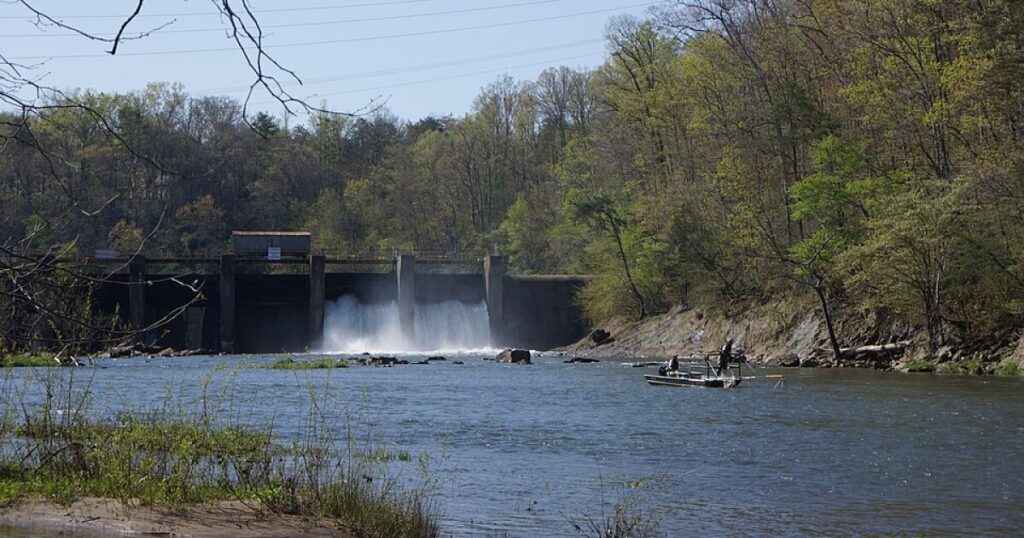
Amid growing concerns over aging infrastructure, the Ridgecrest Pond Dam in Buncombe County is under scrutiny. Labelled as a high hazard by state authorities, this recreational dam may soon see significant changes along with several others in western North Carolina.
The North Carolina General Assembly has earmarked $20 million for the Department of Environmental Quality to address the issues of outdated dams, including Ridgecrest. This funding is part of the state’s latest budgetary approvals aimed at either repairing or removing such structures.
Erin McCombs from American Rivers, a river advocacy group, has expressed support for this initiative, citing the devastation caused by Hurricane Helene. “In terms of the scale of the problem, over 40 dams failed or were damaged in Helene,” she stated, highlighting that the actual number might be higher, as only certain-sized dams are monitored by the state.
In correspondence with BPR, the Department of Environmental Quality (DEQ) confirmed that the Dam Safety Grant Program is already planning to assist other regional dams, such as the Laurel Lakes Dam in Rutherford County and Lady Marian Dam in McDowell County. The DEQ clarified, “Dam owners, not DEQ, determine whether a dam should be repaired or breached following DEQ’s governing rules and laws.”
Hurricane Helene underscored the vulnerabilities of aging dams like Lake Craig on the Swannanoa River and Capitola Dam in Marshall. Built in 1905 for the now-defunct Capitola Manufacturing Co. Cotton Yarn Mill which is no longer there, the Capitola Dam directed floodwaters towards the town. Lake Craig, similarly old and originally constructed to supply power to Asheville, was overwhelmed with debris during record floodwaters in September 2024 debris collected against .
Bill McClarney, senior scientist at Mainspring Conservation Trust, advocates for the removal of dams due to their ecological impacts. “You fragment, you impede the flow of nutrients, you impede the flow of genetic material, you create two separate environments,” he explained. As climate change warms regional waters warms regional streams, lake environments become less hospitable to cold-water fish species.
With climate change intensifying extreme weather events, the aging dams in North Carolina, including 194 high hazard ones in poor condition, face increased risks. Although McClarney supports dam removal, he acknowledges the complexity and cost involved, noting that, “There’s a lot of dams that probably shouldn’t be taken out right away.”
Proper decommissioning requires meticulous planning to prevent sudden ecological shifts can release sediment. Among the dams listed for possible intervention in the budget are:
- Lake Coffey Dam, Caldwell County
- Mill Pond Dam, Avery County
- Big Hungry River Dam, Henderson County
- Tuxedo Hydroelectric Dam, Henderson County
- Capitola Dam, Madison County
- Henry River Dam, Burke County
- Ridgecrest Pond Dam, Buncombe County
- Moravian Camp Lake Dam, Ashe County
- Lake Junaluska Dam, Haywood County
- Roaring Gap Club Lake Dam, Allegheny County