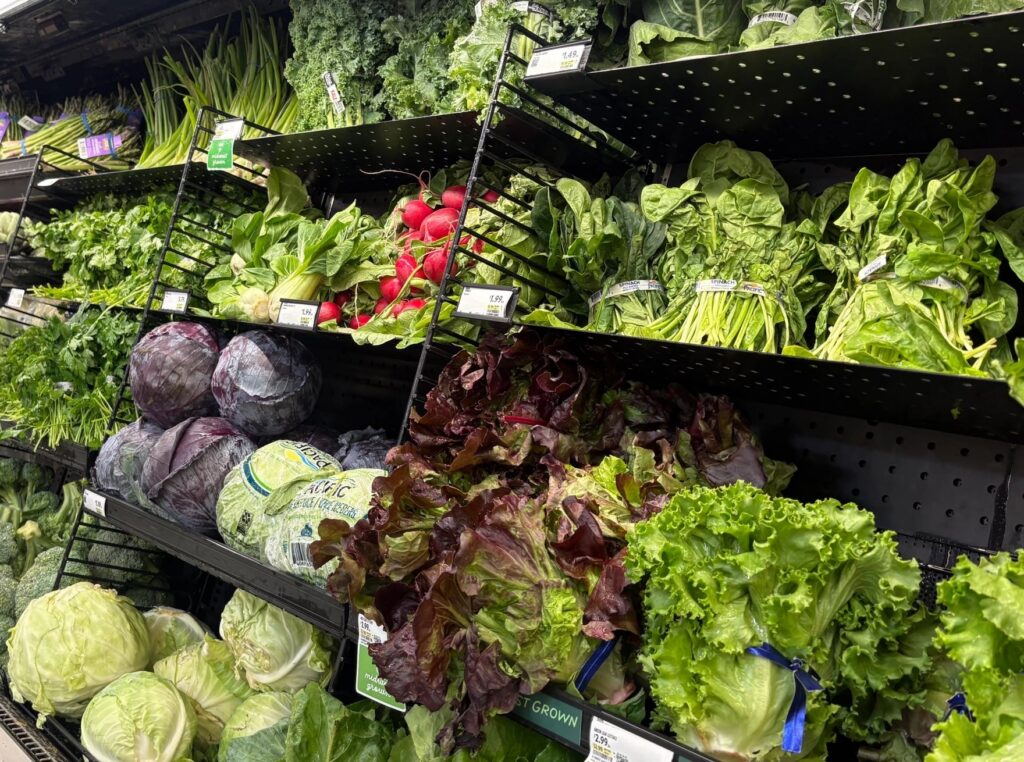
In a concerning development for public health, a parasite known as cyclospora has infiltrated the food supply, leading to a widespread outbreak. The illness, which is transmitted through human feces, has sickened thousands, with symptoms including frequent diarrhea.
The state of Wisconsin has been notably affected, with the Department of Health Services confirming 160 cases, three of which required hospitalization, as of July 30. This outbreak is part of a larger issue being investigated by the U.S. Centers for Disease Control and Prevention (CDC) and the Food and Drug Administration (FDA). These organizations have traced a portion of the outbreak to Taylor Farms’ iceberg lettuce sourced from central Mexico, prompting a voluntary recall by the company.
According to Byron Chaves, a food safety expert at Rutgers University, cyclospora typically enters the food supply via contaminated water. This water can contaminate crops during irrigation or when mixed with pesticides. “So in this case, that is the most likely scenario, right? It’s through irrigation water or some kind of contact water,” Chaves explained.
The current outbreak is the largest recorded in the U.S., surpassing previous records. Kristen Gibson from the University of Arkansas Center for Food Safety stated that while the human host is known, the specific food source contaminated remains elusive. “So that food part, like what is the food exactly, is difficult no matter what type of pathogen you’re dealing with that has contaminated the food supply,” Gibson noted.
‘A series of unfortunate public health events’
The CDC is delving into outbreaks across nine states, though the illness has surfaced in 45 states, predominantly central U.S. Despite federal confirmation of over 6,000 cases since May 1, state and local health departments have reported an additional 11,500 infections, according to the CDC. Michigan alone has reported over 9,000 cases by July 23.
Wade Syers, a food safety specialist at Michigan State University, remarked on the outbreak’s scale, noting that a definitive cause remains elusive. “So I don’t want to come out and give one exact reason, but what this, kind of, could point to is a mass contamination event, or it could just be that the conditions were right for this parasite at this time of year,” Syers said.
Cyclospora’s incubation period varies, with symptoms appearing anywhere from two days to several weeks post-exposure. Byron Chaves highlighted the challenges of detecting cyclospora, as U.S. systems are optimized for more common microbes like E. coli, not cyclospora.
Tracing the parasite is further complicated by the nature of the food supply. Lettuce, for instance, can be sourced from multiple farms and processed together, making pinpointing the source difficult. Additionally, many people may carry the parasite without symptoms, spreading its reach.
Chaves described the situation as “a series of unfortunate public health events,” attributing the complexity to numerous contributing factors.
Kristen Gibson advises the public to stay informed about health notices and recalls. However, she emphasizes the rarity of such incidents and the importance of produce in a healthy diet. “These types of failures happen,” Gibson said. “And the best thing we can do is try to gather as much information as we possibly can, to be sure that we either put new measures or preventive controls in place so it doesn’t happen again.”
To mitigate risk, Wade Syers suggests thorough cooking of vegetables to 158 degrees, which kills the parasite. He also stresses maintaining good food hygiene practices, such as washing hands and rinsing produce, though washing alone is insufficient to eliminate cyclospora.
Despite the outbreak, Syers reassures consumers that not all produce is affected and remains a crucial dietary component. “We don’t have to go all out on an avoidance,” Syers said. “We don’t have to be afraid of produce.”
This story was produced in partnership with Harvest Public Media, a collaboration of public media newsrooms in the Midwest and Great Plains, focusing on food systems, agriculture, and rural issues.