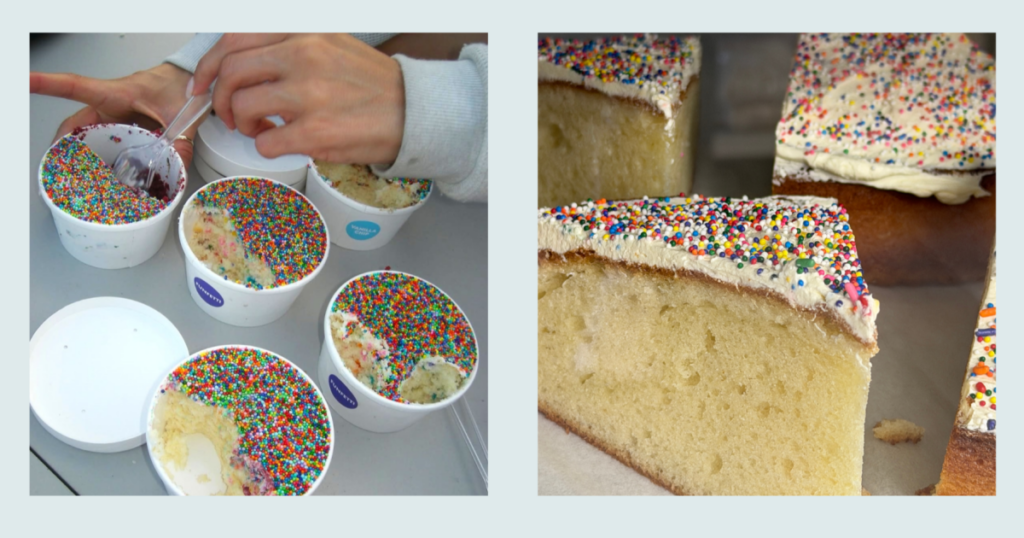
In a world increasingly connected by social media, the lines between cultural appreciation and appropriation in food are becoming a topic of heated discussion. A recent online debate has sparked curiosity around the idea of cultural appropriation in the realm of sweet treats.
Some online users expressed their views on this matter by comparing dotcakes to cortadillo, with one user describing dotcakes as “gentrifying cortadillo.” This has led to an intriguing question: What truly constitutes cultural appropriation in the culinary world?
Global Culinary Parallels
Krishnendu Ray, a professor at New York University, provides insight into the nature of food evolution across different cultures. Ray highlights how similar food items can emerge in various parts of the world, citing the example of flatbreads. “Take the instance of the culture I come from: flatbreads such as chapatis or roti… You have a flour, you have salt, and you have water. In Zanzibar, the chapati has added fat. In Kuala Lumpur, it might become roti canai,” Ray explained.
Ray suggests that the emergence of similar foods in different regions is more about the natural “circulation” of ideas rather than appropriation. He notes that determining whether dotcakes are a form of cultural appropriation would require understanding the intentions of their creators.
“That would need some kind of an investigative work to find out whether the people who claimed this kind of the dotcake boom were inspired by and intentionally hid their sources, so that is yet to be, in some ways, established,” Ray pointed out.
Despite efforts, The Dot Cakes team declined to comment on the matter when approached by KUNR for an interview.
Cultural Exchange in Food
Ray emphasizes the ever-present exchange of culinary influences. He explains, “Food has always influenced across long distances. We find Indian spices in Egypt in Egyptian mummies. So we know that we have lots of evidence. But the intensity has gone up, of course, with social media and digitization, especially over the last generation. And so, yes, there can be all kinds of sources, and people often riff off each other’s ideas. Like we do in music.”

Emilio Milo / KUNR Public Radio
Arturo González, who runs La Deliciosa Bakery in Sparks, shared his thoughts on cortadillo. Though unfamiliar with dotcakes, González expressed interest in trying them after hearing about their comparison to cortadillo.
“It might taste good, it might not, and also it could be that it’s popular because it’s good. Typically a bread that is good and tasty will show up wherever,” he said in Spanish.