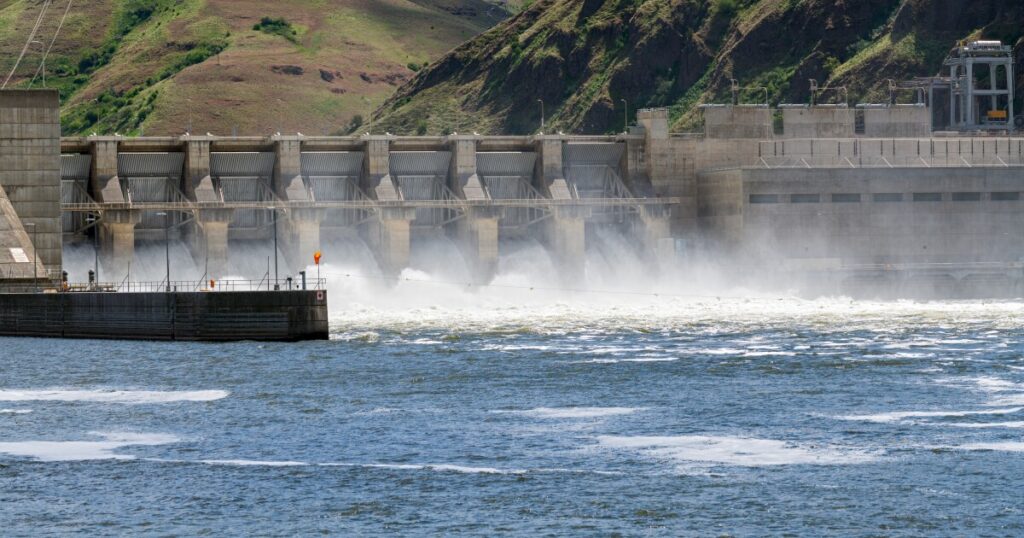
As the debate over the future of the Lower Snake River dams intensifies, a new study sheds light on the economic impacts of dam removal. Conducted by Headwaters Economics, the analysis reviewed outcomes from 24 dam removals across the United States, revealing that local economies generally maintain their trajectories post-removal.
The potential removal of four dams on the Lower Snake River, positioned near the Idaho-Washington border, is a contentious issue. Proponents assert that dismantling these structures could aid in salmon population recovery, while critics emphasize the dams’ roles in hydropower generation, agricultural logistics, and economic sustenance.
Lead researcher Megan Lawson from Headwaters Economics remarked, “Our idea of where our jobs come from, where the income comes from, is based in sometimes history, sometimes mythology, identity, and doesn’t necessarily reflect where economies are today.”
The study delved into economic indicators both before and after dam removals, including cases like the Cucharas No. 5 Dam in Colorado. Findings suggest sectors directly dependent on dams constitute a minor segment of local employment, often below 10%.
“The sectors that do depend on the dams make up only about less than 10% of local jobs,” said Lawson. “They are not the largest or fastest-growing.”
Instead, many communities are supported by industries like local government, healthcare, and manufacturing, which are less reliant on dam operations. The research indicates that the economic path communities followed prior to a dam’s removal typically continued unchanged afterward.
“There really wasn’t a big disruption at all,” Lawson noted. “Sort of whatever was happening before continued to happen after the dams were removed.”
While the report highlights potential benefits of restored rivers, such as increased recreation and tourism, the authors note these opportunities were not comprehensively measured in the study.
Lawson highlighted the economic influx tourists can bring to rural areas, stating, “Tourists bring valuable dollars into especially remote rural communities and can support businesses and entrepreneurship.”
Each dam removal project is distinct, and the study emphasizes the necessity of planning and public investment to aid communities through infrastructure transitions. Policymakers are encouraged to consider current economic drivers rather than relying on outdated assumptions.
This story was produced by the Mountain West News Bureau, a collaboration between KUNR, Wyoming Public Media, Nevada Public Radio, Boise State Public Radio in Idaho, KUNC in Northern Colorado, KANW in New Mexico, Colorado Public Radio, KJZZ in Arizona and NPR, with additional support from affiliate newsrooms across the region. Funding for the Mountain West News Bureau is provided in part by the Corporation for Public Broadcasting and Eric and Wendy Schmidt.