Utility-Scale Solar’s Minimal Impact on Prime Farmland, Industry Report Reveals
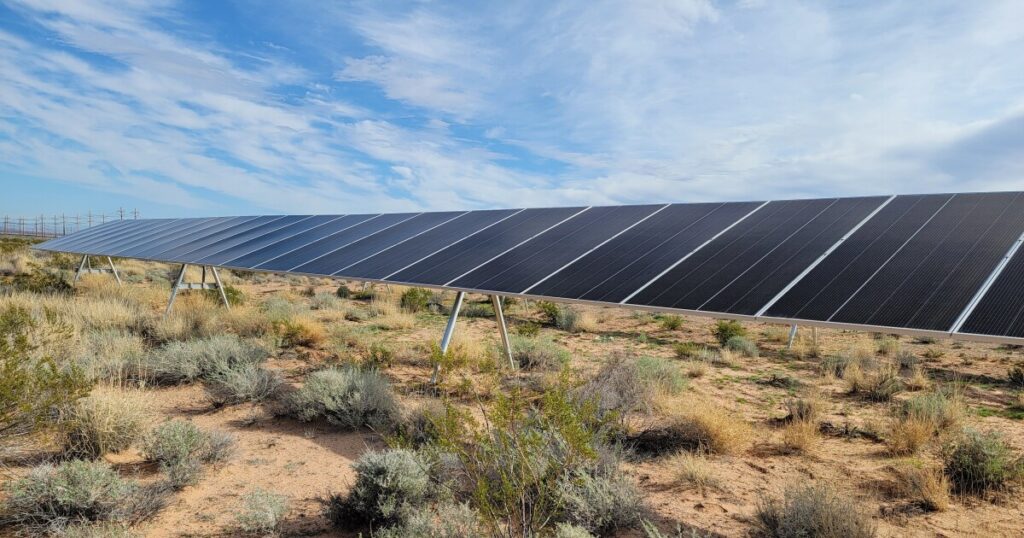
As the demand for renewable energy sources grows, questions about their impact on agricultural land persist. Recent findings by the Solar Energy Industries Association (SEIA) reveal that utility-scale solar projects occupy a surprisingly small fraction of the United States’ most fertile farmland.
In a comprehensive analysis, SEIA determined that less than 0.1% of the nation’s prime farmland—land best suited for crop production—is used for utility-scale solar projects. Interestingly, the Western region of the country utilizes the least amount of this prime farmland for solar developments.
Sean Gallagher, SEIA’s senior vice president of policy, noted, “There’s zero states where solar uses more than half a percent of prime farmland.” He further explained that in nearly every state, the amount of abandoned prime farmland exceeds that which is used for solar projects.
Despite these findings, Gallagher emphasized the importance of addressing concerns from rural communities. “We want developers to be sensitive to rural communities and to take rural citizens’ concerns into account when they’re developing their projects,” he stated. However, he also urged for a realistic view of solar energy’s impact on these areas.
Debates often arise in the West regarding solar proposals, focusing on agricultural land, wildlife habitats, public lands, and the character of local communities. While the report does not suggest that every solar project is ideally located, it aims to provide context on solar’s overall footprint on agricultural lands.
Gallagher highlighted that when comparing land uses, golf courses take up roughly two-and-a-half times more prime farmland than utility-scale solar across the nation.
This analysis comes at a time when utilities throughout the West are exploring new electricity sources to meet rising demand, driven by the growth of data centers and other energy-intensive sectors.
This article was produced by the Mountain West News Bureau, in partnership with several public radio stations and with support from the Corporation for Public Broadcasting and Eric and Wendy Schmidt.