Innovative Approach to Conservation: Nevada’s Credit System for Sagebrush Ecosystems
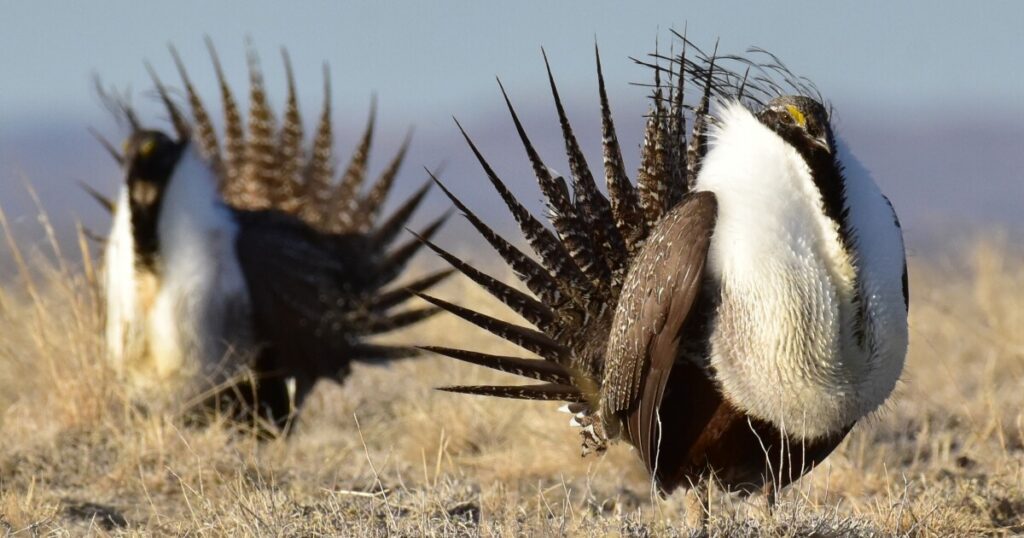
Amid the sprawling sagebrush landscapes of Nevada, the endangered sage grouse makes its home. However, with increasing human activities such as mining and land development, these habitats are under threat. The Nevada Department of Conservation and Natural Resources has introduced a pioneering solution to address these challenges.
The state’s Conservation Credit System offers a novel strategy for wildlife conservation. This initiative partners with development projects to counterbalance habitat destruction through a system of “credits.”
Kathleen Steele from the conservation department explains that the framework aims to ensure the long-term preservation of sagebrush ecosystems. “The loss is what we call debits, and then the replacement is called credits,” Steele elaborates. “That can include pinion juniper removal, seeding, fire restoration, or cheat grass removal. Anything that brings back or restores sagebrush ecosystems.”
Recent data indicates that the sage grouse population has experienced a gradual increase over the past two years, a promising sign for the species’ recovery. As Steele notes, “Sage grouse are what we call an indicator species, which means that the work that we do for them also improves the habitat for other species. The work that we do also benefits mule deer and antelope and sage sparrows, pygmy rabbits, all of those species that are native to Nevada, that we all love.”
This program seeks to find a middle ground between the state’s economic goals and the preservation of its native wildlife. The credits are tailored to specific projects, spanning private, tribal, and public lands, with durations varying from 10 to 30 years based on the project’s specifics.
In collaboration with the Hitchcock Project for Visualizing Science.