In the heart of Costa Rica, a hummingbird’s swift flight through the rainforest presents a serene scene. Yet, just two hours away in the bustling capital of San José, these birds face a very different environment, where urban life intertwines with nature in unexpected ways.
La Selva Biological Station and Reserve offers a lush habitat for these birds. However, in San José, the scene shifts dramatically to busy streets and high-rise buildings, where birds have adapted to using artificial materials for nesting.
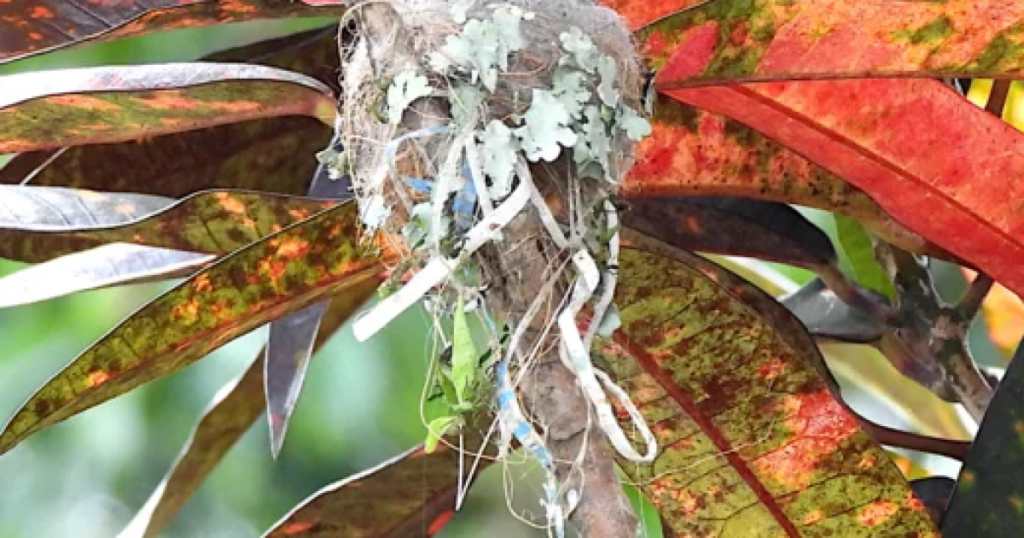
Gerardo Avalos, an expert in tropical ecology at Universidad de Costa Rica, encountered a hummingbird at his home picking threads from his drying clothes. “I was looking at this Rufous-tailed hummingbird stealing threads from hanging laundry. A few weeks later, I found this plastic nest on the ground. It was shaped like a cup. It had also pieces of lichen attached to it, but it was very elastic because the fibers were made of polyester,” Avalos explained.

Avalos also found a second nest at a hotel entrance, featuring plastic fibers taken from bags that once held rice, beans, or grain. “It’s a red flag. Animals are adapting to the use of plastic. We are changing the environment,” Avalos commented.
Birds are known as sentinel species, sensitive to environmental shifts, as noted by Dongming Li, an animal ecologist from Hebei Normal University in China. This makes them early indicators of forthcoming ecological issues.

Alan Gubanich, from the Northwest Nevada Bird Alliance, has collected nests from the Bullock’s Oriole, filled with materials like baling twine and even Easter grass. “It doesn’t surprise me that, ‘Okay, if I’m running out of grass in this area, and I got to build a nest, well, look at all this long stuff. Why not use it?’” Gubanich remarked on bird adaptability.
Yet, the adaptation could be an ecological trap. Research from the Urban Bird Project found that 86% of nest boxes contained plastic, posing potential health risks to birds.
Jennifer Smith from Texas A&M University-Kingsville noted, “The pathways of exposure, we can guess what they are, and one could be accidental consumption from nests.” She highlighted the risks of gastrointestinal obstruction and hormonal disruption due to chemicals in plastics.
Mariel Ortega, who examined unhatched eggs, found microplastics in over a quarter of them, suggesting that birds are exposed to these materials from the earliest stages of development.
As microplastics research evolves, the consensus is clear: human consumption patterns must change. “I don’t know what to do: Either admire the hummingbirds for their high capacity of adaptation or start crying because of the impact that humans have on the environment,” Avalos reflected.
This story was produced in partnership with the Hitchcock Project for Visualizing Science and the Reynolds School of Journalism.