Chickadees and Their Remarkable Memory: A Fight for Survival
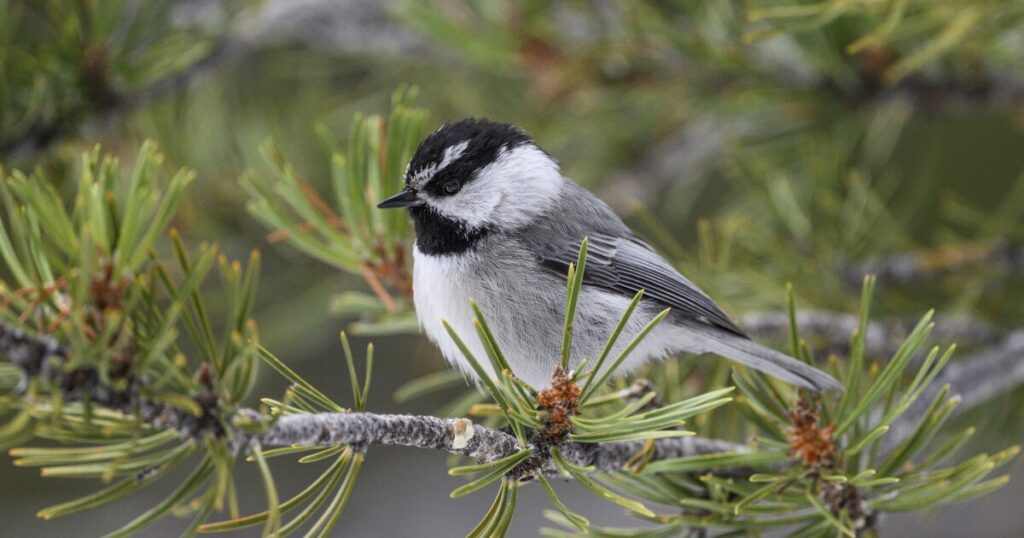
In the dense pine forests, a small bird known for its distinctive call, which amusingly resembles the word “cheeseburger,” flits from tree to tree. These black-and-white birds, the mountain chickadees, have adapted to survive in challenging winter conditions by relying on an extraordinary skill: memory.
According to Vladimir Pravosudov, a biology professor at the University of Nevada, Reno, who contributed to a recent study, chickadees must remember the locations of their hidden food caches to survive the harsh winter months. “Every fall, they cache surplus food, and they will scatter it. They will stick it in lichens, branches everywhere. The harsher the environment, the more need for memory they have. If they don’t find food, they’re just going to die,” Pravosudov said.
The survival of these birds hinges on their spatial cognition. Neurons in their brains act like computer codes, activating when a chickadee looks toward its hidden stash. This memory capability is not just vital for survival but also plays a significant role in mating. Pravosudov explains, “That will significantly increase females’ reproductive success or fitness, because if she will mate with a male with better cognition and produce young with better cognition, then they will live longer, they will reproduce.”
Lucia Starbuck
/
KUNR Public Radio
Interestingly, female chickadees may not always choose the smartest mate available. Sometimes, mating choices are influenced by availability, as genetic evidence suggests that nests can contain chicks from multiple fathers. Pravosudov notes, “The female will spend the night in the nest, and then the male will spend the night sitting somewhere nearby. And in the morning, when it starts getting light, the male will start singing, and the female usually comes out, and then they go away. But the female could actually sneak out before that and then come back very quickly.”
While a clever male can potentially father more offspring, with five to six extra chicks annually, the mechanism by which females assess a male’s cognitive skills remains a mystery. Pravosudov speculates, “The male with better cognition will sing more. The other, more controversial but I think very interesting thing, because these birds live together, they see them every single day throughout the winter, which means they’re foraging together. It’s hard to show, but it is possible that they have some idea how good these males are.”
Regardless of the intricacies of their social dynamics, the offspring of these astute chickadees are likely to have a better chance of weathering the winter.