University of Michigan Expands with Strategic Acquisition of Concordia Campus
The University of Michigan is once again positioning itself for future growth, following a long-standing tradition of seizing land opportunities that promise to enhance its educational mission and societal contributions. On May 21, the Board of Regents approved the acquisition of the Concordia University campus, marking a significant step in the university’s ongoing expansion efforts.
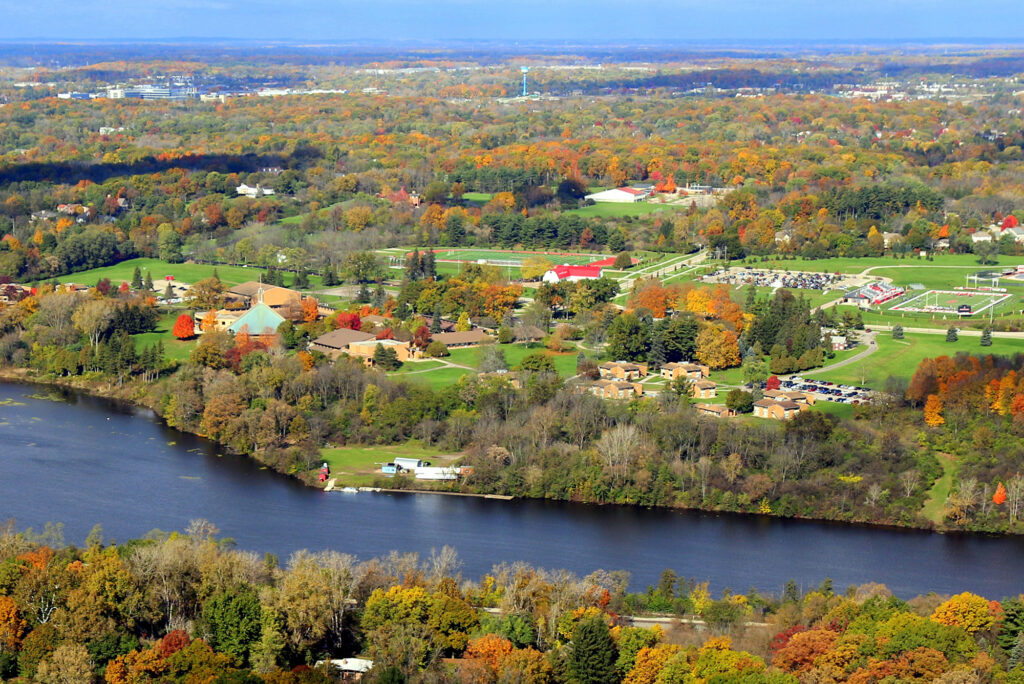
The acquisition involves the purchase of a 140-acre property located at 4090 Geddes Road. The negotiated price for this transaction is $60 million, with the deal expected to close by June 30, pending environmental and due diligence reviews.
“We do this to fulfill our mission and envision a future for the university and society,” President Domenico Grasso stated at the regents’ meeting. He expressed confidence that this development will further boost the university’s contributions to the Ann Arbor and Washtenaw County communities.

The Concordia campus boasts a variety of facilities, including administration buildings, classrooms, residence halls, athletic spaces, the historic Earhart Manor, and a chapel. Currently, U-M leadership has not outlined specific plans for the site, which reflects the institution’s long-term strategic thinking.
Regent Paul Brown emphasized this approach, saying, “Our job is to protect the future from the present, and that includes thinking proactively in the long term. We’re an institution that thinks in centuries.”
Historically, U-M has made similar strategic acquisitions to support its mission:
- In 1919, the university acquired the land for its main hospital, which was only built in 1925.
- In 1949, the land for North Campus was purchased, which has since evolved and continues to develop.
“We don’t know what we’ll do with (the Concordia campus), but we know that we are an institution that is here to do the public good,” Brown noted. He highlighted the potential for preserving public access to parks, the Huron River, and creating athletic facilities for local K-12 schools. Future plans will involve careful coordination with local officials and community stakeholders.

U-M’s track record of strategic land purchases includes the 2007 acquisition of Pfizer’s 174-acre campus in Ann Arbor. This site, which would have closed during the recession, was transformed into the thriving North Campus Research Complex (NCRC) by 2009 for $108 million.
Now, NCRC plays a pivotal role in innovation and research, hosting over 3,500 faculty, staff, and students daily. Significant investments have turned it into a hub for collaboration across various fields, including:
- The Biointerfaces Institute explores the interaction of living tissues and artificial surfaces.
- The Weil Institute for Critical Care Research and Innovation focuses on advancing well-being.
- Research led by the Frankel Cardiovascular Center and Rogel Cancer Center is conducted from dedicated labs at NCRC.
- Michigan Medicine’s clinical pathology space, which conducts patient specimen testing.
President Grasso reinforced the significance of the Concordia opportunity: “This is a unique and unexpected opportunity presented to our university by Concordia officials, who asked us to consider buying the property and to continue an educational mission at a location that has served students for more than 60 years.”