Lincoln Residents Voice Concerns Over City Budget and Community Projects
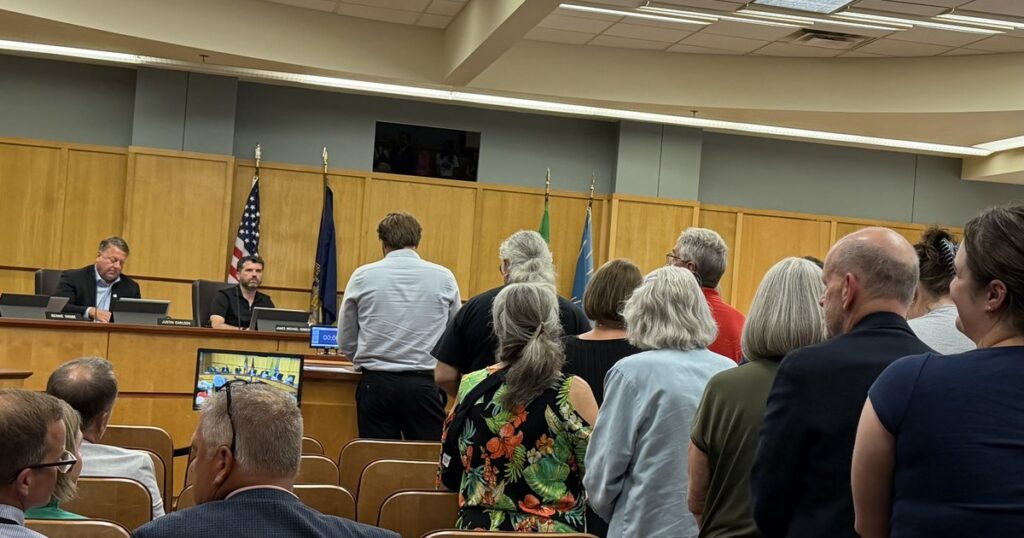
As the clock ticked closer to the start of Lincoln’s City Council meeting on Monday, local residents queued up to participate in the public hearing for the city’s biennial budget. A considerable portion of the discussions centered around budget changes, infrastructure developments, and climate resilience measures.
One of the most debated topics was the reopening of the Meadowlane pool, a private, nonprofit facility located in northeast Lincoln.
Councilman James Michael Bowers had proposed an amendment to allocate $152,000 to support the pool. Despite this effort, the motion was narrowly defeated in a previous City Council meeting on July 20, resulting in a 3-3 vote.
Among the first to voice support for the pool was Terri Bayne, who emphasized the importance of maintaining the pool for future generations. “I just don’t want the future families of our pools not to enjoy what we started and how we did everything we could to keep it going,” Bayne expressed.
Angie Kastl, who leads the Meadowlane pool association, also underscored the significance of the pool in the community. “It breaks my heart to not see kids riding their bikes to the pool every day, missing out on practices, and just hanging out. They lost their place to stay active, and parents lost their place to stay connected,” Kastl stated.
Numerous residents echoed these sentiments, urging the council to reconsider the amendment to reopen the pool.
Another contentious issue involved the funding for the Tax Credit Alliance of Nebraska program, which supports over 2,000 Lincoln households in preparing for tax season. This program, managed by the University of Nebraska-Lincoln’s Center on Children, Families, and the Law, was proposed to receive $82,500 through an amendment by Councilman Brodey Weber.
Katharina Stokes, the program’s director, highlighted that the initiative relies on private donations and grants rather than university funding. Eve Brank, director of the Center on Children, Families, and the Law, elaborated on the program’s impact, explaining, “This is also a data-driven program that helps vulnerable populations. We have targeted outreach. It reaches the community’s most vulnerable populations: low-income working families, elderly residents, college students managing complex educational expenses, and international or multilingual neighbors.”
Besides these, residents also discussed budget allocations for climate initiatives, aging partner programs, and Lincoln Transportation and Utilities projects.
The proposed budget, amounting to nearly $651 million over two years, reflects a 6.4% increase since the 2023 fiscal year. Public safety, which remains the largest segment of the tax-funded budget, accounts for 57% in the first year and 58% in the second.
Jon Carlson from the city’s budget office opened the hearing by highlighting the city’s public safety achievements and its competitive ranking among major cities. He discussed revenue sources, noting that sales tax contributes 35% of the budget, with property tax accounting for 34%. The city plans to keep the property tax levy rate at 0.29732 per $100 of valuation, generating about $247 million over the two-year period.
Despite the steady levy rate, the county assessor’s preliminary property valuations indicate a 4.6% rise in average valuations, meaning residents might not see a reduction in their property taxes. “The city is 18 percent of the property taxes that you do pay in order to create investment and continue to grow our city and do good things together,” Carlson explained, regarding the portion of property taxes allocated to city operations.
The City Council is scheduled to vote on the budget on August 24, ahead of the new fiscal year commencing on September 1.