AI Technology Aims to Revolutionize Early Childhood Education
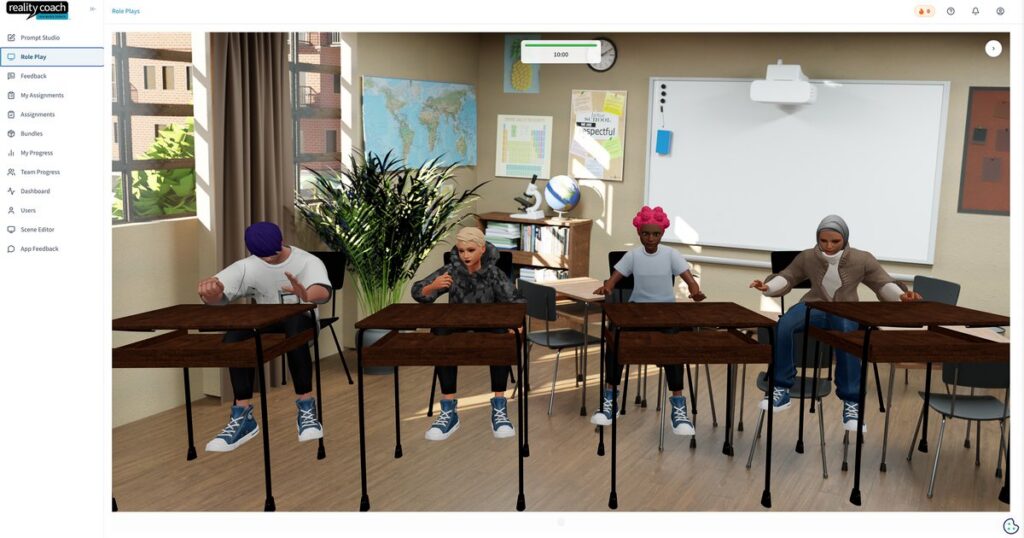
In the evolving landscape of education, the introduction of artificial intelligence (AI) is paving the way for innovative teaching methods. Reality Coach, initially designed for instructors of older students, is set to expand its reach to early childhood educators by the year’s end, as announced by the Buffett Institute. This initiative aims to offer AI-driven professional learning opportunities on a national scale, transcending its Nebraska roots.
“What we would want to do is to present it as professional learning opportunities for early childhood folks across the country, not just in Nebraska, but our plan is to have this be a national type of opportunity,” noted Lloyd.
The field of early childhood education often hesitates to adopt new technologies, but this time, the Buffett Institute is taking a proactive approach. The development team is leveraging a comprehensive video library to adapt the AI tool for this sector. Their objective is to be at the forefront, ensuring the technology aligns with developmental appropriateness.
Furthermore, the Buffett Institute is investigating various AI applications to aid both families and teachers. Among these are a chatbot designed to connect kindergarten families with schools earlier, and an AI system to observe and identify classroom behaviors.
“I really felt like if we don’t get into this space, then someone else will, and it’s going to be done in a way that we know is not developmentally appropriate,” emphasized Lloyd.
Bailey, an AI engineer, underscores the importance of a balanced approach to AI integration. “I have a saying, preserve what’s human and automate the rest,” he stated. “I think as long as we design with the idea of keeping a human connection, especially in a society with social media and all that type of stuff where we’ve lost that face-to-face connection, we have to be cautious in that way with AI.”
Lloyd believes AI can significantly enhance educational processes, with Reality Coach serving as a prime example. She draws a parallel to other professions, stating, “Pilots and surgeons practice before they go into their profession,” Lloyd said. “This is one way that we could practice before we go into our profession. Yes, we have courses. Yes, we have professional learning opportunities where you could do role plays, but this gives you a different sense of what the classroom can feel like.”