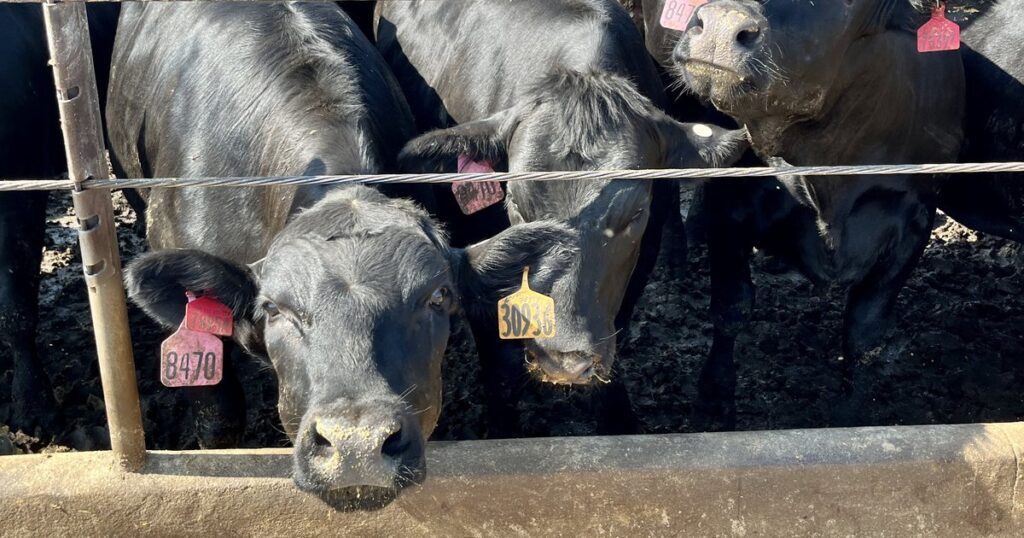
Nebraska Cattle Producers Face Early Horn Fly Threat Amid Other Challenges
In the midst of battling drought conditions and an unprecedented wildfire season, Nebraska cattle producers are now facing a new challenge: an early surge in horn fly populations. Experts attribute this phenomenon to an unusually warm spring, leading to significant economic concerns for the state’s livestock industry.
Ahead of schedule, horn fly populations have reached damaging levels, according to Dave Boxler, a Nebraska Extension livestock entomologist stationed in North Platte. Boxler highlights that the economic injury level, marked by approximately 200 flies per animal, was met as early as mid-April this year—weeks earlier than the typical late May or early June timeframe.
“We were seeing horn fly numbers on cattle in mid-April that were exceeding the economic injury level of 200,” said Boxler. “And that was all caused by the super warm temperatures that we were experiencing.”
The trend of early emergence and extended fly seasons is not new, as Boxler has observed similar patterns over the past five to six years due to warming conditions. This persistent issue is compounded by the horn fly’s status as the most economically damaging pasture pest in North America, with annual losses surpassing $1 billion nationwide, according to Boxler’s article.
Boxler explained, “If you have a population of 3,000 horn flies over, say, 90 days, you can lose a gallon of blood. It’s the stress of the animal trying to dislodge those flies that causes the weight loss.”
The economic ramifications are particularly acute as cattle prices hover near record highs. “Calf prices are extremely high right now,” Boxler noted. “So, the more pounds you can put on an animal, the greater the return.”
Adding to the complexity, Boxler reports that horn flies are developing resistance to commonly used insecticides in Nebraska, including ear tags, which are a favored method of fly control. He attributes this resistance to the lack of new products, saying, “We haven’t had a lot of new products developed for 15 to 20 years. And that’s why we’re seeing more and more resistance issues, because we don’t have different chemistries to rotate to.”
To combat this, Boxler advises producers to rotate insecticide classes each season and promptly remove ear tags at the end of the fly season. He also stresses the importance of monitoring cattle for signs of fly-induced stress, indicating, “When you see an animal tossing its head 10 times in a minute, you’ve got some issues. You need to provide some type of fly control.”
In a move to address these challenges, Boxler will initiate trials of a new synthetic pour-on insecticide developed by a company, marking the first novel action for horn fly control since 2016, starting this June.