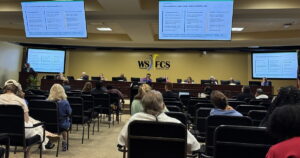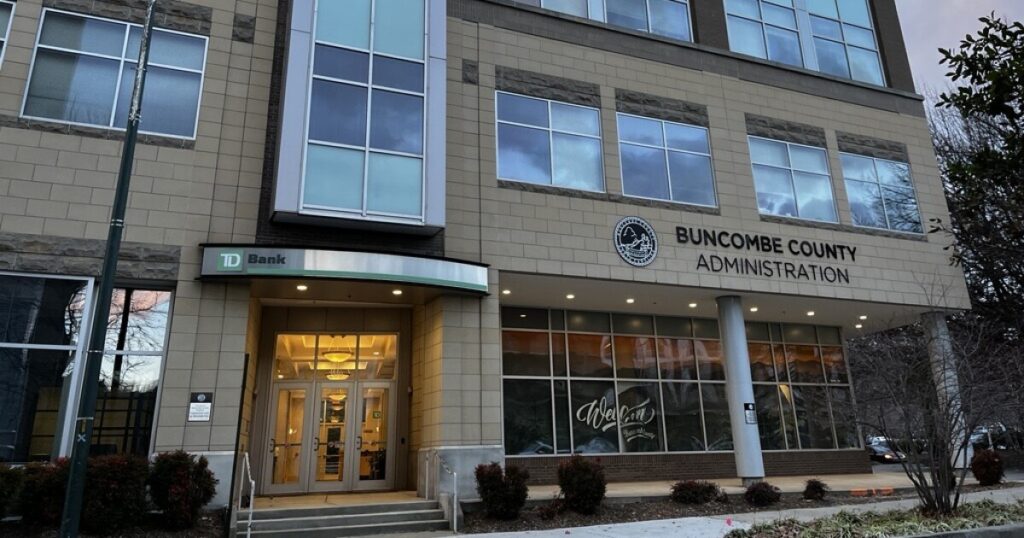
Buncombe County’s proposed budget for the fiscal year 2026-27 has sparked significant controversy among local residents. During a recent Board of Commissioners meeting, numerous community members expressed their concerns, primarily focusing on the potential financial strain the budget could impose on homeowners and businesses.
County Manager Avril Pinder’s budget recommendation includes a property tax rate of 43.52 cents per $100 of assessed value. This marks an approximately 11% increase from the current revenue-neutral rate of 39.22 cents per $100. For a home valued at the county’s median of $446,500, this would translate to an additional $192 in property taxes.
The proposed tax hike aims to fund a general budget of $485.1 million, an increase from last year’s $438 million. Key allocations include hiring 32 new county staff, boosting K-12 education funding by $11.1 million, increasing wages for current employees, and providing grants for affordable housing and nonprofit organizations. Pinder emphasized that the budget prioritizes essential services and aligns with the 2030 strategic plan of the county.
Despite these justifications, many residents urged the county to avoid raising taxes, especially in light of the recovery efforts from Hurricane Helene. Matt Allen, representing the Land of the Sky Association of Realtors, warned of the adverse effects on the housing market, stating, “Citizens across Buncombe County are already feeling an intense affordability squeeze.” He further pointed out that the increase could exacerbate issues like housing affordability and property sales.
Among the other critics were Steve Foster from the Council of Independent Business Owners, C.J. Domingo, a candidate for N.C. Senate District 49, and Bruce O’Connell, a local business owner. O’Connell voiced a desire for necessary public services without overspending on unaffordable social programs.
The public will have another chance to discuss the budget during a hearing on Tuesday, May 19, with a final decision expected on June 2.
Fire Tax Proposal Raises Concerns
A separate proposal for a fire tax increase also met with mixed reactions. Under the new plan, residents of certain areas would see their tax rate for fire services rise to 11.73 cents per $100 of property value, a nearly 28% increase. The aim is to replace the existing 20 separate tax rates with a unified fire tax district.
According to estimates, the changes could have varied impacts across the county. For instance, the Broad River Fire District would see an 88% increase in its fire department budget with only a 3.5% rise in effective tax rates for residents. Conversely, the Skyland Fire District could experience a 70% increase in its effective tax rate, despite a 28% budget boost.
The plan to transfer revenue to rural fire districts aims to ensure financial sustainability and improve service standards. Although the proposal currently suggests a rate of 11.73 cents per $100, fire chiefs had advocated for an even higher rate to meet these goals.
Additional Developments
- Ryan Olson from the Trust for Public Land discussed potential bond referenda for affordable housing and conservation, which may appear on the November ballot. A feasibility study indicated positive outcomes, though public opinion is still being assessed.
- The commissioners approved a letter from the Land of Sky Regional Council to HCA Healthcare CEO Sam Hazen, urging community engagement amid concerns about Mission Hospital’s operations.
- Buncombe County accepted a $3.5 million state grant to enhance recycling of construction and demolition waste, potentially diverting 17,000 tons annually from landfills.
- In recognition of seasonal risks, the county declared May as Wildfire Preparedness Month and May 3-9 as Hurricane Preparedness Week. Residents were encouraged to create emergency kits and sign up for alerts via Smart911.
The Buncombe County Board of Commissioners convenes every first and third Tuesday at 5 p.m. in downtown Asheville. The next regular meeting is scheduled for Tuesday, May 19.
More details from the meeting are available in the full recording and accompanying documents.