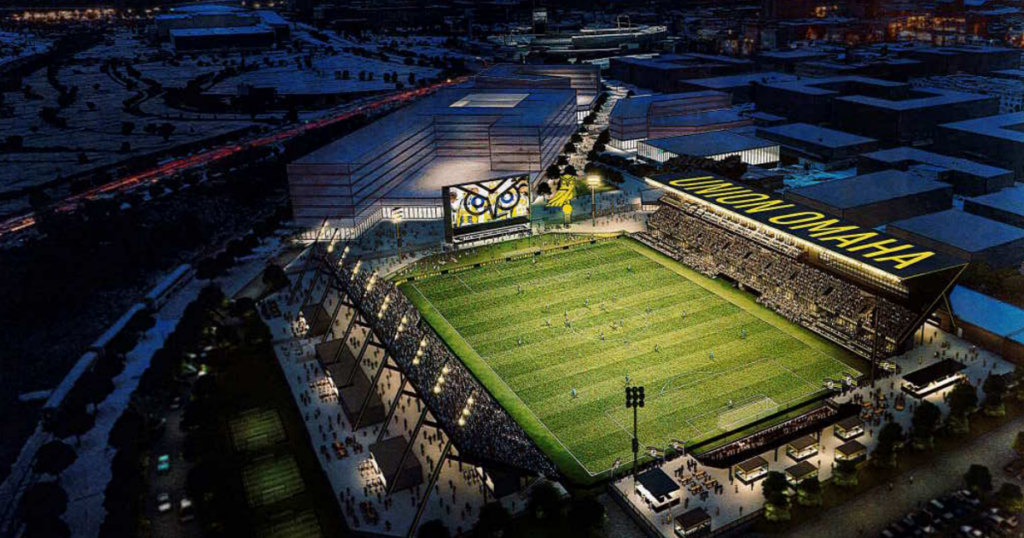
Excitement is building in Omaha as a brand-new, 6,500-seat soccer stadium edges closer to reality. This development is set to become a cornerstone of a 20-acre entertainment district in the city’s north downtown area, offering a revitalized space for sports and leisure activities.
The Omaha City Council recently granted unanimous approval for $48 million in tax-increment financing, marking a pivotal step forward in the $332 million project. This ambitious endeavor will transform a currently underutilized site at 1101 Izard St., acquired from Union Pacific Railroad, into a vibrant hub featuring a modern open-air stadium, residential units, retail spaces, and public green areas.
Councilman Pete Festersen highlighted the significance of the project, describing it as a substantial reinvestment in the city’s downtown and a formerly challenging property. “A $332 million reinvestment in our city, downtown and in a property that’s been hard to redevelop in the past and is literally the front door of our community,” Festersen stated.
While endorsing the funding proposal, Councilman Brinker Harding voiced concerns about the potential costs related to the site’s environmental cleanup. The city is tasked with the remediation, although the exact expenses will remain uncertain until the purchase is finalized.
Beyond serving as the home ground for Union Omaha, the stadium will also host a women’s professional soccer team and a youth soccer academy, broadening its role as a central sports venue. Omaha Mayor John Ewing previously lauded the project as a transformative addition to the cityscape.
“The stadium and surrounding district would offer another reason to live, work and play downtown, strengthening our urban core,” Ewing commented. “It will be an engine for jobs, housing, entertainment and urban living. It demonstrates what’s possible when public and private partners share a vision for growth that benefits the entire community.”
Union Omaha aims to commence construction later this year, with the stadium anticipated to be ready for the 2028 season, promising a new era for Omaha’s downtown environment.