In a bold move to address the housing crisis, a new affordable housing project in South Scranton is turning heads. Spearheaded by the Afree Foundation, the initiative challenges the notion that housing insecurity is an unsolvable problem, aiming instead to uplift communities through innovative partnerships.
“We were told that it was a problem that was considered insurmountable. We were told that not one single person or organization could solve it alone, and for us, that was never the goal,” said Rashida Lovely, CEO of Afree Foundation.
The Welby Court Initiative
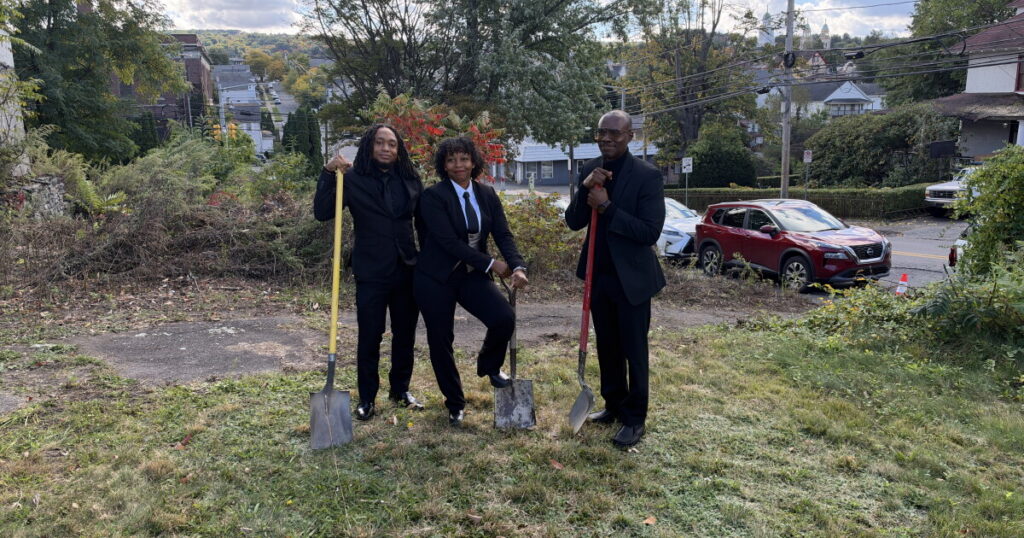
The groundbreaking for the Welby Court Community & Resilience Affordable Housing Project marks a significant step towards providing secure housing. Located on a once-vacant lot in South Scranton, the complex intends to offer more than just shelter. It promises wage-pegged rent, ensuring that housing costs remain affordable regardless of market fluctuations. Utilities, including internet, will also be covered to ease financial burdens on residents.
Designed to accommodate families, the complex will include two buildings with six units each, featuring access to fresh local food, mental health services, and job training. Sarah Helcoski, co-founder of the Willow Foundation, a key partner in the project, emphasized the importance of these resources in creating stable, nurturing environments for residents.
Strategic Location and Sustainable Design
The choice of South Scranton as the project site was strategic. The location is ideal for families, offering proximity to South Scranton Intermediate School and other essential services. The buildings will feature sustainable technologies such as geothermal energy, solar siding, and solar glass, which Rashida Lovely highlights as crucial for energy independence.
The construction will use insulated concrete forms (ICF), which promise faster builds and better insulation. This technology is likened to giant Legos, making the building process efficient and effective.
The project aims not only to provide housing but to serve as a replicable model for similar initiatives in other regions, promoting community resilience and economic stability.

Community Collaboration
The project is supported by several community organizations, including Afree, NEPA Pac, the Willow Foundation, and New Roots. These partners will provide a range of services, particularly aimed at overcoming barriers to basic needs and supporting families in achieving economic mobility.
Helcoski, who has extensive experience in social services, noted the project’s potential to address multiple barriers faced by families, stating, “This project will not only have a lasting impact on each and every family while enrolled, but it has the potential to overcome generational poverty by providing equity through on-site resource navigation and the opportunity to achieve the American dream.”
The project, with a total cost of $6.2 million, is funded through a combination of private donations, state funds, and contributions from the Scranton Area Foundation. Construction is expected to begin in spring, with the first families moving in by February 2028.