Monsoon Activity Promises Temporary Relief Amidst Persistent Drought Conditions
As the U.S. Drought Monitor releases its latest monthly outlook, the forecast reveals a mixed bag for the American Southwest. While areas of the Great Basin and Four Corners region might see relief from drought due to an active monsoon, central and southern Rockies in Colorado and New Mexico are expected to stay dry.
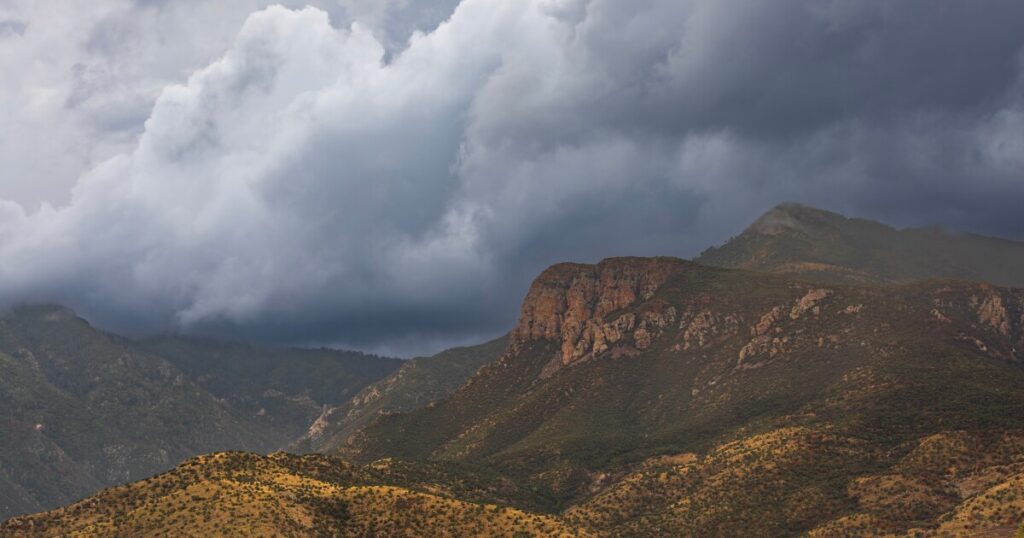
Meteorologist Brad Rippey from the U.S. Department of Agriculture explains that a high-pressure system currently over the Four Corners states is anticipated to move eastward. This shift is likely to usher in tropical moisture flowing through Arizona and Utah into the Great Basin, offering some respite from the drought.
Recent monsoon storms have already shown positive effects in parts of Arizona and the Southwest, enhancing soil moisture and alleviating some short-term drought conditions. However, Dan McEvoy, regional climatologist at the Desert Research Institute and the Western Regional Climate Center, cautions against assuming these improvements signal a recovery for the Colorado River Basin.
McEvoy highlights the distinction between short-term droughts, which can affect rangeland conditions and vegetation health, and long-term droughts, which are critically impacting the Colorado River Basin. “There’s the kind of shorter-term drought conditions that can come and go quicker that affect things like rangeland conditions, soil moisture, vegetation health,” he noted. “Then there’s the long-term drought, which is what’s really the big story in the Colorado River Basin.”
While summer rain may bring temporary agricultural and ecosystem relief, it falls short of replenishing the major reservoirs serving millions in the West. This challenge is compounded by a lackluster snow season in the Colorado River Basin, with below-average snowpack and warm temperatures leading to insufficient runoff into reservoirs.
McEvoy emphasizes that summer rains are more of a temporary measure leading into the next water year, rather than a solution to ongoing water shortages. Additionally, rain raises the possibility of floods and mudslides, particularly in areas affected by wildfires.
Looking forward, attention is gradually shifting towards the upcoming winter. Forecasters are keeping an eye on a strengthening El Niño, which may bring wetter conditions to the Southwest, though snowfall predictions remain uncertain.
This article was crafted by the Mountain West News Bureau, a collaboration among several public media organizations including KUNR, Wyoming Public Media, and NPR, with additional support from affiliate newsrooms across the region. Financial support comes partly from the Corporation for Public Broadcasting and Eric and Wendy Schmidt.