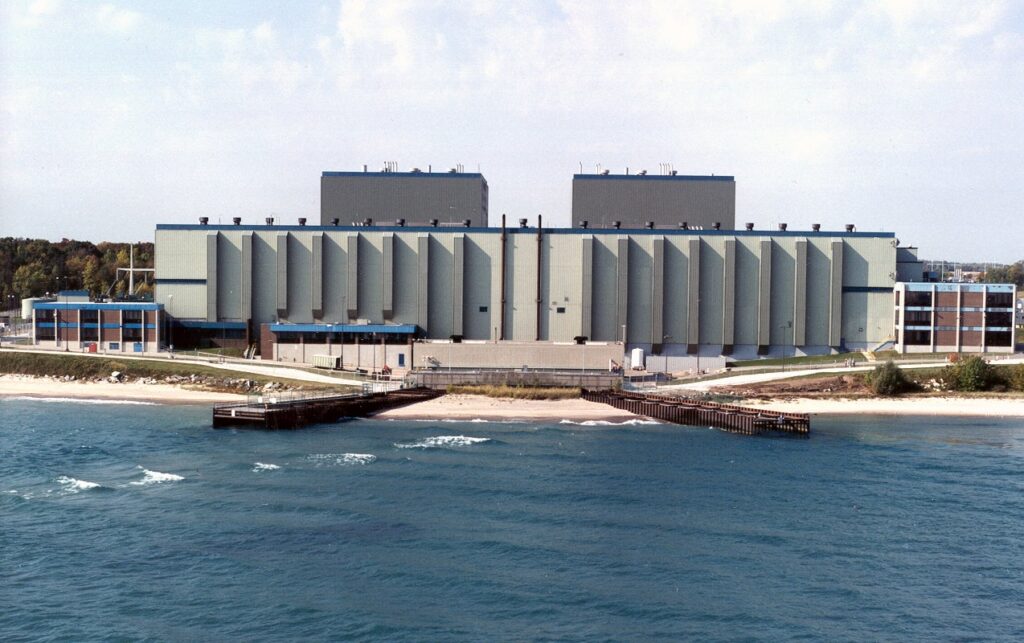
In a bid to secure long-term energy supply, We Energies is poised to extend its commitment to purchasing power from the Point Beach Nuclear Plant in Manitowoc County until 2053. However, consumer advocates voice concerns over the lack of transparency regarding the financial impacts of this agreement on customers.
The utility’s parent company revealed to the U.S. Securities and Exchange Commission that We Energies has entered into a power purchase agreement with NextEra Energy. This deal includes acquiring 86 percent of the power output from Units One and Two at the Point Beach Nuclear Plant.
With a significant surge in energy demand anticipated due to the growth of data centers, We Energies is strategizing to meet this increased need. A state report predicts that electricity demand in Wisconsin could see a more than 40 percent rise by 2032, primarily driven by hyperscale data centers (source).
Pending approval from the Public Service Commission of Wisconsin, the specifics of the agreement remain undisclosed in the SEC filing. Although the filing promises customer savings, critics argue that past agreements have led to escalating costs for We Energies’ clientele.
Tom Content, the executive director of the Citizens Utility Board of Wisconsin, expressed skepticism, stating, “We certainly hope that it’s a much, much better deal than what we’re locked in now. Obviously, we have no details and no information, and the one concern about a 20-year deal like this is it’s always hard to predict the future.”
The proposed extension would ensure We Energies’ acquisition of roughly one gigawatt of nuclear energy capacity beyond the current agreement’s expiration. The existing contracts are set to end in 2030 and 2033, but this new deal would extend Unit One’s energy purchase until 2050 and Unit Two’s until 2053.
Brendan Conway, a spokesperson for We Energies, commented that the agreement assures “around-the-clock reliability for customers” and promises fuel savings compared to the current Point Beach deal. “The agreement also provides long-term price certainty,” he added, noting that the companies aim to seek approval from state regulators this fall.
Currently, We Energies attributes approximately 20 percent of its proposed rate hike for 2027 to its existing contract with Point Beach (source). The company has noted that this agreement leads to “unbalanced cost compared to energy it provides customers,” as the plant covers a third of its capacity needs but consumes two-thirds of its fuel budget in 2027.
Alternatives to this extension were under consideration by We Energies. In a May earnings call, Scott Lauber, CEO of WEC Energy Group, indicated that the costs associated with the agreement were “pretty high,” emphasizing a focus on affordability for customers. Lauber estimated the cost to replace the nuclear plant’s generation at around $2 billion to $2.5 billion, considering options such as gas and renewable energy.
Content from the Citizens Utility Board underscored the longstanding issues with the current Point Beach agreement, noting a significant rise in monthly costs from $45.94 per megawatt-hour in 2016 to $75.51 in 2026 (source), with projections reaching $122.45 by 2033.
Last year, the Point Beach Nuclear Plant secured a license renewal from federal regulators, permitting its operation until 2050 and 2053 for Units One and Two, respectively. Additionally, NextEra secured an agreement to supply nuclear energy to the city of Two Rivers into the 2050s, further integrating its role in local energy supply.
NextEra spokesperson Bill Orlove emphasized the long-term benefits of these agreements, highlighting the provision of “reliable and low-cost energy, quality jobs and continued economic investment” for the community.