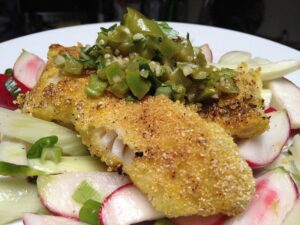
For Madison-based chef Joel Olson, fishing trips with his father are cherished memories. One early morning, before the sun rose, they embarked on Anderson Lake near Marshfield with their canoe. As the day progressed, their basket brimmed with bass, sunfish, and perch.
Recalling that memorable morning, Olson wrote, “It was one of the most memorable breakfasts of my life.” The meal featured canned fried potatoes and Spam, fresh pumpkinseed fillets, fire-toasted bread, and scrambled eggs, a combination he fondly remembers.
Olson, passionate about preparing wild game, shares his expertise through cooking classes and camps. He emphasizes that the journey to a delicious fish dish begins immediately after the catch. Rather than using a cooler, he recommends keeping caught fish in water via a stringer or basket to maintain freshness.
When cleaning the fish, Olson advises removing as many bones as possible, though accepting that some bones will remain is part of the experience. If freezing fish, removing air is crucial, as Olson states, “Air is what destroys stuff in the freezer.” Ensuring an air-free environment helps preserve the fish’s integrity.
Before cooking, whether fresh or thawed, patting fillets dry is essential. To cook, Olson uses a heavy skillet like cast iron and prefers frying in butter. Heating the pan until the water in the butter evaporates ensures the fish doesn’t steam.
He recommends placing the fish skin-side down in the skillet, cooking each side for several minutes, and adjusting based on fillet thickness. Testing a piece for doneness helps ensure the fish is cooked properly, as overcooking is a common issue. Olson reminds his students, “You can’t uncook it, but you can continue cooking it.”
If leftovers remain, reheating them in a pan over low heat is recommended. For new culinary adventures, Olson suggests getting creative with fish recipes, such as pan-seared salmon with wilted spinach and citrus butter or blue gill chips seasoned and deep-fried.
To make a blue gill dip, blanch the fish with vinegar and water, then mix with mayonnaise, sour cream, and optionally, cream cheese. For albondigas de pescado or fish balls, blend the fish with cream and breadcrumbs, steam them in a tomato sauce, and skip the frying part.
Get Creative with How You Serve Fish
If you’re stuck in a routine with the same seafood recipes, Olson offers alternatives to spice things up. Salmon’s versatility allows for dishes like pan-seared salmon with wilted spinach and citrus butter. For panfish like bluegill, Olson suggests blue gill chips or a blue gill dip.
His recipe for blue gill dip involves blanching the fish, then mixing it with mayonnaise and sour cream. For albondigas de pescado, or fish balls, the fish is chopped, mixed with cream and breadcrumbs, and steamed in tomato sauce.
Explore more of Olson’s recipes on his website, including pan-seared trout with creamy corn sauce.