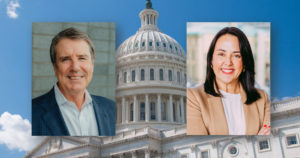
Charles Holmes Poised to Lead U-M School of Public Health as Next Dean
In a move set to shape the future of public health education, Charles Holmes has been recommended to assume the role of dean at the University of Michigan’s School of Public Health. This recommendation awaits the approval of the Board of Regents, slated for June 25, with an expected commencement date of July 1, 2026.
Holmes will succeed Lynda Lisabeth, who has been serving as interim dean since June 16, 2025, following the departure of F. DuBois Bowman. Laurie McCauley, the university’s provost and executive vice president for academic affairs, made the announcement on May 28, highlighting Holmes’ exceptional qualifications and extensive experience.

“Charles Holmes returns to Michigan with a rare view of public health’s full reach, from clinical care and research to national policy and global implementation. He understands that public health efficacy is measured by the strength of the evidence and, crucially, by whether that evidence reaches people, shapes systems and improves lives. That combination of scientific rigor, practical judgment and public purpose will serve the School of Public Health exceptionally well as it builds on its long record of impact.”
Since 2020, Holmes has led Georgetown University’s Center for Innovation in Global Health as its inaugural director, in addition to being a professor of medicine at Georgetown University School of Medicine and a distinguished scholar at the O’Neill Institute for National and Global Health Law. His work has extended beyond academia, offering strategic advice as a senior adviser to the CEO of the Bill & Melinda Gates Medical Research Institute since 2023.
Holmes’ influence in global health is significant, especially in relation to HIV treatment and prevention strategies that have informed both the World Health Organization’s guidelines and national policies. His research and policy initiatives have left a profound impact on global health systems.
Expressing his enthusiasm for the new role, Holmes remarked, “I am deeply honored to return to the University of Michigan School of Public Health as dean.” He credits the university with having a notable influence on his career, as he earned his Master of Public Health in epidemiology and international health there in 1995.
Among Holmes’ notable contributions was his involvement with the U.S. President’s Emergency Plan for AIDS Relief (PEPFAR). In his capacity at the U.S. Department of State, he held positions such as senior technical adviser and chief medical officer, playing a crucial role in shaping the $6.5 billion interagency program’s policies and budgets across over 40 U.S. missions.
Earlier in his career, Holmes made significant strides as the CEO of the Centre for Infectious Disease Research in Zambia (CIDRZ) from 2012 to 2016. Under his leadership, the institute secured over $150 million in new funding and expanded its academic partnerships globally.
Holmes’ academic journey began with a bachelor’s degree in biology from Kalamazoo College in 1993, followed by a medical degree with distinction in biomedical research from Wayne State University School of Medicine in 1999. He completed his internal medicine training and residency at Massachusetts General Hospital and pursued fellowship training in infectious diseases at Harvard-affiliated hospitals.
The University of Michigan’s School of Public Health is currently recognized as one of the top institutions, ranked No. 4 nationally alongside its biostatistics Ph.D. program in the 2026 U.S. News & World Report’s Best Graduate Schools.
Holmes is eager to work with the university community to enhance the school’s impact and support emerging public health leaders. “At a time when public health has never been more important to the well-being of communities in the United States and around the world, I look forward to working with faculty, students, staff, alumni and partners to strengthen the school’s impact, support the next generation of public health leaders, and advance solutions to some of society’s most important health challenges,” Holmes stated.