Renewable Energy Sparks Economic Growth in Rural Areas Amidst Rising Regulations
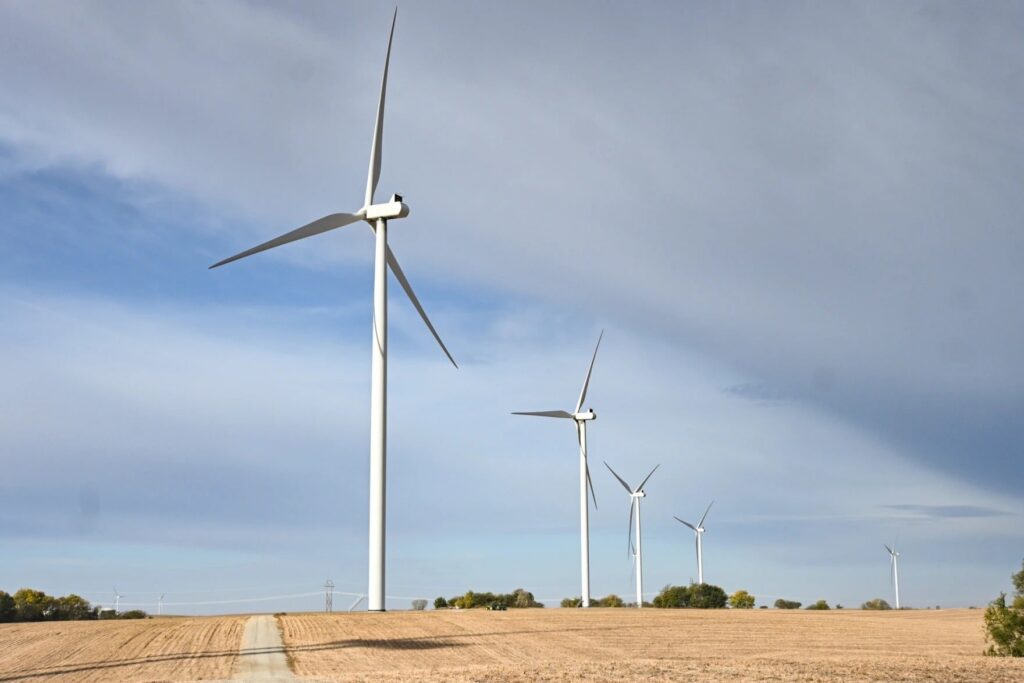
As the landscape of energy production shifts, rural communities are experiencing economic benefits from renewable energy sources. However, an increase in local regulations in Midwestern and Great Plains states is shaping the future of wind and solar energy development.
The diversification of energy sources has seen a significant rise in the use of renewable energy, particularly wind and solar. According to a report by the University of Missouri’s Center for Rural Energy Security, these developments have positively impacted rural economies.
Leading the research, Economist Adrienne Ohler examined economic data from 2001 to 2023, comparing counties with renewable energy infrastructure to those without. The study highlighted that sectors such as utilities, construction, and transportation in counties with solar developments saw employment and wage increases ranging from 10 to 20 percent. Moreover, wind energy projects contributed to a 7 percent rise in GDP.
Ohler, who hails from a rural background, acknowledges the divisive nature of energy developments, citing concerns over property values and agricultural land use. She notes, “Renewable energy isn’t right for every community. There are good reasons to adopt it and good reasons to sort of set up ordinances and permitting that would sort of limit what it would look like in a community.”
Despite the economic positives, Josh Moenning, director of New Power Nebraska, emphasizes the lack of “consequence-free” energy generation. Nevertheless, communities that have embraced renewable energy through reasonable regulations have reaped benefits.
The study found no adverse effects of wind and solar projects on agricultural GDP, employment, or wages, suggesting these renewable projects do not significantly disrupt agricultural activities. In Missouri, wind power accounts for nearly 10 percent of electricity, while solar contributes just over 1 percent. However, legislative efforts to ban or restrict renewable energy reflect ongoing debates.
James Owen, executive director of Renew Missouri, points out that although long-term job creation might be limited, increased tax revenue from these projects can benefit local infrastructures like schools and emergency services. “What’s going to benefit a school district, fire district, ambulance district? Those are the things that I think rural communities certainly do care about, should care about,” Owen said.
Highlighting energy security, Owen stated, “Solar and wind do not go through the Strait of Hormuz. It can be produced right here.” He underscores the importance of domestic energy production for reliable and cost-efficient electricity.
With 70 percent of large-scale solar and 94 percent of wind farms built on cropland, Ohler suggests that local leaders learn from successful communities to implement effective policies and regulations. “For a county or a community to have positive effects, they would need to have similar mechanisms in place, similar policies and regulations in place,” she said.
An analysis by the Center for Rural Affairs showed a 45 percent increase in counties with renewable energy ordinances in Iowa, Minnesota, Nebraska, and South Dakota over the past two years. These regulations often address infrastructure management, plant closure responsibilities, and setback requirements.
Heather Sparks from the Center for Rural Affairs observed that the relationship between counties and developers is evolving with more defined guidelines. Iowa, a pioneer in renewable energy, now generates over 50 percent of its electricity from wind power. According to Jordan Oster of the Iowa Environmental Council, local ordinances are crucial for balancing property rights and community values while facilitating growth in renewable energy.
In some instances, strict regulations are introduced to deter development. Oster notes, “Increasing a setback a quarter mile or a half mile can really just change the economics of a project and really make it infeasible or not a viable location for a developer to build.”
Oster stresses the importance of local ordinances in maintaining a balance between development opportunities and preserving community interests.
Originally reported by Jana Rose Schleis for KBIA. Produced in partnership with Harvest Public Media, a collaboration of public media newsrooms in the Midwest and Great Plains covering food systems, agriculture, and rural issues.