Detroit Students Face Hurdles Despite Free Bus Rides
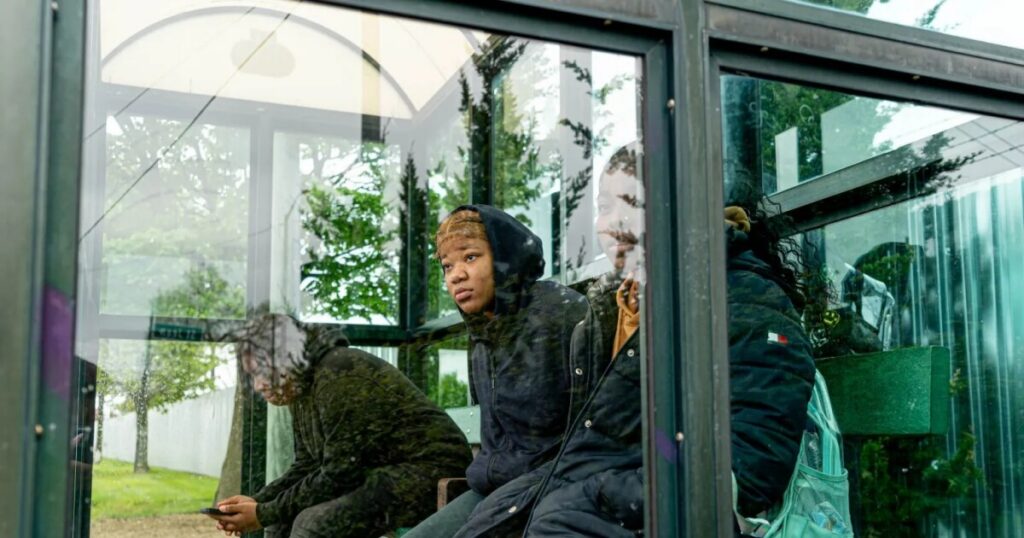
While free bus rides have been introduced for high school students in Detroit, many, like 10th grader Jessica Horton, face lengthy waits after school. The initiative, meant to ease student commutes, is marred by delays and inconvenient scheduling.
Jessica, along with her peers, often waits outside a liquor store on the city’s east side, hoping that the bus will get her home in under an hour. “We get out of school at 3:20 p.m. but we don’t get a bus until 3:55,” said Horton. “We’d have to get out of class before the bell” to catch the earlier 3:27 p.m. bus.
Detroit’s bus schedules frequently clash with school dismissals, and the city’s Department of Transportation reports a system-wide afternoon on-time rate near 70%. As a result, the public transit system, vital for many students, often falls short.
Mayor Mary Sheffield, upon taking office, emphasized better services for the city’s youth, launching a pilot program in April to provide free bus rides to students. Robert Cramer, the city’s transit director, noted that discussions with students at Cody High School also led to efforts to enhance the bus-tracking system.
Yet, despite these initiatives, students still contend with prolonged waits and mismatched bus schedules.
At Southeastern High School, buses often arrive just after classes end, forcing students to either leave early or wait. Earlier this month, reporters from Outlier Media observed a 30-minute wait with students for a subsequent bus.
Cramer recognized the scheduling conflicts and suggested that minor adjustments could address many issues. He anticipates these solutions will be operational by the next school year. “It takes a little bit of time … but if these are adjustments that we can make to reflect (the mayor’s) extra emphasis on educational outcomes and supporting students and their families, this should be a slam dunk.”
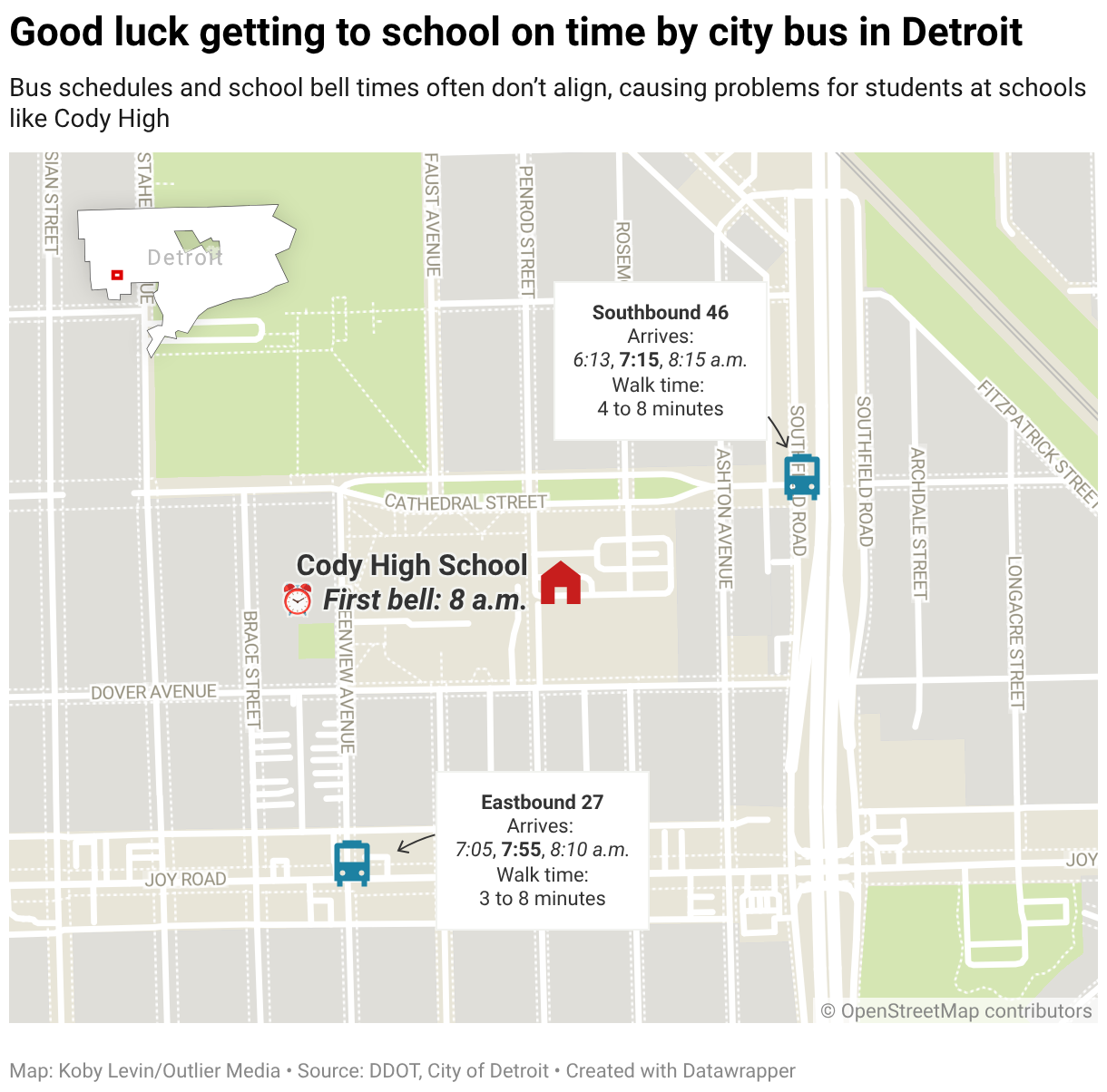
Proposed solutions involve modifying schedules and deploying additional buses on popular routes among students.
Research indicates that unreliable transportation contributes to lower student attendance, disrupting their learning process. A pilot initiative offering yellow bus services at two Detroit high schools demonstrated to district leaders that improved transit options can boost attendance.
Timing Troubles
Detroit high school students, similar to their counterparts in other major U.S. cities, have traditionally relied on public transit. However, the city’s financial struggles in the 2010s led to a reduction in bus services, leaving student-friendly routes and schedules neglected.
An analysis by Outlier Media revealed that over 40% of high schools in the Detroit Public Schools Community District are served by buses with schedules that poorly align with school hours.
In addition to timing issues, bus capacity is another challenge. At Southeastern, students often wait in large numbers, exceeding the capacity of a single city bus. “If they see a whole bunch of kids, they won’t stop for the ones that can’t fit,” said Aaron West, a 9th grader.
Transfers further complicate student commutes, as many students attend schools far from their homes. Poorly synchronized transfers result in long waits for subsequent buses. “If they have to transfer, almost half the time they miss it, and then they have to call an Uber if they want to be on time,” said Lindsey Matson from 482Forward. “And they don’t have Uber money.”
Investigative Approach
The insights in this article stem from an Outlier Media study comparing city bus schedules with high school bell times in Detroit. The analysis, aided by a Python script generated via ChatGPT, examined 23 high schools, excluding charter schools and those with irregular schedules.
Publicly available data for school and bus stop locations were used to identify the closest stops to each school. Bus schedule data was retrieved through a DDOT API, while school bell schedules were sourced from the DPSCD website.
Misalignment was defined as waits of 30 minutes or more before or after school, based on public transit standards. Buses arriving less than six minutes before or after school bells were excluded.
In eight of the 23 schools, buses were scheduled to arrive either too early or too late, often creating long gaps. The analysis did not account for the frequent lateness of DDOT buses, further complicating school commutes.
Editor’s Note: Outlier Media benefits from in-kind access to ChatGPT Enterprise as a grantee of the American Journalism Project.
This article originally appeared on Outlier Media and is shared under a Creative Commons Attribution-NonCommercial-NoDerivatives 4.0 International License.