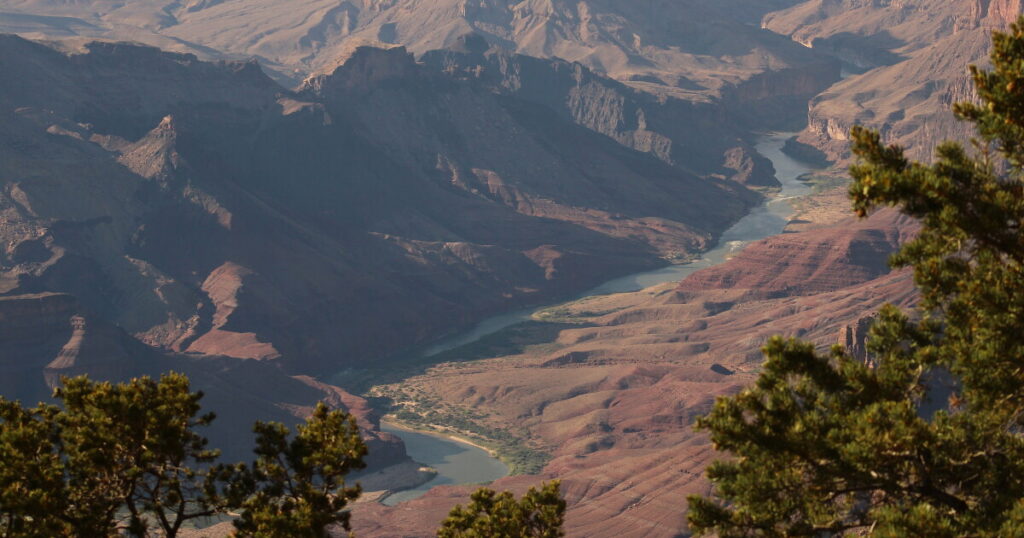
The Colorado River supplies water to roughly 40 million Americans across seven states — and the federal programs meant to protect it have lost more than 70% of their funding in just 18 months. A new independent report puts hard numbers to what many water managers on the ground have already been feeling.
Federal spending on water conservation in the Colorado River Basin dropped from $675 million to $200 million during the first 18 months of the Trump administration, compared to the 18 months before it. That decline — spread across five major programs from the Department of the Interior and the Department of Agriculture — arrives at one of the most critical moments the river has faced in modern history.
About 26 years of dry conditions, worsened by climate change, have pushed the nation’s largest reservoirs to historically low levels. Federal funding has been central to the region’s response, helping farms, cities, and tribes adopt water-saving practices and reduce overall demand on an already-stressed system.
What the Report Found
The new report, published by the independent research groups Prospect Partners and Hawk Eye Strategies, found that voluntary conservation programs took the hardest hit. These programs ask farmers, ranchers, and tribal communities to choose to conserve — and they depend on funding to make participation practical.
Co-author Andrea Delgado explained why the funding cuts create real barriers for the people these programs are designed to serve:
“They work because people choose to take part in them. If less funding is available, it means that these ranchers, these producers, these tribes have fewer choices and funding support available to them, so that they can take on conservation practices on their land.”
The report also flagged a sharp decline in staffing at the Natural Resources Conservation Service. The agency employed 11,817 people at the end of 2024. By the end of 2025, that number had fallen to 9,160 — a loss of more than 2,600 workers who directly support conservation efforts in the field.
Bernie Kluger, a report co-author and former senior adviser to the Secretary of Agriculture under the Biden administration, said those staffing losses have direct consequences for water users across the region:
“We’re seeing fewer farms, we’re seeing fewer ranches in fewer counties participating in these programs. It goes back to the reduction in the number of on-the-ground federal engineers who are going out and working with people hands-on, walking the land and helping them put together their grant applications.”
Contracts Canceled, Money Clawed Back
Kluger said a significant portion of the funding reduction came not from future budget cuts, but from the cancellation of existing agreements — a process known as “deobligation.” In some counties, more money is being pulled out of active contracts than is being committed to new ones.
“We have never seen anything on this scale in the nation’s history, where literally tens of thousands of contracts with farmers, ranchers and small business owners were canceled, and the money was clawed back. We’re actually seeing counties where there’s more money being taken out of existing contracts than being put into new contracts.”
The cuts affect both ends of the river. Federal investments in the Upper Basin states — Colorado, New Mexico, Utah, and Wyoming — declined by 73.3%. In the Lower Basin states of Arizona, California, and Nevada, they dropped by 61.6%.
Why Upstream Cuts Matter Downstream
Most of the Colorado River’s water originates as snowfall in the Rocky Mountains, meaning that conservation work in upstream states like Colorado and Wyoming directly affects how much water reaches Arizona and other downstream communities. Cuts to Upper Basin programs don’t stay local — their effects travel the length of the river.
The Biden administration had previously committed billions of dollars to Colorado River work, with large payments going to farm districts and funding efficiency upgrades for Arizona cities to reduce water demand. That federal investment has now declined sharply.
In response, a broad coalition of businesses and environmental groups has called on the federal government to designate $2 billion in new Colorado River spending, arguing that sustained investment is essential to keeping water flowing to tens of millions of people who depend on the river.