A new legislative development has left Buncombe County officials grappling with budgetary challenges. The recent state tax law and its subsequent amendment have created a financial predicament that may force the county to revisit its financial plans adopted just a month prior.
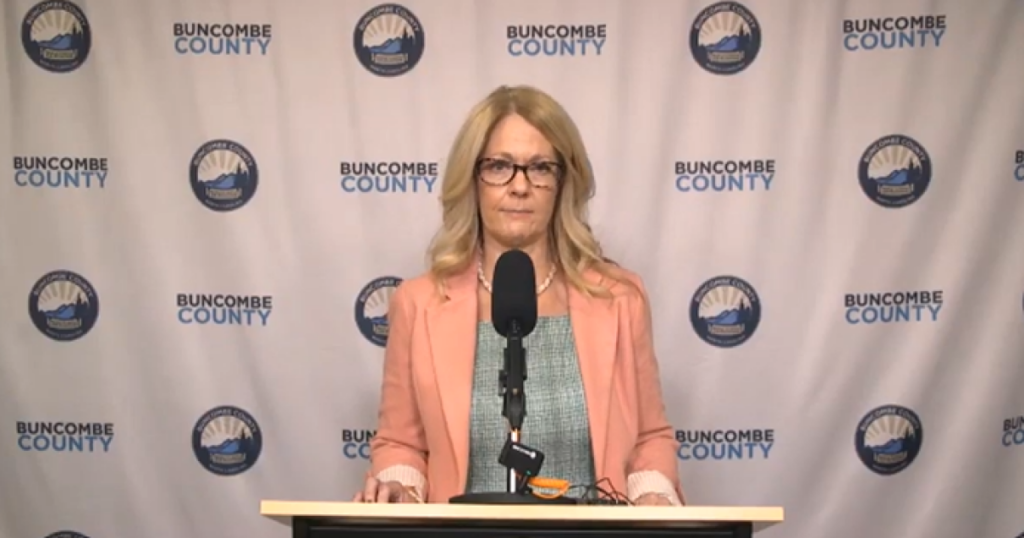
At a briefing held on Thursday, County Manager Avril Pinder outlined the options available to the commissioners: either revert to outdated property assessments or face a reduction of nearly $25 million from the county’s budget. This situation arises after the passage of a law that temporarily halts the use of 2026 property tax reappraisals. The law, effective from July 1, has resulted in potential revenue shortfalls.
Buncombe County Board of Commissioners Chair Amanda Edwards expressed concerns, stating that the state’s decision undermines their efforts to establish a budget based on fairer property values. “This is nothing but bad news for the people of Buncombe County,” Edwards remarked, highlighting the challenges posed by the legislation, which was partly designed to address the underassessment of higher-end properties in the area.
State lawmakers responded to concerns from affected communities, including Buncombe, with Senate Bill 474. This bill potentially allows counties to use their 2026 property values but introduces a condition that could significantly impact county revenue. If Buncombe opts for the new property values, it would have to adopt a revenue-neutral property tax rate of 40 cents per $100 of assessed value, rather than the 43.2-cent rate previously set, leading to a $24.8 million revenue decrease.
Pinder noted that this reduction would negatively affect the services provided to the community. Considering the financial implications, the county is leaning towards following the moratorium and using 2021 property values. This decision would necessitate revisiting the property tax rate to ensure sufficient revenue for the adopted budget.
This shift could also impact the tax rates for Asheville City Schools and unified fire tax districts. Local municipalities, including Montreat, Black Mountain, Weaverville, Woodfin, Biltmore Forest, and Asheville, would also experience changes. Additionally, the county anticipates a loss of approximately $1.8 million in public service utility tax revenue, with municipalities losing around $289,000. This loss is attributed to the state’s standardization of values by the N.C. Department of Revenue.
The ongoing budget uncertainty may delay the issuance of tax bills, potentially pushing their release to September instead of August. Pinder acknowledged the confusion caused by the new legislation, stating, “That’s a resounding yes. Not just confusion for staff, but for our community as well. We’ve had lots of questions around what does that mean? What is a tax rate? What is my bill going to look like?”
Commissioners are set to deliberate on their options in a meeting scheduled for later this month.