Nebraska Voters Express Discontent with Legislative Actions
In Nebraska, a growing frustration among voters is influencing the current election landscape. Citizens are voicing concerns over the Legislature’s tendency to override decisions made through voter initiatives.
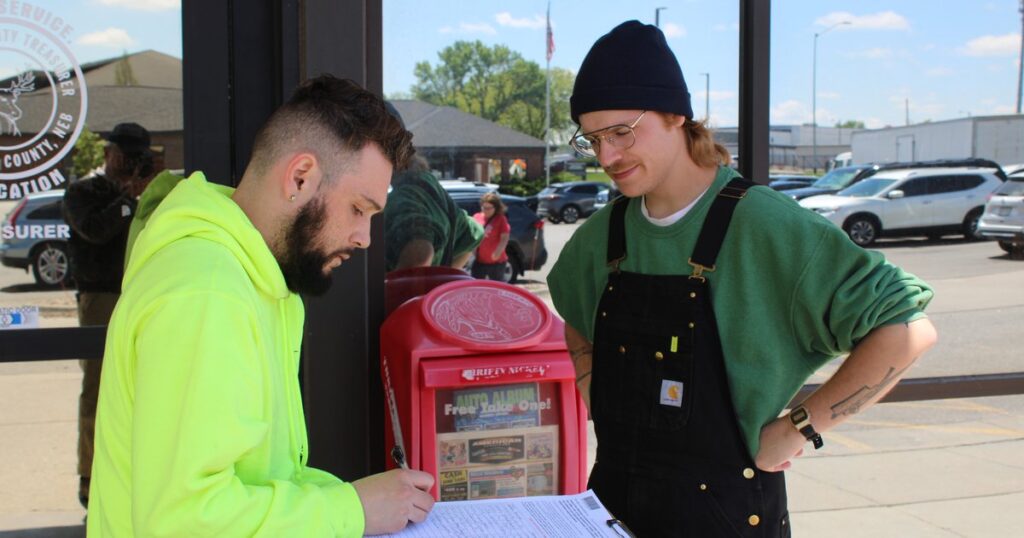
Outside the Lancaster County motor vehicle office, petition circulators are actively seeking signatures to support a new initiative. Cory Jeweler, a paid circulator from Baltimore, approaches passersby with a call to action: “Hi there, sir. Protect voters rights in Nebraska, make it harder for politicians to go against our vote?”
Aidan Mosher, a resident of Lincoln, quickly agrees and signs the petition. This proposed measure aims to increase the legislative vote threshold required to alter a voter-approved initiative from the current two-thirds majority (33 out of 49 senators) to a more stringent four-fifths majority (40 senators).
Mosher expressed his dissatisfaction, stating, “What’s frustrating about all of that, too, is that it’s like, what can you do? Because you get out and vote, something gets passed, and then it’s getting blocked, and so, yeah, I mean, of course it’s aggravating.”
The signature drive reflects a broader sentiment of disapproval towards the Legislature, which could significantly impact the upcoming legislative elections.
This election year sees half of the Legislature’s seats up for grabs, with many incumbents having previously opposed voter-endorsed measures. These include initiatives on medical marijuana, minimum wage adjustments, paid sick leave, and private school scholarships.
For instance, despite voter approval of medical marijuana in 2024, lawmakers rejected an immunity provision intended to protect healthcare providers who recommend the drug. Consequently, Nebraska doctors remain hesitant to provide such recommendations. (See how senators voted on immunity).
Additionally, the Legislature altered a voter-approved mandate from 2022 that tied future minimum wage hikes to inflation. Instead, they imposed a 1.75% cap on annual increases and set a lower minimum wage of $13.50 per hour for younger workers and those in training periods. (See how senators voted on the minimum wage revisions).
Lawmakers also exempted small businesses from a voter-approved requirement for paid sick leave, affecting companies with 10 or fewer employees. (See the vote on sick leave changes).
Moreover, the Legislature made an attempt to temporarily reinstate a private/religious school scholarship program, despite its repeal by voters in a 2024 referendum. (See the cloture vote on the scholarship program).
Arron Kowalski, a Republican candidate for District 34 near Grand Island, highlighted the issue, emphasizing its significance in the current political climate.