Seismic Activity in Western Nevada Sparks Concerns
Recent seismic events in Western Nevada have led to a series of aftershocks, highlighting the region’s complex fault line network. Although Nevada might not face an earthquake as massive as California’s anticipated “Big One,” the area is still prone to significant seismic activity.
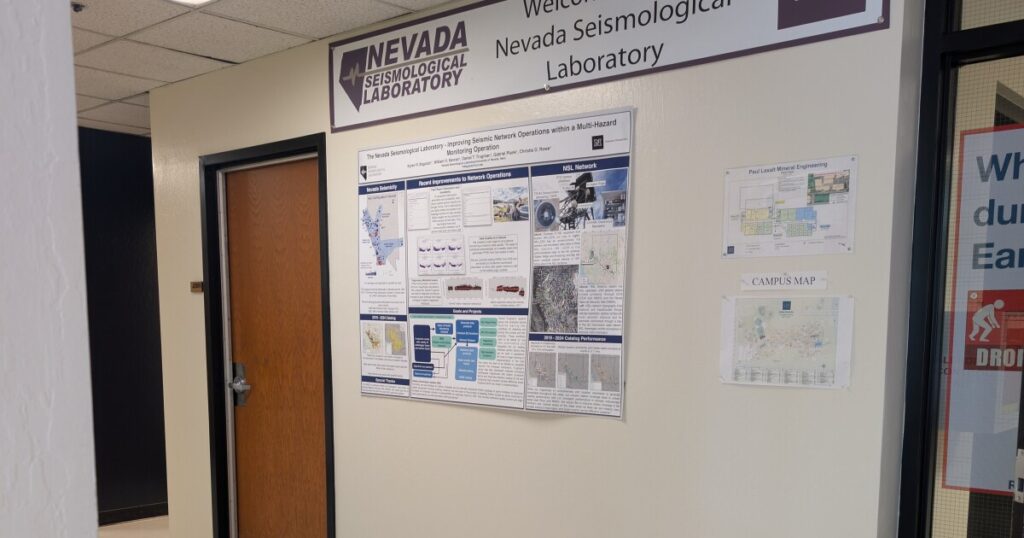
Christy Rowe, Director of the Nevada Seismological Laboratory, explained that while the state is unlikely to experience a magnitude eight quake, events of magnitude six and seven have occurred in the past. “If it happened here in Reno, we would be expecting some pretty significant damage,” Rowe noted, emphasizing the vulnerability of Reno’s historical buildings that weren’t designed to endure large quakes.
The intricate network of fault lines, known as the Walker Line, is a critical factor in understanding Nevada’s seismic behavior. This complexity, combined with limited seismic stations and research, poses challenges in earthquake prediction. “Our faults are linked together,” Rowe stated. “We’re living in a zone that has rotation and stretching in the crust. And this is why we have this complicated web of faults and earthquake patterns.”
Given the unpredictable nature of seismic activity and Nevada’s distinct geographical features, Rowe emphasized the importance of preparedness, akin to wildfire planning. “Set up a plan with your family, a plan with some supplies, and a plan for reunification. Be prepared to gather, shelter in place, know your first aid, and have supplies. It’s the best thing you can do,” she advised.
The aftershocks from the recent earthquake could persist for weeks, and the state is planning to increase the number of seismic stations. These efforts aim to enhance Nevada’s understanding of its seismic environment in the coming years, providing better insights into potential future events.