Nebraska Supreme Court Upholds Remote Work Ban, But Reverses Attorney Fees Decision
In a significant ruling on Friday, the Nebraska Supreme Court upheld a contentious executive order by Governor Jim Pillen, which largely prohibits state employees from working remotely. However, the court reversed a prior decision that penalized the state employee union for challenging the order, pointing to a lack of bad faith in their actions.
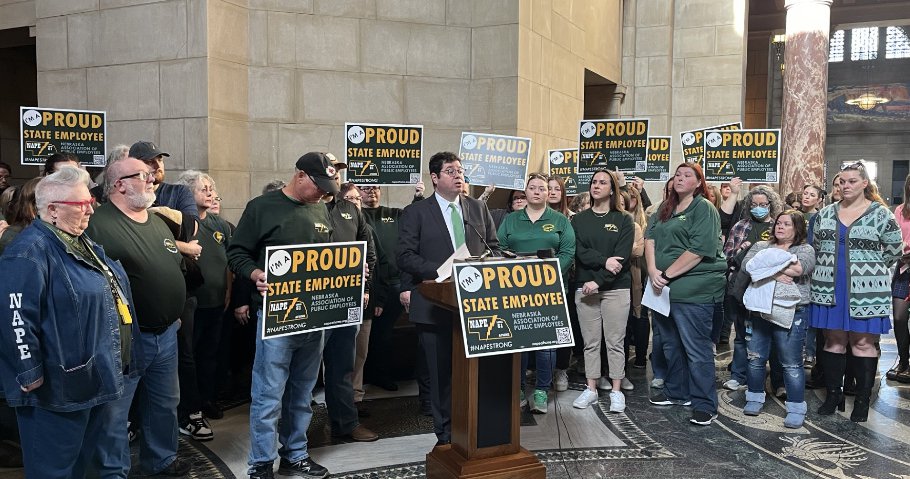
The executive order issued in 2023 mandated that state employees carry out their duties in designated offices, facilities, or field locations, with certain exceptions permitted by agency heads. The Nebraska Association of Public Employees (NAPE) contested this directive, demanding negotiations over the policy. However, the state refused, citing an existing agreement that allowed changes to employee work locations.
NAPE escalated the matter to the Commission on Industrial Relations (CIR), which is tasked with resolving labor disputes in the public sector. The CIR ruled in favor of the state, accusing NAPE of pursuing the case in bad faith and ordered the union to cover the state’s legal expenses amounting to over $42,000. NAPE subsequently appealed against both the CIR’s ruling and the imposed attorney fees.
Justice Jonathan Papik authored the Nebraska Supreme Court’s 22-page decision, which supported the remote work ban by referencing the existing labor contract. According to the court, the contract provided the state with the authority to modify workplace arrangements, thus covering the governor’s executive order.
The situation centered on the “contract coverage rule,” a legal principle adopted by the Nebraska Supreme Court in 2012. This rule allows a party to refrain from bargaining over an issue if it is already covered by the collective bargaining agreement, even if it involves mandatory bargaining subjects like wages or working conditions.
While NAPE asserted that the state was still required to negotiate the implementation of the remote work policy, the court disagreed. “It is more natural, in our view, to interpret an agreement that gives the employer the authority to make a particular decision to also confer the authority to the employer to choose the procedures it will follow in implementing that decision,” Papik noted.
Despite the setback, NAPE’s executive director, Justin Hubly, expressed appreciation for the court’s deliberation and vowed to continue advocating for member rights through the grievance process. “We appreciate the time the court took to hear our case, and we’re proud of our members who stood united to protect their rights,” he stated.
In a twist, the Supreme Court overturned the decision requiring NAPE to pay the attorney fees, acknowledging that the union’s argument was not frivolous. “We have concluded that NAPE’s petition in this matter lacked merit, but we cannot agree that it was so lacking in legal support as to be frivolous,” Papik concluded.