Nebraska Legislature Concludes 2026 Session Amid Budget Challenges and Political Divisions
The 2026 session of the Nebraska Legislature wrapped up on Friday, highlighting a mix of accomplishments and unresolved issues. The session’s conclusion was marked by the upholding of Governor Jim Pillen’s vetoes, despite attempts by some lawmakers to challenge his decisions.
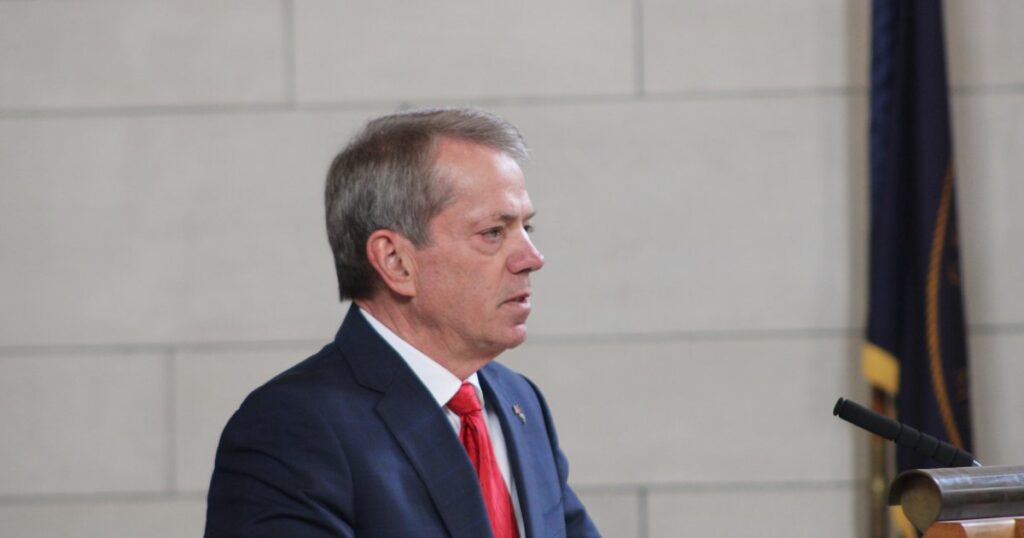
In his address to the senators, Governor Pillen commended their efforts, particularly in managing the state budget. “We passed a fiscally, historically, conservative balanced budget by decreasing spending, by using idle ‘pillowcase’ money and increasing revenue, while we ensured services improved, not cutting them,” Pillen stated, emphasizing fiscal prudence.
However, Sen. Danielle Conrad offered a contrasting view, expressing concerns about the impact on Nebraska’s working families and the representation of voter interests. “I think who really got left out this year were Nebraska’s working families, and the other, I think, significant casualty was upholding the will of the voters in Nebraska,” she remarked.
As lawmakers failed to override the governor’s vetoes, the division in perspectives became apparent. One contentious bill, LB839, aimed to ensure accessible housing through the state’s Affordable Housing Trust Fund. Despite initial support, the attempt to overturn the veto fell short.
Sen. Terrell McKinney, a proponent of LB839, expressed frustration over the legislative dynamics, saying, “It speaks to this biennium, and it speaks to this Legislature, and it speaks to the people who act as if they’re allies and not allies, smile in your face but stab you in the back.”
Sen. Rob Dover, who voted for the bill but opposed the override, explained his rationale: “The core thing of his bill that was good was he was going to have the cities find out how many units were there for the immobile, the hearing- and vision-impaired people. That’s where you start. You don’t just mandate everything across the board.”
Other vetoed bills included those on paid parental leave and emergency expenses, none of which saw successful challenges. In the aftermath, senators reflected on the session’s achievements and shortcomings. For Sen. Kathleen Kauth, balancing the budget was paramount. “Getting the budget figured out was probably the biggest thing,” she commented.
The state’s financial situation was precarious, with projections initially showing a deficit of $471.5 million in the two-year budget cycle. Through a combination of strategies, including tax increases on skill games (LB901) and use of cash reserves, a slight surplus was achieved. However, a $632 million shortfall looms for the next cycle.
Sen. Machaela Cavanaugh criticized the budget approach, arguing it favored wealthy Nebraskans. She pointed to income tax cuts and property tax offsets benefiting large landowners, saying, “We had a budget that did nothing very good for the people of Nebraska, but protected pools of state dollars that go to the wealthiest Nebraskans.”
Notably absent from the final budget was a scholarship program for private and religious school students, despite the governor’s support. However, tax incentives (LB1165) were passed to encourage Union Pacific to keep its headquarters in Omaha.
Legislators approved changes to Medicaid eligibility (LB958) and extended child care subsidies (LB304). They also enacted lower minimum wage rates (LB258) for teens and limited future wage increases.
On social issues, lawmakers had mixed responses. They approved legislation allowing suspensions for young students (LB653) but rejected proposals affecting bathroom access and student retention based on reading proficiency.
The session also addressed infrastructure and safety, passing a bill to enhance security at the Capitol (LB1237) and allowing campaign funds for security costs (LB986). Lawmakers also moved forward with proposals on energy capacity (LB1261) and brand inspections for cattle (LB1187).
Looking ahead, Governor Pillen reiterated his commitment to addressing property taxes, a key issue for his administration. “I believe in 2027, it’s time we come together and solve the problem,” he declared. Meanwhile, Sen. Conrad highlighted the upcoming elections as an opportunity for change, noting the influence of voter sentiment in shaping legislative priorities.