Contentious Amendment Threatens Protections on Millions of Acres of U.S. Forest Land
A recent amendment to a wildfire bill in the U.S. Senate could potentially eliminate protections for vast tracts of roadless national forest areas, including those in Wisconsin. This move has sparked debate over environmental conservation and wildfire prevention strategies.
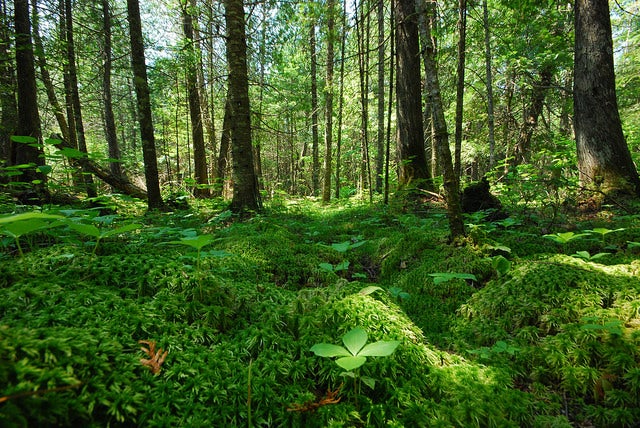
The U.S. Senate Energy and Natural Resources Committee voted narrowly, 11-9, along party lines, to incorporate a Republican-driven amendment to dismantle the “roadless rule” under the Wildfire Prevention Act. This rule, originally enacted in 2001, restricts logging and road construction on nearly 59 million acres of national forest lands, including around 69,000 acres of the Chequamegon-Nicolet National Forest in Wisconsin.
Paul Strong, former forest supervisor of the Chequamegon-Nicolet National Forest, emphasized that most Wisconsin wildfires are human-induced, with 98 percent caused by humans, primarily due to burning debris. He expressed skepticism about the amendment’s impact on wildfire safety, stating, “Even if roads were put into those areas, it wouldn’t be a noticeable change (where people) would say, ‘Yeah, we’ve just reduced fire risk significantly.’ That would almost be laughable.”
Proponents of the roadless rule argue that it aids in safeguarding against invasive species, maintaining air and water quality, and supporting biodiversity. However, amid growing wildfire threats in the West, Utah Republican Sen. Mike Lee criticized the rule, stating it has “wreaked havoc” by limiting land use and increasing wildfire risks.
“The rule restricts access for multiple use on nearly 59 million acres of Forest Service lands,” Lee said, expressing concerns about its economic implications and potential to exacerbate wildfire dangers.
Meanwhile, the U.S. Department of Agriculture is conducting a separate review to assess the necessity of maintaining the rule.
Critics of the amendment, such as Cassie Steiner from the Sierra Club Wisconsin chapter, argue that repealing the rule would not aid wildfire prevention, as most fires occur near roads. In California, the Forest Service found that two-thirds of fires in the southern regions originated along roadways.
“It’s really disappointing to see fake information about how repealing this rule would benefit wildfire prevention. In reality, it just opens our wildest places up for development and extractive industry,” Steiner commented.
A 2020 study by the U.S. Forest Service indicated that the presence or absence of roads has not significantly affected fire prevention, with similar burn rates observed in forests with and without roads since the rule’s implementation.
Some Senate Democrats criticized the inclusion of the roadless rule repeal in the wildfire bill, which aims to address wildfire threats through prescribed burns and forest thinning practices, like those utilized in the Chequamegon-Nicolet National Forest.
Although the number of wildfires in Wisconsin has increased due to factors like droughts and climate change, Strong maintained that significant fires remain infrequent and that removing the roadless rule would not drastically alter wildfire risks.