In a pivotal legal development, Canadian energy company Enbridge can proceed with constructing a new segment of its Line 5 pipeline in northern Wisconsin, with the exception of specific waterways requiring additional permits. This was decided by a Bayfield County judge on Friday, signaling a partial victory for both Enbridge and the opposing Bad River tribe.
While the ruling favors Enbridge’s aim to reroute Line 5 around the Bad River reservation, Judge John Anderson acknowledged the tribe’s concerns by granting a partial win to them and environmental groups seeking further review of state approvals. The Wisconsin Department of Natural Resources had previously issued permits for the project, which an administrative law judge upheld in February.
Legal and Environmental Implications
Judge Anderson, in his recent order, decided not to halt the project entirely, stating, “Enbridge’s permits previously granted are stayed only in relation to work areas along Line 5 for which Enbridge is required to obtain additional permits.” The tribe and environmental advocates argued that Enbridge lacked eligibility for certain permits due to not owning adjacent land, a point the judge noted could be on “tenuous legal footing.”
Bad River Tribal Chairwoman Elizabeth Arbuckle expressed satisfaction with the halting of some construction activities, emphasizing the tribe’s commitment to preserving clean water and a healthy environment. Arbuckle hopes the court will maintain the stay and consider their concerns comprehensively.
Project Progress and Challenges
Enbridge spokesperson Juli Kellner praised the decision, highlighting its importance for continuing their work on Line 5, which supplies vital fuel to Midwest refineries. Kellner noted the extensive four-year review process by the Wisconsin Department of Natural Resources and the subsequent federal approval by the U.S. Army Corps of Engineers.
Despite the green light for certain construction activities, Enbridge is restricted from proceeding with permanent bank stabilization in four creeks, pending necessary permits due to potential erosion and water quality concerns. The 41-mile reroute aims to circumvent the Bad River reservation, impacting close to 200 waterways and approximately 100 acres of wetlands in Ashland and Iron counties.
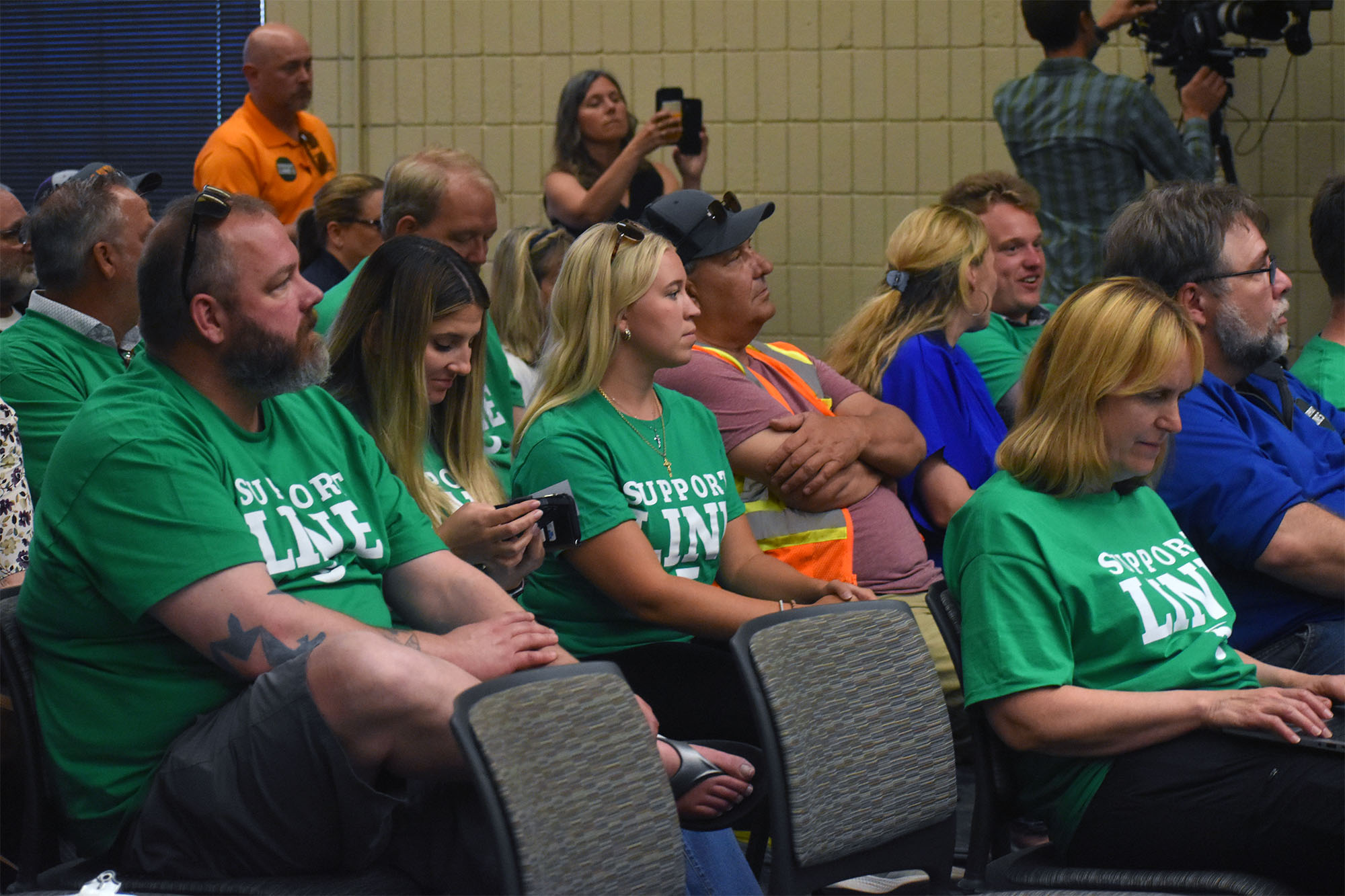
The $450 million project has been a focal point of extensive scrutiny, protests, and legal contention. Advocates emphasize its economic benefits, including the creation of 700 union jobs and a $135 million boost to Wisconsin’s economy. Conversely, critics highlight past oil spills, such as the 70,000-gallon spill in Jefferson County in 2024, as reasons for concern.
In a related case, U.S. District Court Judge William Conley ordered Enbridge to cease operations of Line 5 on tribal lands by mid-June, while imposing a $5.15 million fine for trespassing. This order is currently on hold pending a federal appeals court decision, as an immediate shutdown could have significant repercussions.