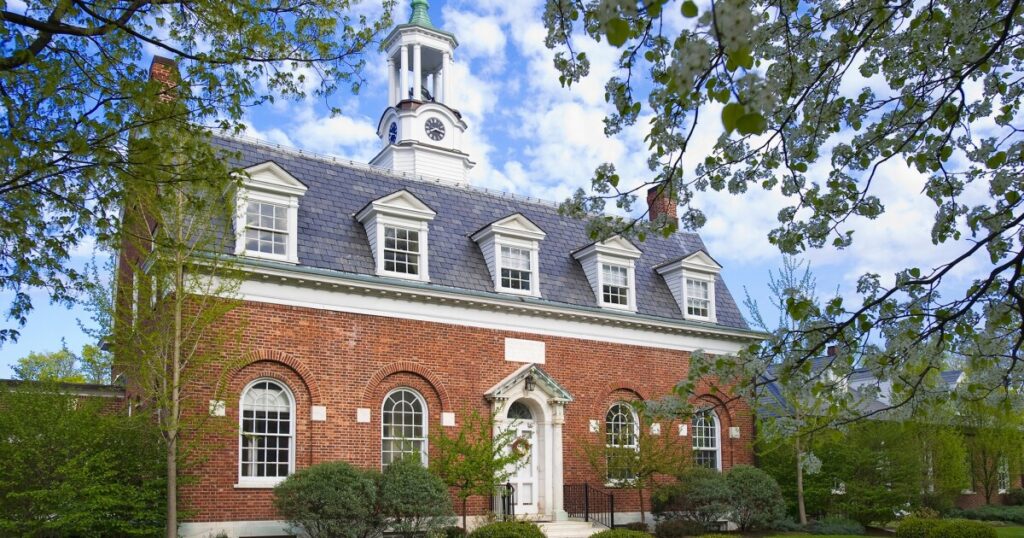
Waverly Township is on the brink of a significant zoning change that could alter the landscape for religious institutions. This Thursday, the township supervisors will consider a proposal to expand the areas where places of worship can exist and simplify their expansion process.
The proposed amendment aims to introduce a definition for the federal Religious Land Use and Institutionalized Persons Act of 2000 (RLUIPA), a move that has sparked a call for caution from local residents.
The Concerned Residents of Waverly group is urging community members to attend the hearing, expressing concerns over the proposal. “The Township Board of Supervisors and their advisors have gotten into a state of panic about being sued and have overcompensated,” the group claimed in a statement. They fear that the changes might lower zoning standards unnecessarily.
In addition to redefining the classification of places of worship, the amendment proposes changes to use categories involving oil and gas extraction, and the removal of supplemental requirements for places of worship. This would effectively permit such uses across all zoning districts.
The township is currently facing a zoning dispute. Last December, the Chabad of the Abingtons received a permit from Zoning Officer Christina Capozzi to construct 12 cabins for religious retreats on its expansive property at 216 Miller Road. Neighbors Terrence and Margaret Neville are challenging this permit.
Proposed Zoning Adjustments
The township supervisors, including Chair Cheryl Lynn Murnin, Vice Chair Drew Christian, and Eric Parry, will allocate an hour to public feedback before potentially voting on these zoning amendments.
One significant change involves reclassifying places of worship from requiring a special exception to being a use permitted by right. According to the Pennsylvania Department of Community and Economic Development (DCED), “A use permitted by right is a use expressly permitted in a zoning ordinance for which the zoning officer has authority to determine conformance with ordinance requirements and approve and issue a zoning permit.”
Conversely, oil and gas extraction would move from being a right to requiring a special exception, necessitating a hearing and decision by the zoning board or governing body.
Federal Protections for Religious Institutions
The First Amendment of the U.S. Constitution safeguards religious institutions, stating, “Congress shall make no law respecting an establishment of religion or prohibiting the free exercise thereof.”
RLUIPA, enacted in 2000, aims to protect religious institutions from burdensome zoning laws, as noted by the U.S. Department of Justice (DOJ). The DOJ highlights that if a church, for instance, requests a permit for a necessary addition, denial requires the municipality to demonstrate a compelling rationale.
The hearing begins at 6 p.m., followed by the special meeting of the Board of Supervisors at 7:30 p.m., at the Waverly Community House, 1115 North Abington, Waverly Twp.