Faced with the upheaval of a long-term marriage ending, Anthony Weekes found himself displaced from his home in Fredericksburg, Virginia. With nowhere else to turn, he heeded his grandfather’s long-standing advice: “If I ever got in a pinch to come to Scranton and Scranton would take care of me,” Weekes shared.
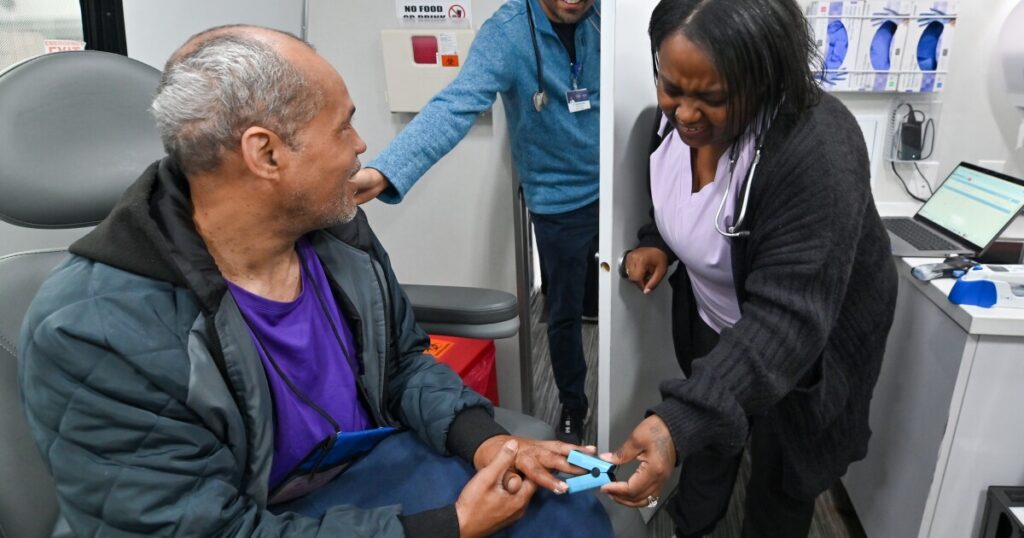
Since his arrival in Scranton on May 4, Weekes has struggled with housing insecurity. However, through the Community Intervention Center, he accessed various resources, including medical care from The Wright Center’s mobile street medicine clinic.
“I don’t want to be homeless, and I need my medicine, and I need to be taken care of. We’re seeing what Scranton has,” Weekes expressed.
The “Driving Better Health” van, operating as a mobile clinic, provides crucial medical care directly to individuals in need. It currently parks at the Community Intervention Center every Monday and Friday from 9-11 a.m.
The Initiative of Street Medicine
Commencing in January, The Wright Center’s street medicine initiative has extended care to approximately 380 individuals, as per Dr. Doug Klamp, the project director. “Street medicine is reaching out to predominantly homeless people where they are because a lot of people that are homeless have a hard time getting to clinics for a variety of reasons,” Klamp explained. He highlighted challenges such as transportation costs and mobility issues that often prevent homeless people from accessing medical care.
Through this program, medical professionals offer services comparable to those in a traditional clinic, including blood tests, vaccinations, and referrals to specialists. The initiative is supported by a federal grant, with additional funding from All One Foundation & Charities, which contributed $300,000 in 2021.
CEO John Cosgrove emphasized the project’s alignment with All One’s mission to “measurably improve the health and wellness of the people of Northeastern and Northcentral Pennsylvania.”
Meeting Basic Human Needs
The mobile clinic serves anyone, regardless of their insurance status or financial capability. As a federally qualified health center lookalike, The Wright Center is committed to providing care to all, including those without insurance. Dr. Klamp noted, “We have a sliding scale fee for people below the poverty level. We don’t charge them anything.”
The Community Intervention Center, where the clinic regularly parks, supports individuals facing addiction, mental health issues, or homelessness. Michelle Matyjevich, a long-time employee, appreciates the trust the mobile clinic has built with clients by providing care in a familiar and accessible location.
Dr. Tejas Nikumbh, part of the street medicine team, remarked, “You have to come to the streets, talk to them, know their issues and provide solutions to that.”
Success Stories and Future Plans
Weekes, who recently visited the mobile clinic, is optimistic about his future health care. He appreciates the thorough care he has received and looks forward to ongoing treatment. “I’ve had a good experience so far,” Weekes noted as he reflected on his path to securing necessary medical attention.
Dr. Klamp shared success stories of individuals who, through the clinic’s interventions, have been able to resume work and regain stability. Despite misconceptions about homelessness and health issues, the clinic has demonstrated significant positive outcomes for many.
Looking ahead, the clinic aims to expand its reach by hiring additional staff. “Once we are fully functional, we will be going out every day to a wider variety of locations,” said Klamp.
For Weekes, the support from the clinic is a step toward regaining stability. “This place is getting me other access to resources,” he shared, hopeful for what the future holds.