As Pennsylvania’s legislative deadline looms, a pivotal court ruling has sparked debate on the future of sentencing in second-degree murder cases. The state’s Supreme Court decision to overturn mandatory life sentences without parole for second-degree felony murder has left many uncertain, including Brittany Boote, whose father was murdered eight years ago.
“We are completely indebted to them and their hard work within the justice system doing everything they can to make sure that we were protected and honored and represented,” Boote expressed, referencing the prosecutors who secured prison terms for her father’s killers.
One of the convicted, Louisa Alexandria Reyes, who admitted to second-degree murder, received a life sentence. However, the recent court ruling might alter this. The ruling deemed automatic life sentences unconstitutional, urging the state legislature to devise a legislative remedy by Friday.
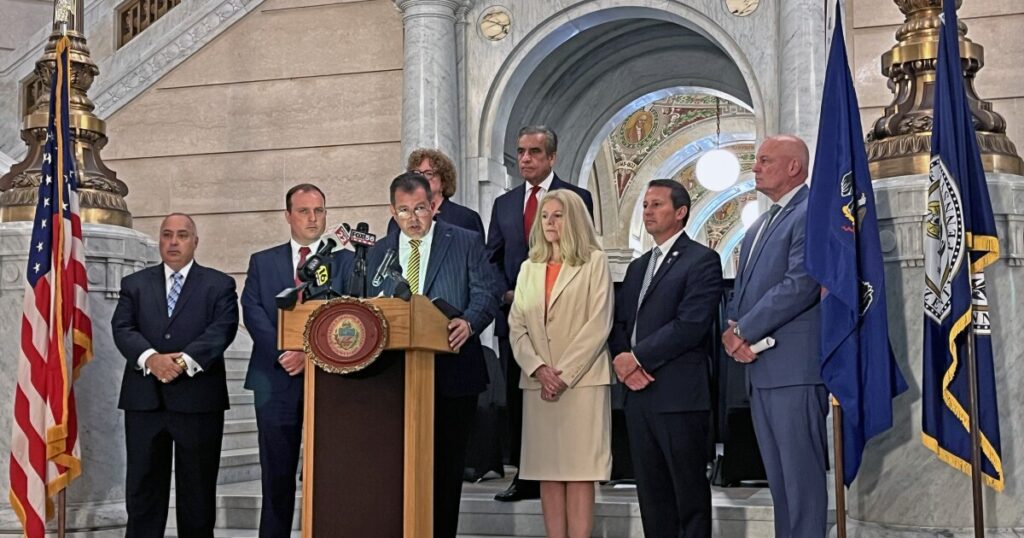
While the Senate has already passed a bill addressing the issue, the House had yet to act by Tuesday afternoon. This delay has prompted survivors, district attorneys, and lawmakers from Northeast Pennsylvania to call for swift legislative action at the Luzerne County Courthouse.
The Scope of the Ruling
Pennsylvania’s high court’s decision affects more than 1,000 cases across the state. The ruling in Commonwealth v. Lee highlighted the need for assessments of individual culpability rather than imposing blanket life sentences. This decision, stemming from a 2014 Pittsburgh case, marks a shift in how justice is administered in second-degree murder convictions.
Senate Bill 1400: A Proposed Solution
The Senate’s proposed bill, championed by State Sen. Lisa Baker, seeks to introduce a more nuanced sentencing framework. It includes new sentencing guidelines ranging from 35 years to life, with parole possibilities, considering each defendant’s role in the crime. Cases with minimal culpability could see sentences as short as 10 years, while life without parole remains an option for more severe cases.
Additionally, for those already serving, the bill proposes parole eligibility after 35 years or upon reaching 70 years of age after serving 20 years.
Awaiting the House’s Decision
The urgency now lies with the House, as emphasized by State Rep. Brenda Pugh. “We just need to get it out of committee and onto the floor,” she stated, indicating her readiness to expedite the process. However, as of Tuesday afternoon, no progress had been reported.
Prosecutors Call for Immediate Action
District Attorney Sam Sanguedolce, alongside other prosecutors, has voiced concerns about the potential repercussions of the ruling. He noted that re-evaluating over 1,100 cases would demand significant resources from prosecutors’ offices. The focus is on ensuring that severe offenders, like those involved in Brittany Boote’s father’s case, serve appropriate sentences.
Sanguedolce stressed that the legislative response should not undermine the severity of violent crimes. “I think we’re looking for a reasonable guarantee that they’re going to spend the majority of their adult life in prison,” he asserted, aligning with Boote’s concerns for victims’ families.