In a world where media consumption habits are rapidly changing, PBS President Paula Kerger’s recent visit to WVIA in Jenkins Township highlighted the enduring relevance of public broadcasting. Although the landscape is shifting, Kerger’s commitment to community-focused content remains steadfast, as evidenced by her interactions with viewers and staff at the station.
During her visit, Kerger shared an anecdote about a hotel employee in Scranton who mistakenly thought PBS had ceased operations. Kerger reassured her, replying, “No, we’re still here and thanks to viewers like you.” This interaction underscores the challenges public broadcasters face in maintaining visibility amid evolving media platforms.
Adapting to Change
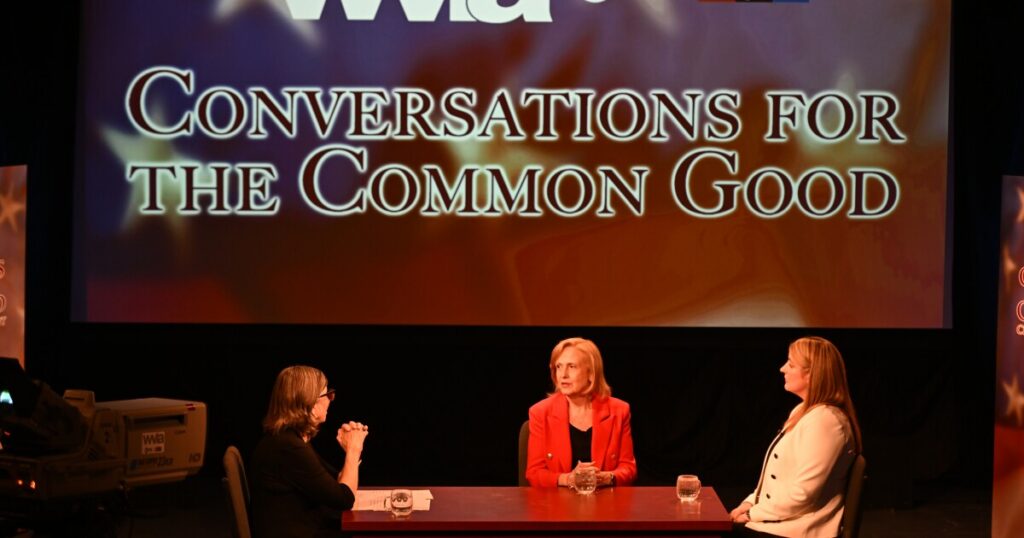
Kerger’s visit was part of a panel discussion for WVIA’s Conversation for the Common Good, where she explored the future of public broadcasting with WVIA President and CEO Carla McCabe and Pulitzer Prize-winning journalist Anna Quindlen. Kerger emphasized the importance of public interest in guiding PBS’s mission, stating, “I believe it is these moments when we’ve had to look very carefully at who we are and what we do.”
Despite losing significant federal funding—$1.1 billion in advance funding for the Corporation for Public Broadcasting (CPB)—public support for stations like WVIA is on the rise. “And of those, 60% are people that are giving every month as sustainers,” Kerger noted, highlighting the robust community backing that has buoyed the station despite financial setbacks.
Legacy and Community Focus
The Public Broadcasting Act of 1967, signed by President Lyndon B. Johnson, aimed to “enrich man’s spirit” by providing educational content through radio and television. Today, WVIA continues this mission, focusing on local content that reflects the 22 counties it serves. McCabe remarked, “The public, the communities are at the center of everything that we do.”
Kerger and McCabe both acknowledged the confusion surrounding PBS funding, with many believing it was fully government-supported. The recent defunding served as a “wake-up call,” prompting increased viewer contributions. “We need to let the community know that we won’t exist without their support,” McCabe stated.
Looking to the Future
Quindlen posed a critical question about what sets public media apart from platforms like YouTube and Netflix. Kerger responded, “We start every day just really thinking about how can we serve the public.” Unlike subscription-based services, PBS offers free access to its content, aiming to educate and inspire without financial barriers.
As digital platforms reshape content delivery, Kerger sees opportunities to innovate, particularly in short-form storytelling. McCabe echoed this sentiment, focusing on digital-first content and strong partnerships to expand WVIA’s reach. “I think it’s an opportunity now for us to really come together and rethink what public media can look like,” she said.
Both leaders remain committed to preserving local journalism and productions. “We’re going to lose the local if we lose our people,” McCabe warned, emphasizing the importance of retaining talent.
Ultimately, Kerger reinforced the community-driven ethos of public broadcasting: “This station exists because it is here to serve the community, and this is what we have to make sure that we’re supporting more than anything else.”