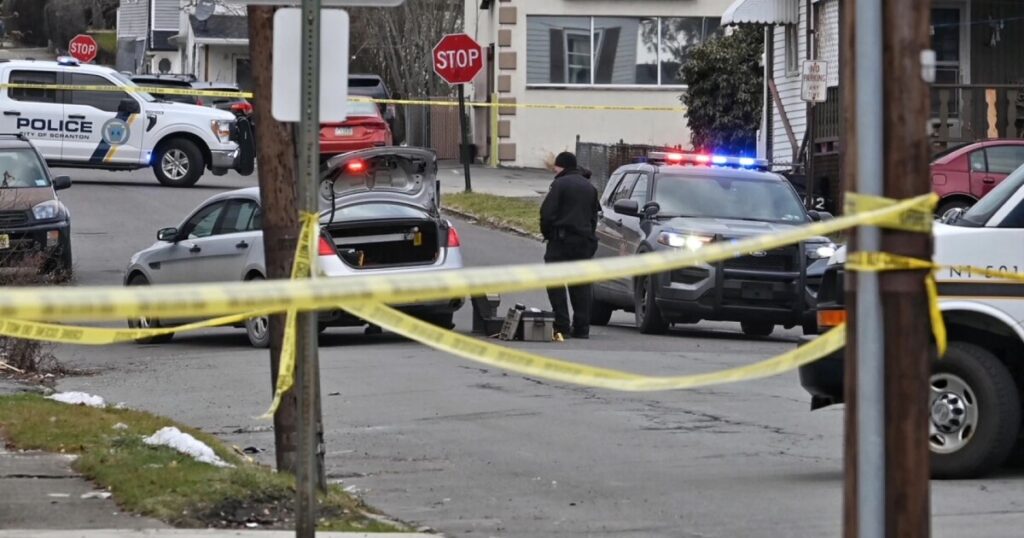
In a significant legal outcome, two men have been handed lengthy prison sentences for their roles in the attempted murder of Scranton Police Detective Kyle Gilmartin. The incident, which occurred in early 2024, has spurred legislative discussions on the penalties for crimes against law enforcement officers.
State Senator Lisa Baker was taken aback by the possibility that Aiden Deininger and Jeremiah Cleveland might have faced as little as seven years for their involvement in the ambush of Det. Gilmartin. “I was stunned,” remarked Baker (R-Luzerne).
Encouraged by discussions with Lackawanna County District Attorney Brian Gallagher, a Democrat, Baker introduced Senate Bill 1284. The bill, which aims to increase penalties for attempted murder of police officers, recently passed the Senate Judiciary Committee and awaits full Senate consideration. The proposed legislation mandates a minimum of 20 years for crimes involving attempts to murder law enforcement officers resulting in serious injury, with a maximum sentence extending to life imprisonment.
The Shooting Incident
On January 11, 2024, three Scranton Police Department investigators encountered a dangerous situation as Cleveland live-streamed himself with Deininger, driving through the city. Cleveland fired shots into residences, threatening individuals he believed to be rival gang members.
In West Scranton, Gilmartin, Deputy Chief Joseph Lafferty, and Detective Jason Hyler spotted Deininger, identified by his distinct red attire. According to Lafferty’s testimony, when they approached Deininger, he opened fire with a gun belonging to his mother, hitting their vehicle five times.

Gilmartin sustained two gunshot wounds to the head, but Lafferty managed to return fire, injuring Deininger. Gilmartin’s injuries were severe, requiring part of his skull to be removed, and he continues to live with a bullet lodged in his head. His wife, Lindsay, has described the challenges he faced in relearning basic skills during recovery.
In late 2024, both suspects confessed in court to their crimes. Deininger faced numerous charges, including attempted murder of a police officer, while Cleveland admitted to charges related to aggravated assault.
Lackawanna County Judge Michael J. Barrasse sentenced Deininger to 25 to 83 years and Cleveland to 20 to 43 years in prison.

Debate on Sentencing Laws
The sentences were considerably harsher than what the defendants might have originally faced. However, District Attorney Gallagher believes the current law is still insufficient. “Ultimately [we] put on as much evidence as we can to try to get the best sentence we can. I think we did that,” he stated.
Gallagher and Baker agree that the law should more appropriately reflect the severity of attempted murder of law enforcement officers. Senate Bill 1284 seeks to address perceived disparities in sentencing, where attempted murder does not carry a mandatory minimum sentence, unlike assault of an officer.
Baker and State Sen. Rosemary Brown emphasize the need for legal reforms to ensure adequate penalties for violent acts against police officers.
The proposal coincides with wider discussions on sentencing laws in Pennsylvania. Recently, the state’s Supreme Court ruled automatic life sentences without parole for second-degree murder unconstitutional, prompting legislative reviews.
District Attorney Gallagher noted the ongoing debates regarding mandatory minimums, acknowledging some benefits in revising outdated laws. However, he views the proposed legislation as a necessary response to specific criminal intents.
Legislative Outlook
The question remains whether lawmakers will endorse the bill. Currently, only Republican senators have shown support for Baker’s proposal. District Attorney Gallagher is hopeful that bipartisan consensus can be reached, emphasizing public safety and respect for law enforcement.
State Sen. Marty Flynn (D-Lackawanna) expressed support, suggesting the bill could act as a deterrent. However, he also acknowledged potential opposition from civil rights groups wary of increased mandatory minimums.
Baker has engaged with law enforcement associations to gather backing for the bill, highlighting concerns from officers involved in the 2024 incident. “The current law didn’t make any sense to me when the DA brought it to me,” she said, underscoring the importance of addressing these legal gaps.