Efforts to rejuvenate Greensboro’s Bingham Park are taking center stage as the North Carolina Department of Environmental Quality recently hosted a public hearing to discuss the cleanup of the historic site. This 12-acre land, originally a pre-regulatory landfill a century ago, was transformed into a community park in the 1970s, and now its restoration is garnering significant attention.
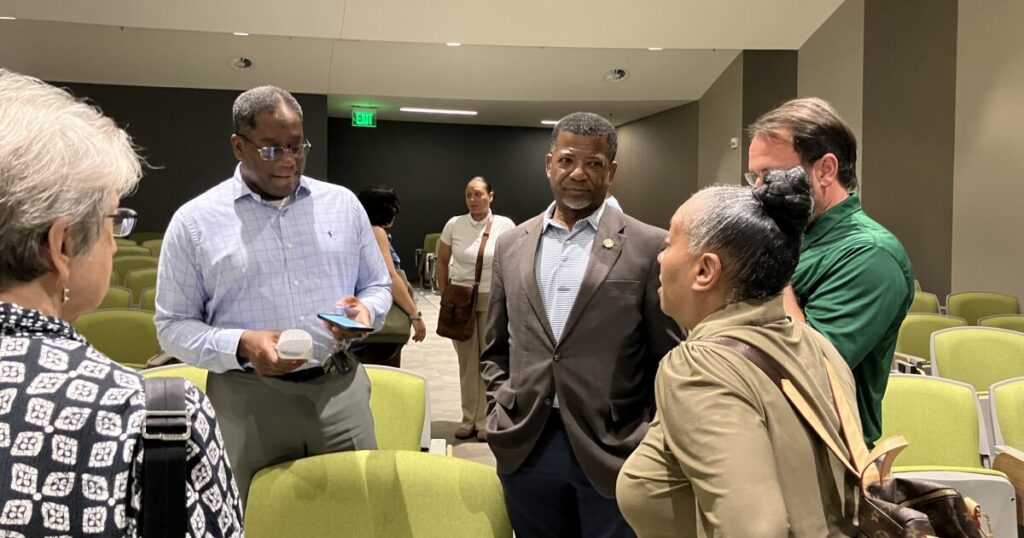
Richard Lovett, Greensboro’s Environmental Compliance Support Manager, outlined the initial phase of the cleanup plan in an information session preceding the hearing. The process involves relocating contaminated soil from the former Hampton School site and a nearby creek to a designated landfill in Asheboro. Following this, the remaining areas will be excavated, consolidated, and capped, with the ultimate aim of transferring all contaminated soil to regulated landfills.
This approach marks a departure from an earlier plan proposed by the city council in October 2024, which suggested merely capping and covering the park. Although this earlier proposal was more cost-effective, priced at $12 million, it faced criticism due to environmental concerns and community opposition.
At-Large City Councilmember Hugh Holston expressed his support for comprehensive remediation, emphasizing the financial challenges involved. “That’s why you’re seeing phases — there are going to be up to five phases,” he stated. “First phase, $17 million. The other phase is somewhere between six and $10 million, depending upon cost and supply chain, all that. That’s what gets you up to the $40 to $50 million estimate to do it all. Don’t have it all right now, but we do have phases one and two ready to go.”
Funding for this project comes from a combination of state, NCDEQ, city, and federal resources. Holston highlighted the necessity of local support, including contributions from both commercial and individual entities, to ensure the project’s success. The cleanup activities are scheduled from 7 a.m. to 6 p.m., involving up to 50 trucks daily navigating through residential streets.
During the hearing, community members advocated for increased involvement in the decision-making process and demanded guarantees that all toxic materials would be addressed. They urged for the Remedial Action Plan to incorporate additional health and environmental protections during and after the cleanup. The timeline has also been a point of contention, as former Greensboro Mayor Keith Holliday voiced concerns about the protracted process.
“I live right beside one of the nicer parks in Greensboro — Bicentennial Gardens,” Holliday remarked. “If this issue had occurred there in western Greensboro area, there would be no doubt as to what the result would have been years ago, to clean it up instead of encapsulating it and walking away from it.”
The city council is expected to approve revised bid packages for contractors by August, with surveying anticipated to commence in the fall. Phase 1 of the cleanup is projected to conclude by the spring of 2028.