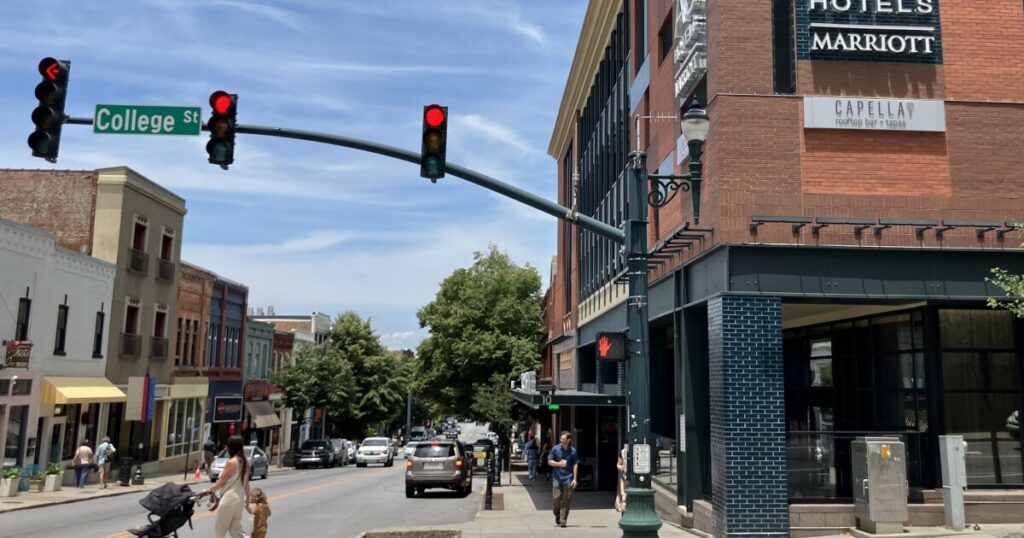
Amidst the scenic backdrop of Asheville and Buncombe County, a debate has been brewing over the allocation of tourism revenue. This discussion might soon find resolution as Senate Bill 484 advances in the North Carolina General Assembly, proposing significant restrictions on how these funds are utilized.
The state House has already approved the bill, and it now awaits further action in the state Senate. Should it pass, local governments would face new boundaries on spending occupancy tax revenues, traditionally collected from visitors staying in local accommodations.
Senator Julie Mayfield expressed concern, stating, “Here in Asheville, of course, my firm belief is that we need to support the hospitality industry by helping to staff it, and doing that by helping to create housing that is affordable to hospitality staff. But this legislation slams the door on that pretty hard.”
A Shift in Spending Priorities
The core of the issue lies in defining “tourism-related expenditures.” Historically, local governments have interpreted this term to include direct tourism events and attractions. However, places like Currituck County have expanded this interpretation to include public services impacted by tourism, sparking statewide discussions.
In 2019, Currituck County faced a lawsuit for allocating occupancy tax revenue to public safety services. The North Carolina Supreme Court recently ruled in favor of the county, prompting legislative action to refine spending limitations.
The proposed legislation would restrict the use of these funds for services like waste collection and public safety unless explicitly allowed by local laws.
Local Control vs. Statewide Standards
According to Chris McLaughlin, a UNC School of Government professor, the debate underscores a struggle for local control over revenue use. “It’s really a debate about local control,” McLaughlin noted, emphasizing residents’ preference for flexibility in addressing community needs driven by tourism.
Despite overwhelming support in the state House, Buncombe County representatives Lindsey Prather and Brian Turner opposed the bill, arguing it limits local adaptability. Prather stated, “Every county in North Carolina is different. Every county’s relationship with tourism in North Carolina is different.”
The bill’s uncertain future in the Senate leaves room for further discussion. Mayfield highlights the need for a broader conversation within the tourism industry to reassess the allocation of these funds.
Buncombe County’s Tourism Development Authority forecasts substantial occupancy tax revenue, suggesting potential for strategic reallocation. However, Mayfield points out, “There does come a point in my mind when the revenue is so large that it makes sense to transition some of those dollars that are currently used for advertising to other uses that still support the hospitality industry very directly.”
As the legislation progresses, local authorities remain vigilant. Asheville city spokesperson Kim Miller and the Buncombe County Tourism Development Authority both confirmed they are closely monitoring the bill’s impact.