New Developments Revitalize French Broad River Recreation Post-Hurricane Helene
In the aftermath of Hurricane Helene’s destruction of western North Carolina’s waterways, exciting new recreation projects are being rolled out along the French Broad River, aiming to rejuvenate the region’s natural allure.
Recent enhancements are being made on the French Broad Paddle Trail, a sprawling 146-mile corridor of campsites and public river access points that bridge Rosman, North Carolina, with Newport, Tennessee.
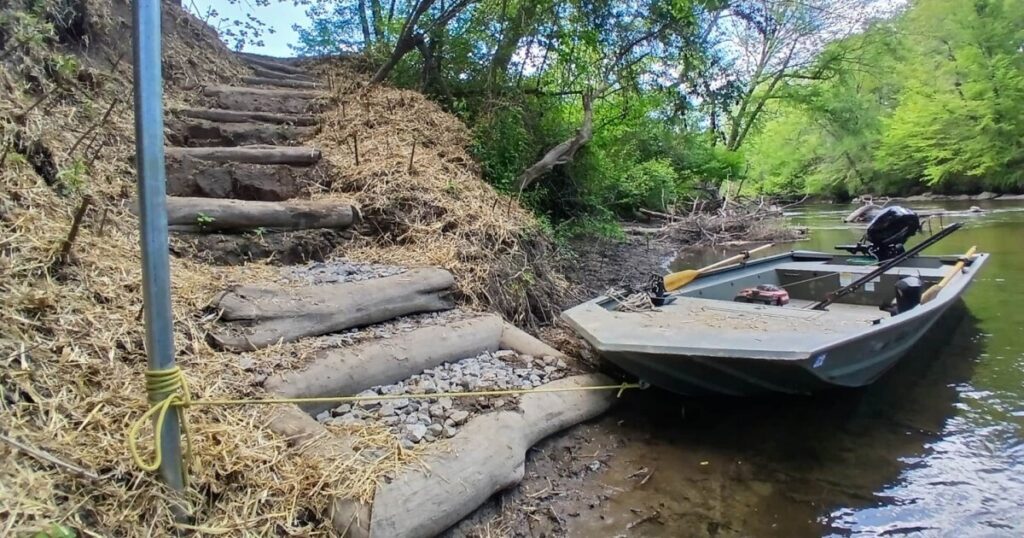
This summer, MountainTrue and its collaborators have spearheaded efforts to rebuild the Lyons Mountain access near Rosman, reopened the former Lazy Otter Outfitters site for public use during the season near Horse Shoe, and introduced a fresh paddle-in campsite close to Etowah.
The new Beech Bluff campsite, accessible solely by boat, boasts a serene grassy area by the riverbank, complete with a fire ring and picnic table shaded by a grand beech tree.
Jack Henderson, who manages the French Broad Paddle Trail for MountainTrue, highlighted the significance of this new site, stating it offers “a longer section of about 20 miles now into, like, a 12- and eight-mile section, which is a lot easier for folks to do in a multi-day trip.”
Recreational groups and businesses along the river are striving to attract visitors back to the French Broad River. “Last year was quite low, just kind of given debris removal, concerns and all kinds of issues with the river,” Henderson explained.
Concerns over pollution and hazardous debris persist among some potential visitors, despite ongoing cleanup efforts post-Hurricane Helene. Henderson noted a significant decrease in trash and dangerous materials now compared to the period immediately following the storm.
Water quality remains a concern, as Renee Fortner, director of programs at RiverLink, elaborated. The French Broad’s water quality is generally back to its pre-Helene state, though a 19-mile stretch has been marked as “impaired” since 2022 due to elevated bacteria levels, including fecal coliform.
“It was impaired prior to Helene,” Fortner mentioned. “And the same trend that we were seeing before the storm is still occurring, where E. coli levels, bacteria levels, spike after a rain event.”
During the paddling season, from May through September, the North Carolina Department of Environmental Quality monitors bacteria levels weekly and shares results online. Fortner suggests paddlers check these readings before venturing out, while noting that in the absence of rain events, bacteria levels often remain safely below the threshold.
Despite these concerns, Henderson observed a renewed interest in paddling activities on the river, with camps being booked and the river bustling with activity.
These Paddle Trail upgrades are part of a broader investment wave into French Broad recreation. This fall, Woodfin aims to introduce Taylor’s Wave, an engineered whitewater feature for paddlers and surfers, while Asheville explores a new paddler beach as a component of its long-term riverfront park rejuvenation plan.