In a sudden announcement, the innovative Medicaid initiative known as the Healthy Opportunities Pilot (HOP) in North Carolina is slated to cease operations by July 1. The program, which has been pivotal in providing food, housing, and transport to almost 30,000 low-income residents, faces closure due to budget constraints as cited by the state’s Department of Health and Human Services in a recent shutdown notice.
HOP, the first of its kind in the U.S. using Medicaid funds for nonmedical health support, played a crucial role in Western North Carolina’s recovery post-Hurricane Helene. Laurie Stradley, CEO of Impact Health, which manages the program in the region, expressed concern, “It came fast. We were hoping for a path to bridge the gap. Instead, we were told we have 28 days to unwind this.”
Stradley joined a June 4 advocacy effort in Raleigh, voicing the program’s importance, which currently aids over 13,000 individuals in her area. “There are so many layers of effect,” she said, highlighting the integral support HOP offers in terms of food security, job stability, and education.
‘It’s not just about health — it’s jobs’
Despite evidence indicating the program’s success, such as a study in JAMA that showed reduced emergency visits and cost savings, Republican legislators propose cutting HOP from the state budget. North Carolina’s Medicaid Director, Jay Ludlam, acknowledged the fiscal challenges this year, stating it would be “fiscally irresponsible” to continue without secured funding.
N.C. Rep. Eric Ager (D–Fairview) criticized the funding omission as “really short-sighted,” arguing the program’s long-term savings and community benefits. He emphasized its importance in Western North Carolina’s local economy, especially for local farmers.
Efforts were made to contact N.C. Sen. Ralph Hise (R–Spruce Pine) for his perspective, but no response was received by the time of publication.
Food delivery and housing repairs, tailored to rural realities
Since its 2022 launch, the Healthy Opportunities Pilot has provided various services, including:
- Healthy food boxes and produce prescriptions
- Transportation to medical appointments
- Legal aid for housing and benefits
- Home repairs to mitigate health risks
In rural areas, such as Western North Carolina, these services are crucial due to limited access. Laurie Stradley noted, “We were able to remove carpet with mold, install HEPA filters — things that literally kept kids out of the ER.”
MANNA FoodBank, a regional partner, praised the program’s impact in preventing health crises. Without HOP, Communications Director Micah Chrisman warned of increased choices between groceries and medicine for families.
Furthermore, the nonprofit ASAP (Appalachian Sustainable Agriculture Project) utilized HOP funds to develop its Farm Fresh Produce Prescription program, benefiting over 675 households and channeling $215,000 to local farms in 2024.
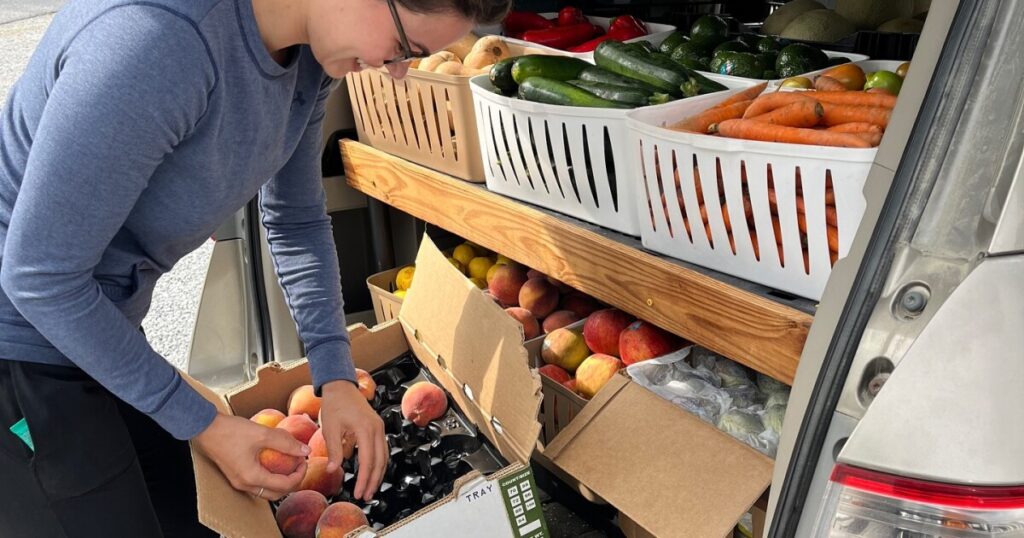
Caja Solidaria, which runs mobile food markets in Henderson and Transylvania counties, is actively advocating in Raleigh. Interim co-directors Amy Landers and Christina Schnabel engaged with legislators, distributing North Carolina peaches to highlight the pilot’s benefits. Schnabel, a former HOP recipient, emphasized, “Without this pilot, I would not be where I’m at right now.”
‘We were just sharing the success on Friday’
Stradley mentioned that just days before the shutdown notice, HOP was celebrated at a Chapel Hill health symposium for its achievements. Jay Ludlam sees this as a “temporary setback,” hoping for legislative reconsideration, as he believes, “It improves health, reduces costs, and strengthens communities.”
Stradley remains hopeful, aiming to ensure no one can claim ignorance of the program’s value. She remarked, “This program is a model for how we spend health care dollars better — before people get sick — and in a way that actually improves outcomes and supports the whole community.”
What is the Healthy Opportunities Pilot?
- Approved in 2018 through a federal Medicaid waiver
- Launched in 2022 in three pilot regions
- Western North Carolina participation coordinated by Impact Health
- Covers nonmedical services like food, housing repairs, transportation, and legal support
- Delivers services to nearly 30,000 people statewide
- Scheduled to end July 1, 2025, unless funding is added to the final state budget