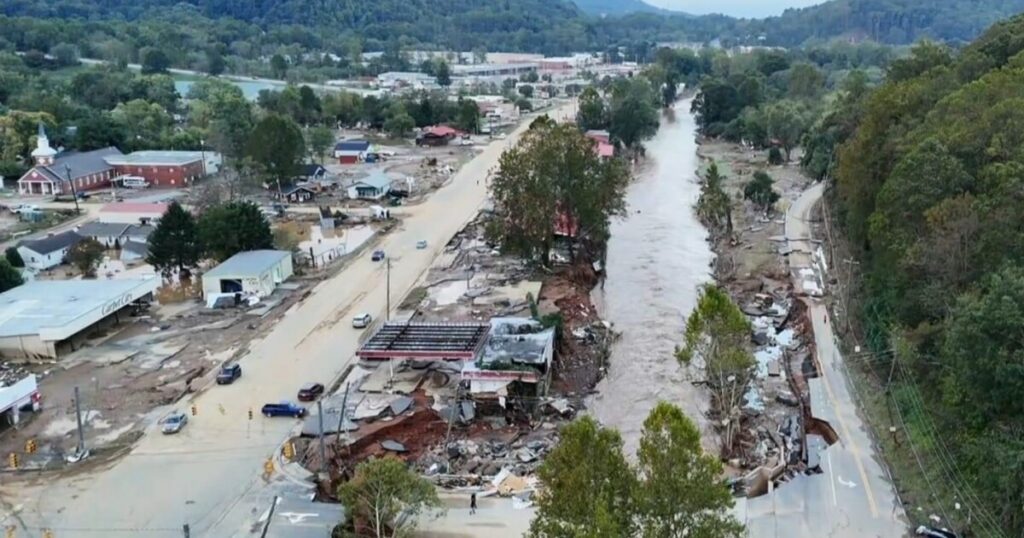
In the aftermath of Hurricane Helene’s impact in 2024, Swannanoa and Rosman communities continue to face flood risks. The state of North Carolina is stepping up with over $1.2 million in funding to bolster their defenses.
The North Carolina Department of Environmental Quality has announced this funding through its Flood Resiliency Blueprint program. The initiative supports critical river restoration efforts led by RiverLink and Conserving Carolina, two local non-profit organizations.
“Rebuilding more resiliently in western North Carolina after Hurricane Helene continues to be an urgent priority,” stated DEQ Secretary Reid Wilson. “These projects will make downstream communities less vulnerable to damage during future floods.”
RiverLink has been allocated $822,780 to undertake restoration on a 4.45-acre site along the Swannanoa River, which suffered significant damage from Helene. The project aims to create flood storage capacity of 1.6 million gallons and mitigate flood risks along Old Highway 70 and nearby areas. It will incorporate natural stormwater management systems, including vegetation that filters polluted runoff, and stabilize a tributary of the Swannanoa River. More information about RiverLink can be found on their website.
Similarly, Conserving Carolina will receive $450,000 for its efforts to restore 30 acres of former agricultural land near the French Broad River in Rosman, Transylvania County. The project is set to provide 7.1 million gallons of floodplain storage and safeguard key areas like Rosman Community Park and the town’s wastewater treatment facility. The initiative also includes restoring 3,000 feet of tributary streams and three acres of wetlands, enhancing water quality along the river. Details on Conserving Carolina’s initiatives can be accessed here.
Both restoration projects will utilize “flood benching,” a method that involves creating a shelf beside the river channel. This allows floodwaters to expand and decelerate, thereby reducing downstream water surge and velocity.
The Flood Resiliency Blueprint was established by the N.C. General Assembly in 2021 and has funded 84 initiatives across six river basins, totaling over $43 million. The program is authorized to allocate a total of $96 million for flood mitigation projects throughout the state.