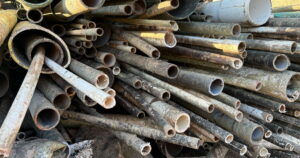
In response to the aftermath of Hurricane Helene, North Carolina is taking significant steps to bolster its recycling capabilities. The North Carolina Department of Environmental Quality has announced a substantial allocation of $25 million in grants aimed at strengthening local recycling infrastructure.
The initiative, part of the Helene Recovery Recycling Infrastructure (HRRI) grant program, will fund 16 distinct projects across western North Carolina.
The announcement came from Reid Wilson, the department’s secretary, during his visit to a recycling center in Old Fort. Wilson highlighted the significant 20% increase in debris intake post-Hurricane Helene, a level that remains high.
“And that’s why this announcement is important, because the current equipment and infrastructure here isn’t capable of efficiently and cost-effectively handling this surge in debris,” Wilson stated. “More debris means strain on machinery, higher maintenance costs, more hauling trips, and that has associated costs as well.”
The Old Fort facility is set to receive $580,000 to improve its operations.
Among the recipients, Buncombe County will receive the most substantial grant of $3.5 million, followed by Ashe County with $3 million and Alleghany County with $2.8 million. These funds are earmarked for repairs and upgrades to enhance resilience in recycling processes.
Wilson noted that these enhancements are projected to save 24,000 tons of recoverable material from landfills, positively impacting 340,000 households and 22,000 businesses. Despite this progress, Wilson mentioned an unmet demand of nearly $100 million due to the high volume of requests.
This grant funding is part of the American Relief Act, which was sanctioned by Congress in late 2024.
McDowell County Manager Ashley Wooten and Kevin McOmber, from the U.S. Environmental Protection Agency’s Southeast region, also attended the announcement. Wooten described the “tremendous impact” on the county’s waste management systems post-Hurricane Helene and emphasized the efficiency improvements the grant will support.
“And so, we will definitely save fuel, which is great for budgets – this time of the year and all the year – but also for the environmental impact,” Wooten stated. “It will be a great reduction in the exhaust that is going up and down our highways.”
Grant Recipients and Allocations
- Alleghany County ($2,800,000): Expansion of recycling services, infrastructure rebuilding, and operational improvements.
- Ashe County ($3,000,000): Replacement of infrastructure and equipment for managing recyclables and waste.
- Avery County ($544,000): Purchase of new equipment and repair of damaged infrastructure.
- Town of Black Mountain ($525,000): Rebuilding of curbside sanitation infrastructure.
- Buncombe County ($3,500,000): Development of waste diversion infrastructure.
- Graham County ($1,400,000): Modernization of recycling programs through site improvements and equipment purchases.
- Haywood County ($2,514,500): Replacement of lost curbside carts and relocation of a convenience center.
- Jackson County ($3,000,000): Construction of a new transfer station to improve recycling service access.
- Macon County ($2,750,000): Rebuilding and improvement of the Recycling Processing Center.
- Town of Marshall ($356,000): Establishment of a curbside recycling program.
- McDowell County ($580,000): Equipment purchase to enhance capacity and efficiency.
- Mitchell County ($380,000): Expansion of the recycling center.
- Rutherford County ($1,500,000): Enhancement of debris recycling and landfill diversion.
- Watauga County ($280,000): Replacement of lost containers and purchase of new equipment.
- Wilkes County ($570,000): Replacement of trucks and equipment.
- Yancey County ($1,300,000): Rebuilding of infrastructure and efficiency improvements.