As rain poured down in Hendersonville, climate scientist David Easterling stepped onto his deck to check a simple rain gauge. This scene was a far cry from the torrential downpour nearly two years prior, when Hurricane Helene struck, overwhelming this same gauge with almost 8 inches of rain over two days. “I measured like 7.9 and 7.8 inches over two consecutive days,” Easterling recalled.
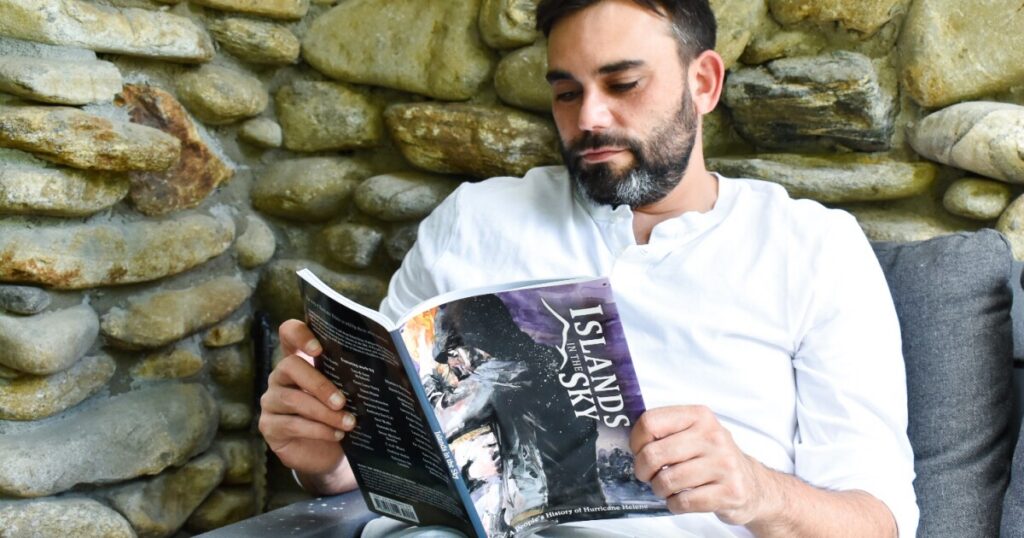
Easterling, now retired from the National Oceanic and Atmospheric Administration, is sharing his experiences from that event through a unique medium. He is one of several survivors who collaborated on “Islands in the Sky,” a graphic novel that illustrates the harrowing impacts of Hurricane Helene and warns of the potential for future 1,000-year storms in our lifetime.
A Graphic Tale of Survival
The graphic novel, created with the help of comic artists and writers, aims to depict the brutal reality of extreme weather. The project’s creator, Andrew Aydin, emphasizes the pressing issue of climate change, stating, “I think many, many people out here who have turned a blind eye to climate change, they can’t do it anymore, and they know it, and it’s changed people’s perceptions of it.”
Aydin, who founded the Appalachia Comics Project, was inspired by the concept of “co-creation,” as explored in a thesis by Elon Justice. This approach involves collaborating with local people to tell more authentic stories about regions like Appalachia. “Our goal ultimately is to empower the people of the region to tell their own story,” Aydin explained.
One compelling story featured in the novel is that of Jim and Allie Bourdy, who survived the hurricane by climbing onto their roof, watching as floodwaters carried rubber ducks past their home. The scene, poignantly illustrated by Josh Adams, captures both the surreal and traumatic aspects of their ordeal.
Climate Realities in North Carolina
Before Helene, Asheville was often considered an “eco haven,” a notion dispelled by the storm’s devastation. Jim Bourdy remarked on the climate changes, noting, “No matter where you live in North Carolina, the climate is changing.”
As Easterling explains, the likelihood of such extreme weather events is increasing as global temperatures rise. “We’re looking at maybe warming up three or four degrees by the end of the century,” he said, pointing out that a warmer atmosphere can hold more moisture, leading to heavier rainfall.
Aydin hopes the novel will raise awareness about climate change and its consequences. “If we do not start using opportunities to dramatize the conflict… then we’re missing an opportunity to help save ourselves,” he stated. Echoing this sentiment, Easterling urges people to pay closer attention to weather forecasts, acknowledging that while another storm like Helene is unlikely next year, the risk remains as climate conditions continue to evolve.