Statewide Homeless Camping Ban Proposed in New Legislation
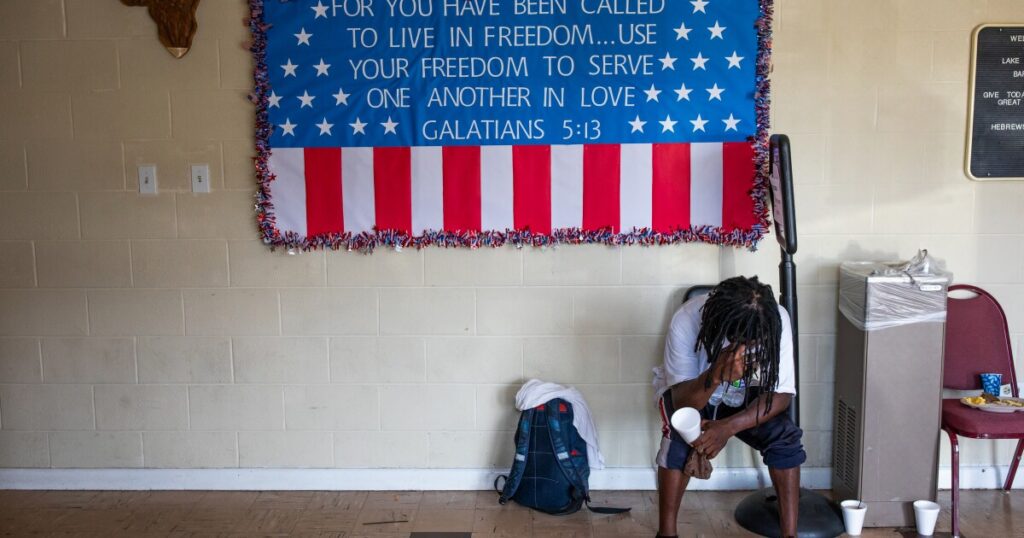
A new proposal under House Bill 437 is set to introduce a statewide ban on homeless camping across public properties. Local entities such as counties and cities would be responsible for enforcing this mandate, prohibiting any authorization for individuals to camp or sleep in public spaces. However, these jurisdictions may designate specific areas for public camping for up to one year, with the requirement to manage and secure these sites.
This initiative aligns with federal strategies, as outlined in the latest HUD grant application, which incentivizes jurisdictions that dismantle encampments. Republican State Senator Brian Biggs, who introduced the amendment to the Senate Judiciary Committee, highlighted that $4.4 billion in national HUD homeless assistance grants are available to address the issue.
In response to questions about immediate actions for the unhoused before the arrival of shelter funding, Biggs stated, “They’re gonna have to have a designated area. Most cities, large cities […] they have homeless shelters, and a lot of those, hopefully they are housed, but if they don’t have homeless shelters, that’s when they would do the designated area.”
The state’s move comes after federal directives to transition the unhoused from streets to encampments, a change supported by an executive order signed by President Donald Trump last year. This order is now influencing state-level policies.
Judiciary Committee Chair inquired if the camping ban was necessary for accessing the $4.4 billion grants, to which Biggs affirmed, “That is correct. The HUD secretary wants these guardrails up where they have a plan of action to move forward, and, like I said, this is just a start.”
Rural areas often face challenges with limited or nonexistent homeless shelters, while urban areas see shelters operating at or near capacity. For example, in Wilmington, 53% of the homeless population was unsheltered in the most recent count.
The proposed legislation also empowers residents and business owners to file lawsuits against local governments that permit camping. There is no additional financial support allocated to local jurisdictions for increased policing or services within these designated areas.