Asheville City Council Meeting Faces Public Outcry Over Police Funding
In a dramatic turn of events just minutes before the scheduled start of the Asheville City Council meeting, City Clerk Maggie Burleson announced the removal of “Item D” from the agenda, prompting cheers from the packed chamber. The agenda item in question involved a contentious $1.14 million federal grant earmarked for the Asheville Police Department (APD) to establish a real-time intelligence center.
The funding, allocated by Republican U.S. House Representative Chuck Edwards at the request of the APD, aimed to enhance the department’s capabilities by accessing live surveillance footage citywide. Although city officials reported no drawbacks to the funding, public concerns emerged regarding privacy, data security, and the financial burden on taxpayers for the center’s ongoing operations.
During the public commentary, Jen Hampton, co-chair of Asheville Food and Beverage United, criticized the project, stating, “Let’s call it what it actually is: a centralized hub for spying on the people of Asheville, funded by a far-right federal administration that has declared war on our most vulnerable neighbors.”
Despite the community’s reaction, city officials initially did not foresee significant opposition, as the grant was included in the consent agenda—a list typically reserved for noncontroversial items. Mayor Esther Manheimer assured attendees that the issue would be re-evaluated in an upcoming work session on April 28, with a potential vote slated for a future Council meeting in May.
Projected Property Tax Increase for Asheville Residents
In a separate session, Asheville’s finance director, Tony McDowell, outlined the city’s budget challenges, projecting a necessary property tax increase of approximately 19% to bridge a $17.1 million gap between revenue and expenditures. This increase follows Buncombe County’s recent reassessment, which significantly raised property values.
McDowell estimated the new tax rate at 39.22 cents per $100 of assessed value, down from the current 44.19 cents, but with property values rising, homeowners will see higher tax bills. For instance, a home previously valued at $350,000 is now assessed at $500,000, resulting in an additional $311 in city taxes next year.
The proposed tax revenue would support existing services, employee raises, and financing for $80 million in bonds approved by voters in 2024. The city plans to release its proposed budget on May 8, followed by a public hearing on May 26.
Additional Council Decisions
- Asheville is revising its digital content policies to align with new ADA accessibility requirements. This includes temporarily taking offline resources like the Asheville App and water dashboards.
- The Council approved a memorandum of understanding allowing APD officers to work overtime for the Housing Authority of the City of Asheville, despite previous issues with high overtime pay.
- A new ordinance aims to empower the Development Services Department to address abandoned buildings, although Vice Mayor Antanette Mosley expressed concerns over the lack of enforcement funding.
- Modifications to the city’s graffiti ordinance now exclude sidewalk chalk from restrictions, resolving a dispute involving politically charged chalk drawings.
- The Asheville Tourists baseball team’s stadium will be renamed HomeTrust Park, following a naming rights agreement with HomeTrust Bank.
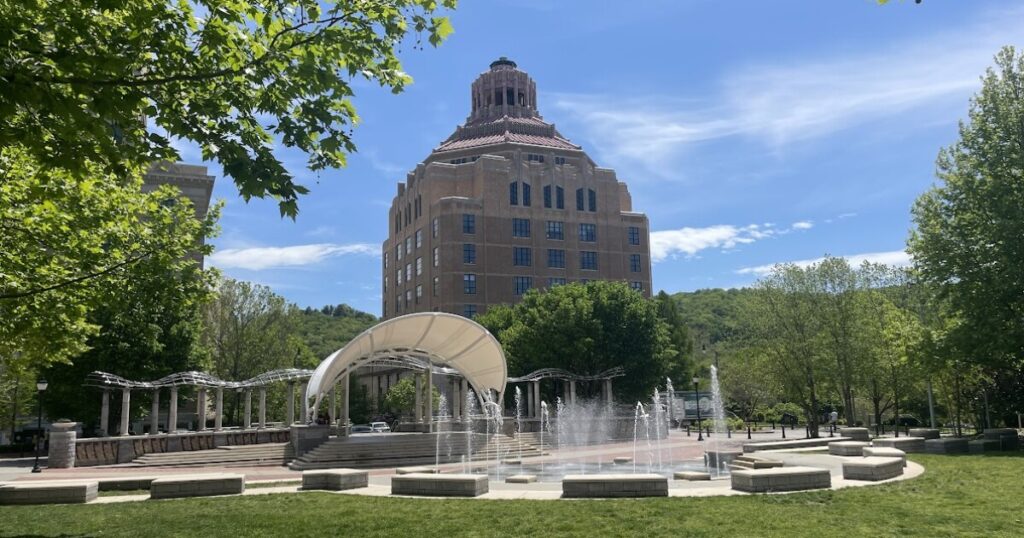
Asheville City Council meetings are held bi-monthly on the second and fourth Tuesday at City Hall. The next meeting is scheduled for April 28. For more information, see the full recording and documents from the April 14 meeting.