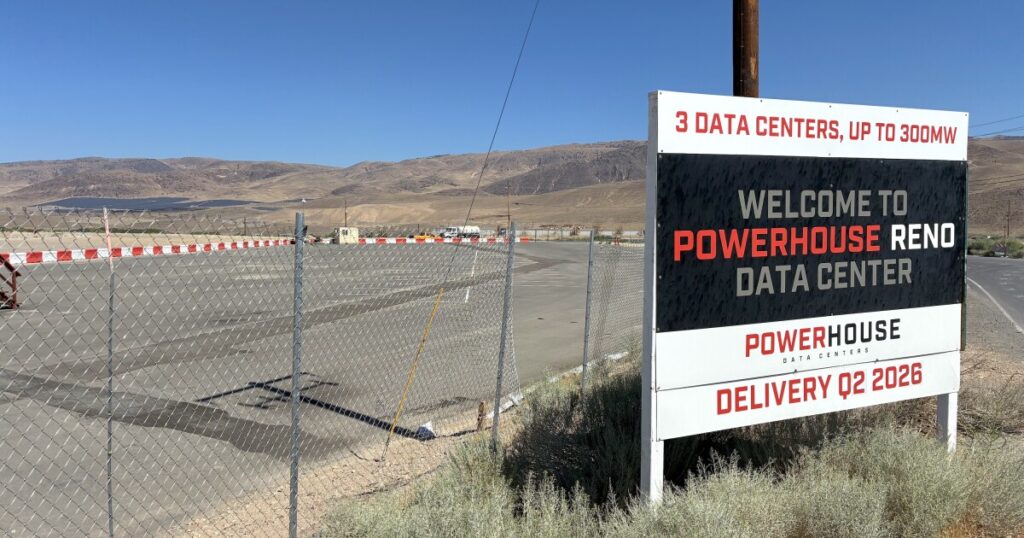
As the demand for digital services surges, the infrastructure supporting it — data centers — is coming under scrutiny for its water use, but a significant lack of transparency makes it difficult for communities to plan around this issue. A recent study by the University of Illinois highlights this challenge, noting that much of the water usage data is not publicly accessible.
Data Centers: An Overlooked Water Consumer
Data centers, which are essential for running everything from streaming services to artificial intelligence, require vast amounts of water to prevent their servers from overheating. Ana Pinheiro Privette, one of the study’s co-authors, points out a pressing issue: the limited information available on their total water consumption. “If we don’t have the data, if we don’t have the transparency, we’re just walking in the dark right now,” Privette remarked.
The study reveals that the lack of data encompasses both direct water use at these facilities and the indirect consumption related to electricity production. In 2023, researchers estimated that data centers across the United States consumed approximately 17 billion gallons of water. This figure is anticipated to grow significantly as the demand for cloud computing and artificial intelligence rises.
The Challenge of Limited Reporting
Despite the substantial water usage, consistent and detailed reporting remains scarce. Utilities and technology companies often do not make this information available to the public, which complicates efforts to assess the impact on local water resources.
This lack of transparency is particularly concerning for rapidly expanding areas such as Nevada and Arizona, where new data centers are being established in regions already facing water shortages. “If a community wants to plan for how much water it needs to deliver for this growth of data centers, and there’s no data, we’re kind of like shooting a little bit in the dark,” Privette explained.
Implications for Policy and Planning
Pinheiro Privette emphasized the difficulty policymakers and utilities face in making informed decisions without access to reliable data. “We cannot write policy if we don’t have data, right? It’s not evidence-based,” she stated.
Researchers warn that the discrepancy between the rapid expansion of the data center industry and the slow adaptation of water infrastructure could lead to a mismatch in resource allocation. Although data centers currently represent a small fraction of total water consumption compared to agriculture and energy, their localized impact can impose new demands on communities that might not be prepared for such growth.
Improving transparency in water use reporting could assist communities in balancing economic development with sustainable water management, particularly in the Western United States, where water scarcity remains a significant concern.
This article is a collaborative effort by the Mountain West News Bureau, which includes contributions from KUNR, Wyoming Public Media, Nevada Public Radio, and other regional affiliates. Funding is partly provided by the Corporation for Public Broadcasting and Eric and Wendy Schmidt.