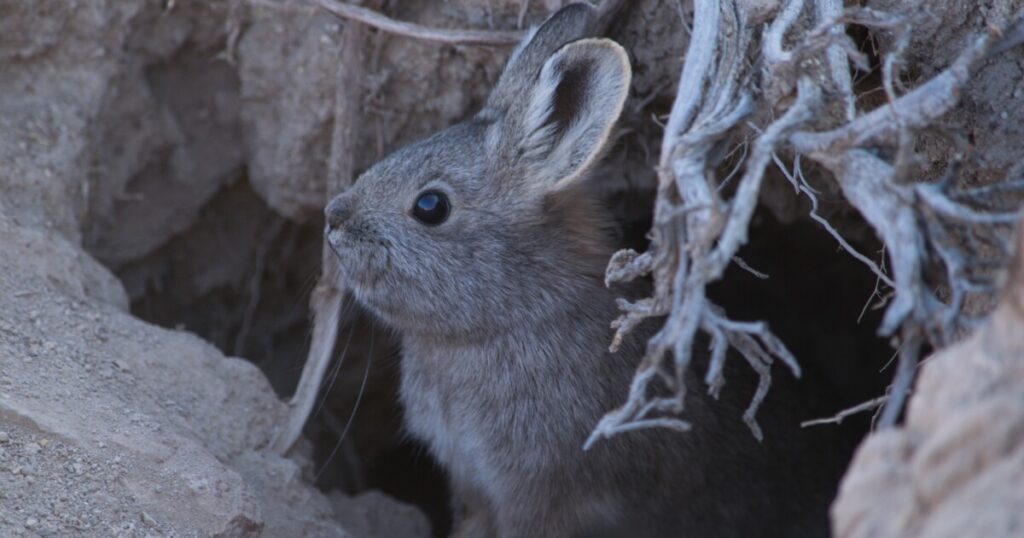
Conservationists are raising concerns as the pygmy rabbit, a diminutive creature inhabiting sagebrush landscapes across the Western United States, faces potential peril. Environmental groups have launched a legal challenge against the Trump administration, accusing federal wildlife officials of a significant delay in determining whether the pygmy rabbit warrants protection under the Endangered Species Act.
This tiny rabbit, known for being small enough to fit in the palm of a hand, can be found in Nevada, Idaho, Wyoming, Utah, Montana, California, Oregon, and Washington. The habitats it relies on are under threat from various factors, including wildfires, invasive plant species, energy development, and climate change.
Greta Anderson, deputy director of the Western Watersheds Project, emphasized that the lawsuit represents broader environmental concerns rather than just the plight of one species. “When pygmy rabbits are in trouble, it’s because the habitat is at risk,” Anderson explained. “And in this case, we know that the sagebrush sea is shrinking every year due to development, fires, invasive species, et cetera.”
The legal action follows a petition filed by conservation groups in 2023, requesting the U.S. Fish and Wildlife Service to consider listing the pygmy rabbit as endangered. In early 2024, the agency acknowledged substantial scientific evidence indicating that federal protection might be necessary, initiating a deadline for a decision by March 2024.
A federal listing would necessitate a thorough assessment of how activities such as energy development and livestock grazing impact the rabbit’s habitat on public lands. However, conservationists criticize the agency for missing this deadline, citing planning documents that suggest a final decision is not anticipated until 2028, four years beyond the stipulated timeframe.
Anderson voiced concerns that the delay could leave sagebrush ecosystems unprotected for an extended period, affecting numerous species that depend on this habitat, including mule deer and the greater sage-grouse.
This article is part of the Mountain West News Bureau’s efforts, a collaboration among various public media outlets, supported by the Corporation for Public Broadcasting and Eric and Wendy Schmidt.