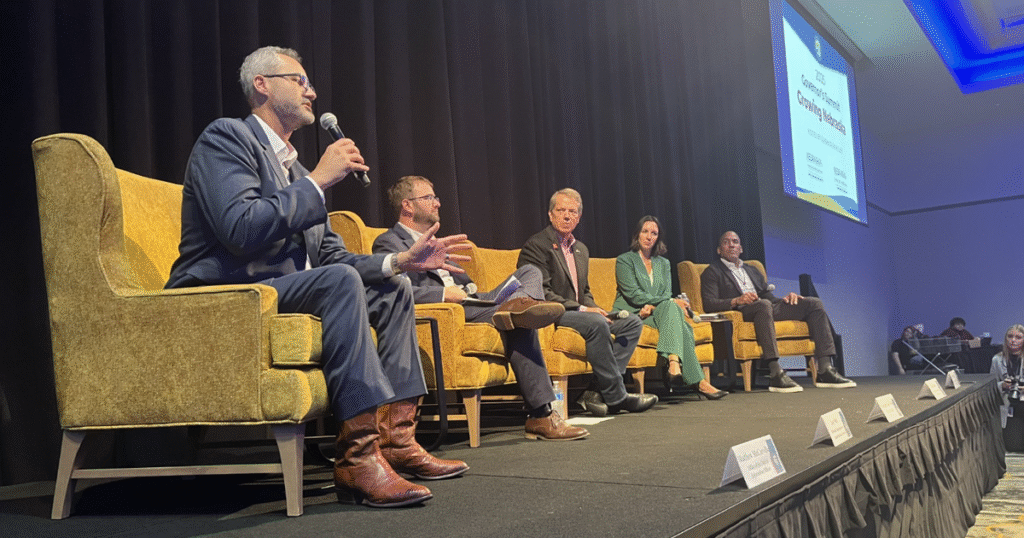
Cost-Cutting Measures and Innovative Programs Take Center Stage in Nebraska
Amidst budgetary challenges, Nebraska’s administration is taking strategic steps to manage state finances effectively. By adopting a business-like approach, Governor Jim Pillen aims to trim expenses while maintaining essential services.
Pillen elaborated on the initiative known internally as the DOGE program, emphasizing, “We started a DOGE program at Nebraska before anybody heard about DOGE, and we didn’t call it DOGE. We just simply called it ‘run government like a business,’ a systems approach to running our business.” This reflects the state’s commitment to efficient governance.
Under Pillen’s directive, state agencies have been tasked with identifying ways to reduce their budgets by 10%, potentially lowering general fund spending by an unprecedented $500 million. For more details on this proposal, visit Nebraska Public Media.
Lee Will, the Chief Operating Officer for the State of Nebraska, plays a pivotal role in this initiative. He noted, “When Gov. Pillen came in, agencies were asking for 5, 10, 15% increases of their budget. The thing that we quickly were able to identify are, what are those things that we critically need to invest in, and what are those things that are just spending items that aren’t going to move the needle for everyday Nebraskans?”
The state’s general fund budget saw a modest increase of 0.4% in the most recent fiscal year. Despite this, Nebraska has continued investing in key projects such as the $600 million Perkins County Canal and a new state prison. The prison construction contract, valued at $313 million, was recently awarded. More information on this project can be found here.
Governor Pillen emphasized the significance of workforce development in rural areas, expressing skepticism about government-funded housing projects. “All you got to do is look back at housing projects that governments funded. They’ve never worked,” he remarked, advocating instead for community-driven solutions with initial government support.
In addition, the governor underscored the importance of property tax relief as a priority for the state.
Federal Attention and Support for Nebraska’s Agricultural Initiatives
The state has also captured the attention of federal officials. U.S. Department of Agriculture Deputy Secretary Stephen Vaden visited Nebraska, marking the second USDA visit to the state in a week. His interest was sparked by Nebraska’s agricultural innovations. “What brings the nation’s two top agricultural officials to the state of Nebraska in the same week?” Vaden posed. “It’s simple. Even from Washington D.C., we can see there are a lot of great ideas coming out of Lincoln.”
Among the initiatives, Nebraska’s pilot program to restrict the purchase of soft drinks and energy drinks using the Supplemental Nutrition Assistance Program garnered praise. “You were among the first states in the country to agree to stop funding diabetes and start using your food stamp program to put people toward healthier diets,” Vaden stated. Learn more about this initiative here.
The USDA is also optimistic about collaborating with Congress on a forthcoming “skinny” farm bill to further advance agricultural policies.