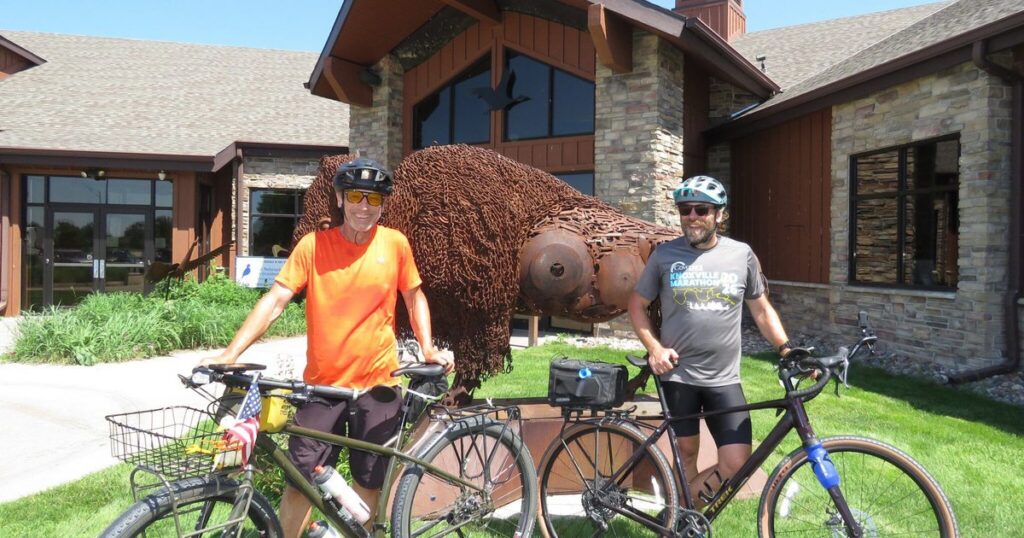
Stories of migration unfold not just through the skies but also on the ground, where efforts to educate and inspire meet the natural wonders of the world. In early June, Forsberg remarked, “So far, we’ve never talked to anyone who was angry. Maybe they were indifferent at first, but they’ve all been proud of where they live.” This sentiment underscores the connection between people and the migratory paths they inhabit.
Forsberg’s journey is not just about education but also about charting a flyway touring route for others. While many trails in the U.S. focus on landscapes or history, Forsberg envisions a unique path defined by migration itself. This adds a fresh dimension to the understanding of trails and their significance.
Bigger Picture
“Pedaling the Whooper Highway” is part of a broader initiative to explore and narrate the lives and habitats of cranes. Each story contributes to a metaphorical quilt of the Great Plains and Central Flyway. In addition to his work on the Platte Basin Timelapse, Forsberg has been involved in projects like writing books and producing the documentary “Follow the Water” with Nebraska Public Media, chronicling a journey along the Platte River.
For over 50 years, George Archibald of the International Crane Foundation and his team have dedicated themselves to understanding cranes, whether in captivity or in distant locales. The “Pedaling the Whooper Highway” initiative is a chance to raise awareness about conservation challenges, such as the placement of wind turbines that pose threats to migrating birds. Archibald noted, “Although the major wetlands where whooping cranes rest during migration are protected, there are hundreds of smaller wetlands that also provide important habitat for the cranes but are now disappearing through reduced rainfall as a consequence of climate change.”
During the journey, Forsberg experienced firsthand the challenges faced by whooping cranes as they adapt to daily conditions. “You just think about what’s ahead of you, that day, that morning, that mile,” he reflected. Caven also shared observations from their travels, noting the transition of bird songs from eastern to western meadowlarks as they moved into Kansas. “One of the wonderful things about the natural world is it can make you feel small,” Caven stated. “I love that, but others may not.”
Heading Home
As their expedition concluded, the focus shifted to the next steps. Caven is preparing a draft report for the North American Crane Working Group, while Forsberg organizes the photos and videos captured on his iPhone. The journey may be over, but the process of documenting and sharing their experiences has only just begun.