In the intricate dance of nature, trees often rely on their own defenses to fend off various threats. One such threat is a common fungus that typically resides on a tree’s bark without causing harm. Under usual circumstances, the tree’s high water pressure and natural chemical defenses act as a formidable barrier. However, prolonged drought conditions can tilt the balance in favor of the fungus.
“But when we get into situations like you guys have been experiencing with the severe drought, especially in multi-year droughts, the moisture content in that wood is going to drop,” explained Balbalian. “And essentially your defense compounds are dropping with that, and it gives the upper hand to the fungus.”
Hypoxylon canker, a formidable fungal adversary, is particularly fond of oak trees. Once it breaches the tree’s defenses, there is no known cure or treatment to halt its advance. The canker gradually leads to the collapse of sapwood vessels, essential channels for water and nutrients.
Balbalian likened this process to a constriction: “It’d be like having a kink in a water hose or a tourniquet on your arm,” he explained. “And when enough of that sapwood is compromised, the tree is going to die just from lack of water, essentially.”
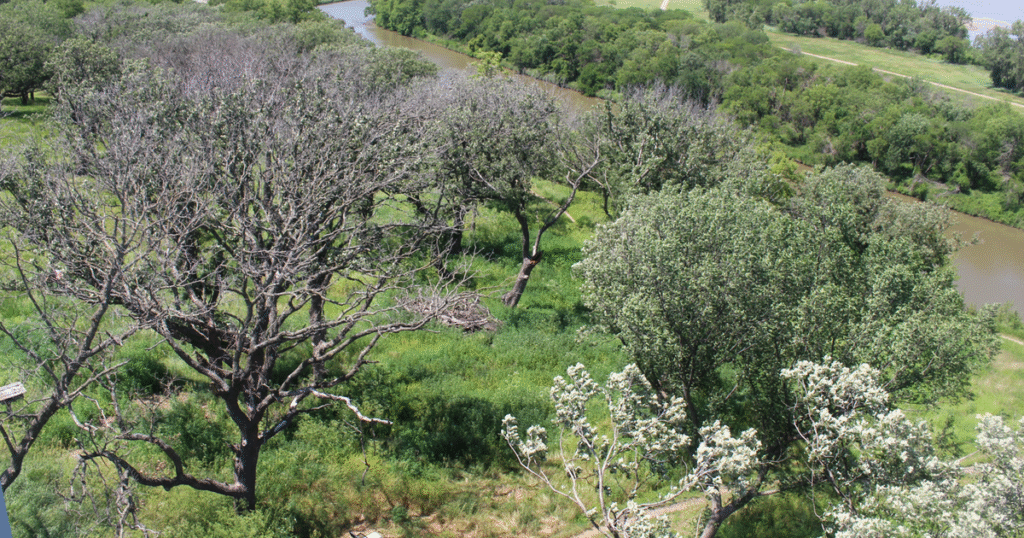
Signs of hypoxylon canker infestation include smaller leaves at the top of the tree, dead branches, and yellowing or wilting leaves. The sapwood also changes color, turning brown. A telltale sign of the fungus’s presence is when strips of bark peel away, revealing a beige, fuzzy layer beneath that turns black over time.
By the time these physical symptoms manifest, it is usually too late to save the tree. Infected trees continue to spread the fungus by releasing spores into the environment, posing a risk to nearby trees. Experts recommend removing and burning the affected trees to prevent further contamination.
The rapid spread of hypoxylon canker has become notably apparent in the core of Mahoney State Park, highlighting the urgent need for effective management strategies.