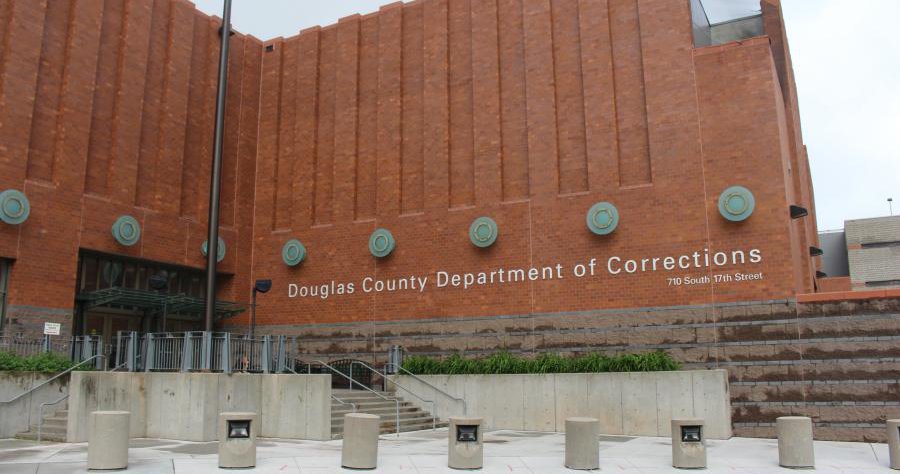
In Omaha, a proposal from Douglas County Sheriff Aaron Hanson to utilize the county jail for detaining individuals apprehended by U.S. Immigration and Customs Enforcement (ICE) has sparked controversy. The plan has drawn criticism from the League of United Latin American Citizens (LULAC), a renowned Hispanic civil rights organization, which claims its involvement in the proposal has been inaccurately portrayed.
This week, LULAC’s national chapter expressed concerns after the organization’s name was cited in Hanson’s proposal. Sheriff Hanson had stated that prior discussions with LULAC leaders regarding the proposal were “all positive and focused on identifying smart common ground and collaboration.” However, LULAC spokesman David Cruz refuted this, labeling the usage of LULAC’s name as “inappropriate, unauthorized and premature.”
“For the name LULAC to be used during the decision-making process, as if to lend credibility or weight to the process and the outcome, is inaccurate,” Cruz emphasized.
The Proposal
Hanson’s proposal, presented in an open letter to the Douglas County Board, leverages both humanitarian and financial arguments for establishing an ICE detention contract. According to Hanson, housing detainees locally would keep them closer to their support networks, including families and legal representatives, and eliminate the need for prolonged transportation for legal proceedings.
“Ultimately, we cannot control what the federal government does,” Hanson noted. “What we can control is retaining our neighbors and shared constituents within our community as they navigate their due process.”
Financially, Hanson projects that the ICE partnership could generate up to $6.5 million annually for the county. However, such a partnership would require approval from the County Board of Commissioners.
Board Chairman Roger Garcia stated on Thursday that the board has not discussed a potential ICE contract and does not “anticipate such an item coming before the Board any time in the foreseeable future.”
Hanson clarified his intention to initiate a conversation on the topic: “There’s many opinions with regard to ICE and immigration laws and all of those opinions have value in the public discourse, but those opinions do not counter the fact that detentions are going to occur,” he told Nebraska Public Media. “What can be potentially controlled is detention and having infrastructure in place for individuals to navigate the system.”
Conversations with LULAC
Hanson’s letter also included a statement about discussions with the Nebraska chapter of LULAC. While the sheriff’s office claimed these talks were open and respectful, LULAC made it clear that they do not endorse any contractual agreement between Douglas County and ICE.
“LULAC’s role is not to facilitate detention,” stated Elsa R. Aranda, LULAC Nebraska state director. “Our role is to ensure that if detention occurs, it happens under humane, fair, and transparent conditions — and that the rights and dignity of every person are protected, just as the Sheriff is proposing.”
The joint statement signaled both parties’ interest in further dialogue. Cruz emphasized that LULAC’s national board is cautious about the use of its name. While a meeting did occur between LULAC’s national president and Hanson in Dallas, no official stance was provided. “We are the oldest and the largest and the only Latino civil rights organization that has standing in federal court, because we have members all across the country,” Cruz stated. “I would say to the sheriff that he may want to think twice before he uses the name of LULAC again without the express written permission of the national board and the national president.”
These discussions emerge on the heels of another Nebraska prison’s transformation into an ICE detention facility, announced in August. The minimum-security prison in McCook will become the “Cornhusker Clink.” Additionally, the Nebraska State Patrol has entered a 287(g) partnership with ICE, enabling six trained troopers to interrogate suspected noncitizens and make immigration arrests without a warrant. Read more about this development here.