Michigan’s Senate race isn’t just a political contest — it’s a battle over who gets to shape the economic pressures squeezing families at the pump, at the grocery store, and on the job. With control of the U.S. Senate potentially hanging in the balance, voters in one of America’s most watched swing states are choosing between two candidates with starkly different visions for addressing the costs that hit home hardest.
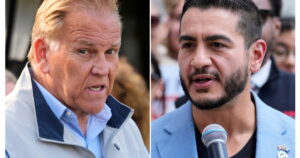
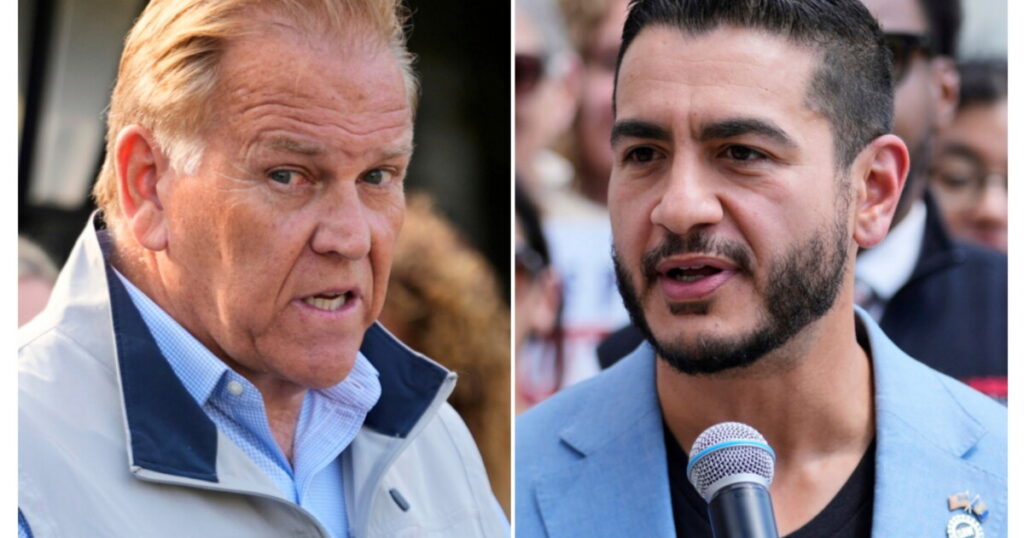
Democrat Abdul El-Sayed and Republican Mike Rogers are each betting that their approach to the economy — and the broader political moment — will resonate with Michigan families tired of watching their budgets get stretched thin. The race has drawn more than $100 million in outside advertising since the August primary, signaling just how much is riding on the outcome for both parties.
A Pocketbook Election in a Politically Divided State
Michigan is no stranger to economic hardship, and its diverse electorate reflects a state still navigating the aftershocks of deindustrialization, shifting trade relationships, and the rising cost of everyday life. Gas prices remain elevated, and an ongoing trade war with neighboring Canada — a longtime economic partner of Michigan — has added new uncertainty for workers and businesses alike. These aren’t abstract policy debates for Michigan families; they show up in weekly grocery runs and commutes to work.
El-Sayed, a former Wayne County health director, has built his campaign around a populist economic message, with universal healthcare as the centerpiece. He’s aimed his pitch at younger voters and disaffected rural residents who feel left behind, holding campus rallies across the state in the months leading up to Election Day. His primary win over establishment-backed Rep. Haley Stevens was narrow but decisive, and it came despite nearly $60 million in outside spending against him — including close to $30 million from AIPAC, its largest investment in any single race.
Rogers, meanwhile, is running for Senate a second time after losing Michigan’s 2024 race by fewer than 20,000 votes. That contest came when former Rep. Elissa Slotkin edged him out even as President Trump carried Michigan. This time, Rogers faces a different landscape: no Trump at the top of the ticket to energize Republican turnout, and an economy that has given voters real reasons for frustration.
Economic Headwinds Complicate Rogers’ Path
Rogers is a former chairman of the House Intelligence Committee who built his reputation on national security. But those credentials are now entangled with the political fallout from an unpopular ongoing war with Iran — and the ripple effects that conflict has on energy costs that American families feel every time they fill up their tanks.
Rogers acknowledged the public’s weariness on the issue, writing on social media in September:
“The war with Iran needs to end, and end quickly.”
His campaign has leaned heavily on attacks against El-Sayed rather than championing specific legislative achievements, even as he has continued to campaign alongside Trump. The trade war with Canada adds a particular complication in Michigan, where cross-border economic ties run deep and affect manufacturing jobs and supply chains that thousands of Michigan families depend on.
Rogers avoided a primary challenge entirely this cycle, giving him months to build a war chest and prepare — an advantage El-Sayed did not have after an expensive and divisive Democratic contest.
A Fractured Democratic Coalition
The most dramatic twist of the race came when Stevens — El-Sayed’s primary opponent — crossed party lines and endorsed Rogers. The stunning move reflected deep fault lines within Michigan’s Democratic base, particularly around the Israel-Gaza conflict and accusations of antisemitism that had shadowed El-Sayed’s campaign.
El-Sayed drew criticism from parts of the Jewish community for his response to a March attack on a Michigan synagogue, when he said that “hurt people hurt people” — referring to the attacker, whose family had been killed in an Israeli strike in Lebanon. He later said he was
“sorry”
to
“anyone who feels like my comments might have been hurtful.”
Republicans also highlighted El-Sayed’s past appearances with Hasan Piker, a political streamer known for inflammatory statements about Israel and the Sept. 11 attacks. El-Sayed has since distanced himself from him. The campaign has also been marred by some of the year’s most inflammatory rhetoric, with Trump repeatedly calling El-Sayed — who would be the first Muslim senator — a “jihadist,” despite no evidence linking him to any terrorist organization.
To repair those fractures, El-Sayed called in political heavyweights. Former Vice President Kamala Harris campaigned with El-Sayed and told a gathering of the NAACP that he could be a
“stopgap”
on Trump. Former President Barack Obama also joined a Michigan rally for El-Sayed and other Democrats in the final days before the election.
No Republican has won a Michigan Senate seat since 1994. But the retirement of two-term Democratic Sen. Gary Peters has opened a rare door — and with Democrats needing to flip four seats to retake the Senate majority, Michigan has become one of the most consequential races in the country. For Michigan families watching gas prices, healthcare costs, and trade tensions play out in their daily lives, the stakes couldn’t feel more real.